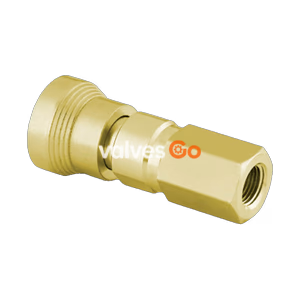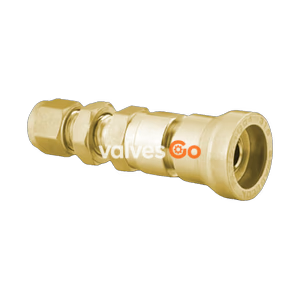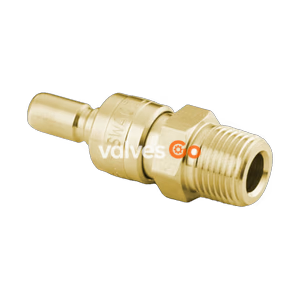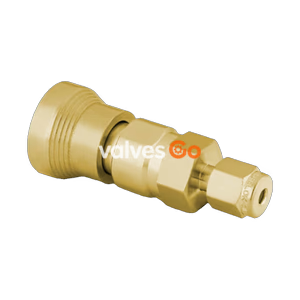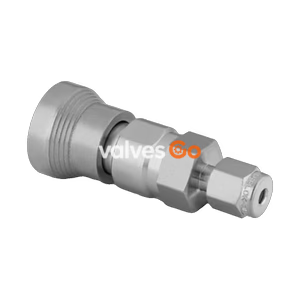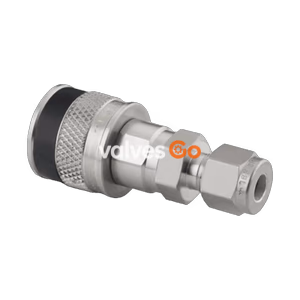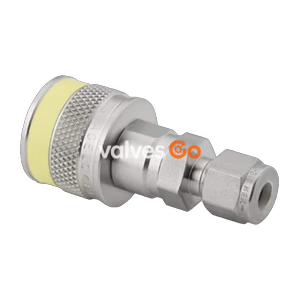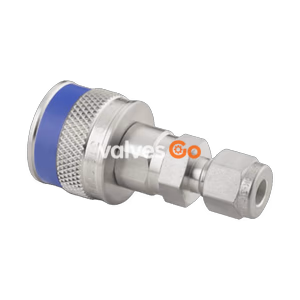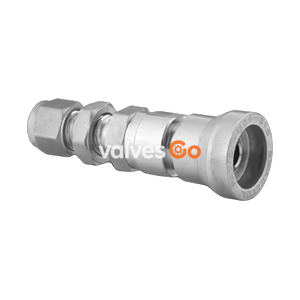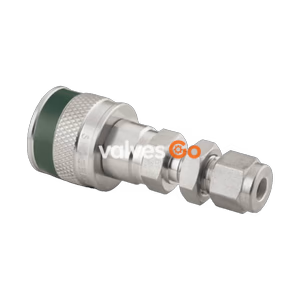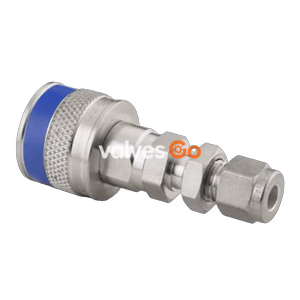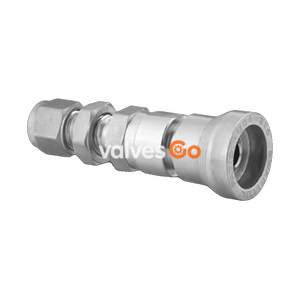

Tube Fittings0.2 Cv
 Product category
Detailed QC4, QC6 and QC8 selection guide covering SESO/DESO stems, pressure ratings, flow, spillage, seals, keyed variants, protectors and ordering numbers.
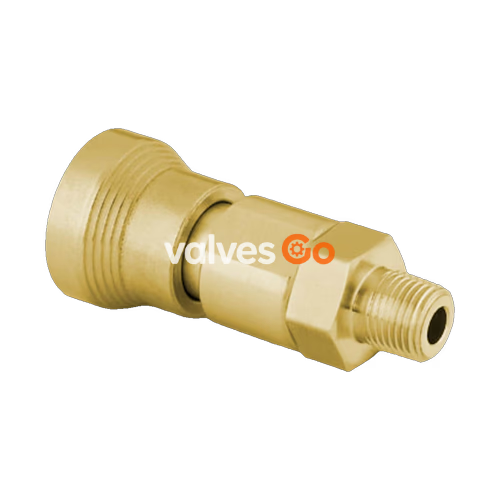
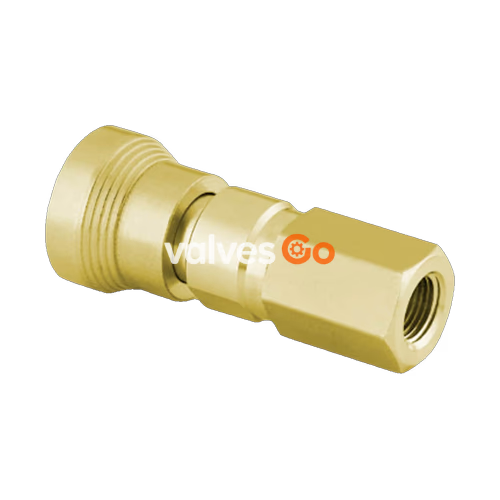
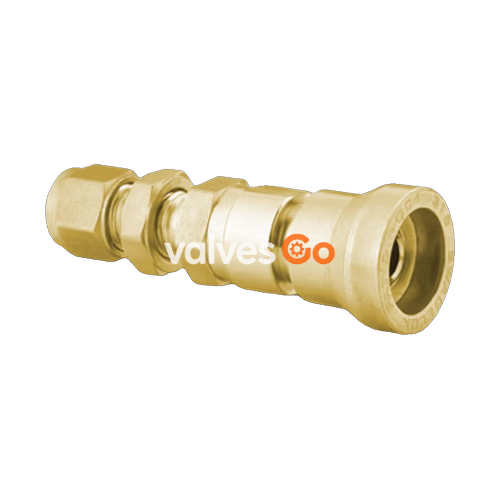
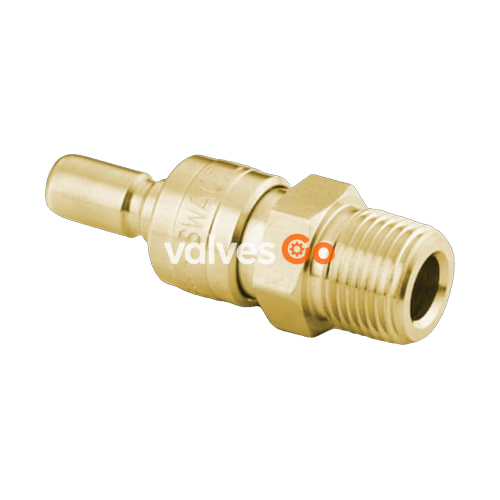
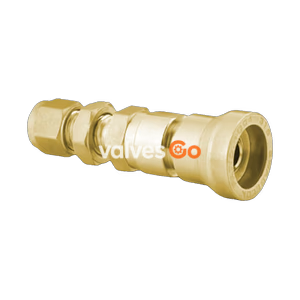
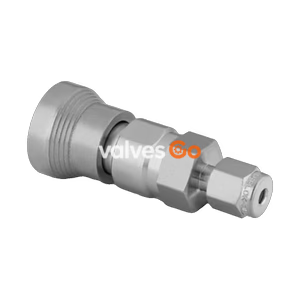
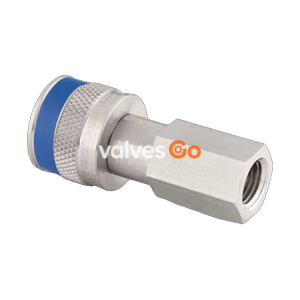
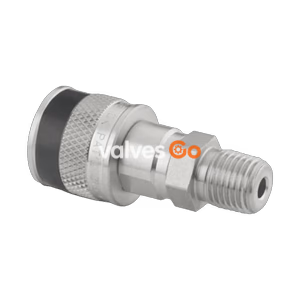
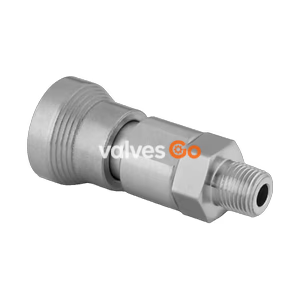
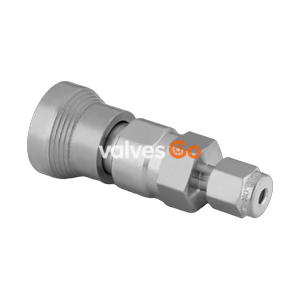
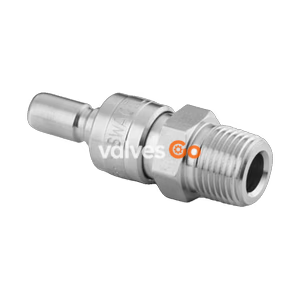
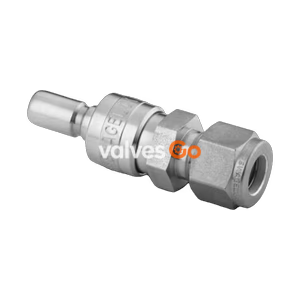
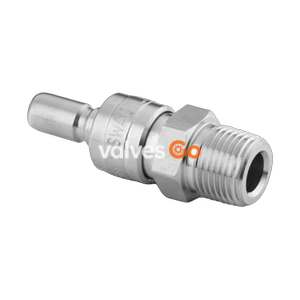
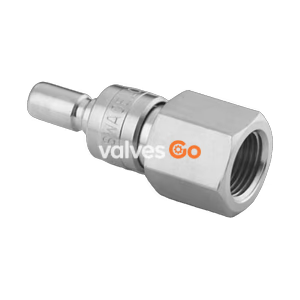
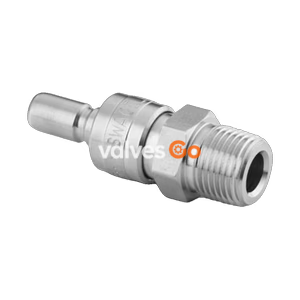
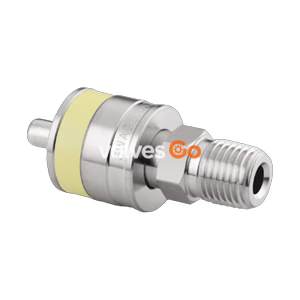
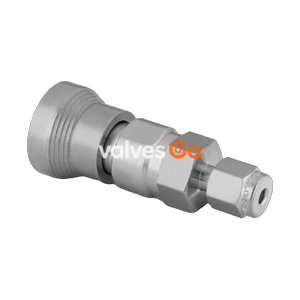
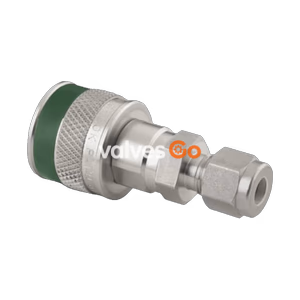
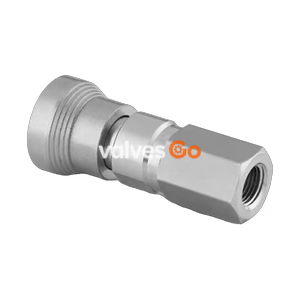
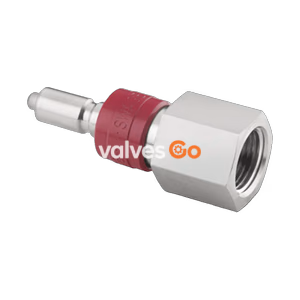
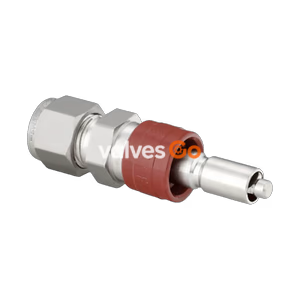
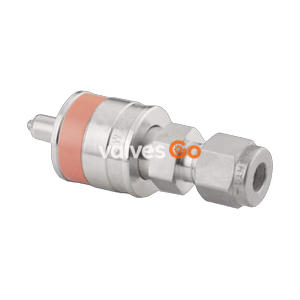
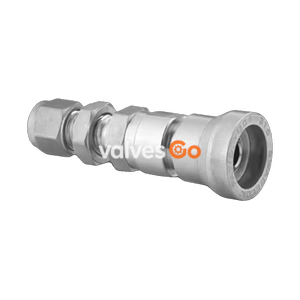
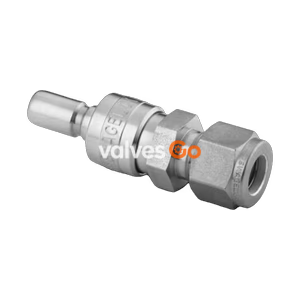
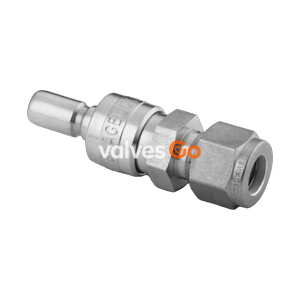
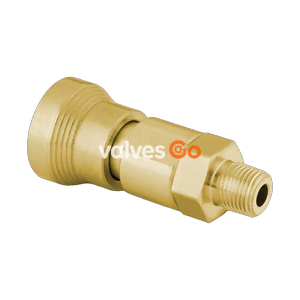
The QC family is the broad instrumentation range in MS-01-138. It includes QC4, QC6 and QC8 sizes, single-end shutoff (SESO) and double-end shutoff (DESO) stems, stainless steel and brass bodies, multiple O-ring choices, keyed variants, bulkhead options and protectors. The design uses a locking-dog retention mechanism and push-to-connect operation. The current-generation body and stem design is described as interchangeable with the earlier design of the same series and size.
The heavy-duty sleeve shields the open end of the body. A redesigned stem insert uses one O-ring while improving containment. These design points make QC the first series to review for general instrumentation connections that must be connected and disconnected repeatedly.
| Size | 316 SS coupled pressure at about 100 °F | Brass coupled pressure at about 100 °F | Uncoupled / coupling pressure at 70 °F | Spillage / air inclusion | Max recommended water flow |
|---|---|---|---|---|---|
| QC4 | 3000 psig (206 bar) | 2000 psig (137 bar) | 250 psig (17.2 bar) | 0.3 / 0.3 cm³ | 4 US gal/min (15 L/min) |
| QC6 | 1500 psig (103 bar) | 1000 psig (68.9 bar) | 250 psig (17.2 bar) | 1.0 / 1.0 cm³ | 6 US gal/min (22 L/min) |
| QC8 | 750 psig (51.6 bar) | 500 psig (34.4 bar) | 250 psig (17.2 bar) | 3.0 / 3.0 cm³ | 10 US gal/min (37 L/min) |
The catalog contains separate high-temperature derating tables. The lowest-rated component, connection, seal and operating state determines the allowable system condition.
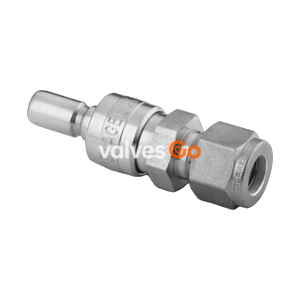
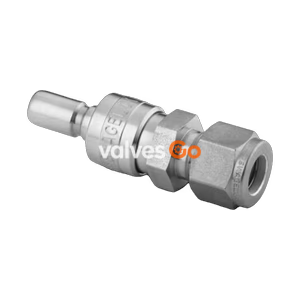
SESO stems have no internal valve and remain open when uncoupled. They are useful when a simpler stem flow path is needed and the open line can be safely isolated and drained. They must not be disconnected under pressure.
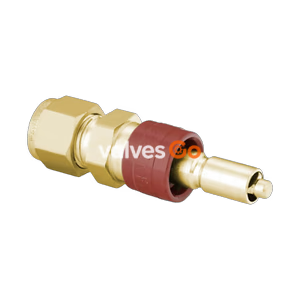
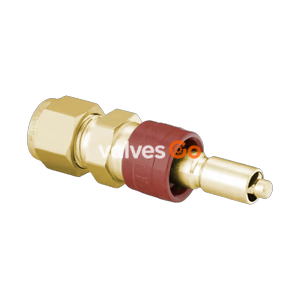
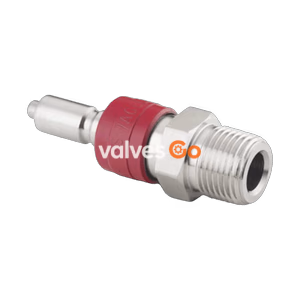
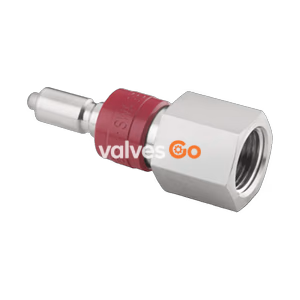
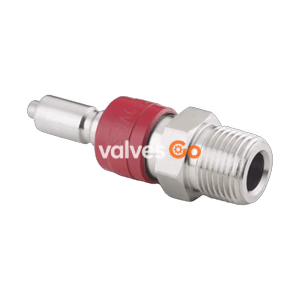
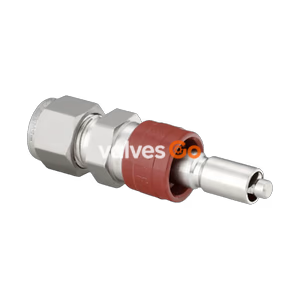
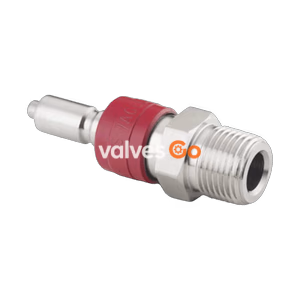
DESO stems include a valve that closes on disconnection. DESO should be considered when both sides of the connection require shutoff. Because fluid is trapped between the valves, spillage and air inclusion become important selection data. Red stem sleeves visually identify DESO stems in the catalog illustrations.
| Selection question | Prefer SESO when… | Prefer DESO when… |
|---|---|---|
| Disconnected stem state | An open stem is acceptable and safely controlled | The disconnected stem must shut off |
| Flow path | Lower internal complexity is preferred | Two-sided containment is more important |
| Disconnect procedure | The circuit will always be isolated and depressurized | Frequent controlled disconnects are expected |
| Data to review | Coupling pressure and full system isolation | Spillage, air inclusion and both valve ratings |
QC bodies, stems, body valves and body inserts are offered in 316 stainless steel or brass C36000. Internal material details vary by size and construction. Standard stainless configurations use fluorocarbon FKM seals; ethylene propylene and perfluorocarbon FFKM are cataloged alternatives. Standard brass configurations use Buna N, with other seal options available by suffix.
Do not select an O-ring solely by temperature. Check process-fluid compatibility, cleaning chemicals, permeation, compression set, lubricant and exposure time. The exact suffix must be verified in the ordering table.
| Size | SESO insertion depth | DESO insertion depth |
|---|---|---|
| QC4 | 1.09 in. (27.7 mm) | 1.15 in. (29.2 mm) |
| QC6 | 1.18 in. (30.0 mm) | 1.30 in. (33.0 mm) |
| QC8 | 1.48 in. (37.6 mm) | 1.68 in. (42.7 mm) |
Reserve additional clearance for sleeve movement, hand access, hose bend radius and protector removal. Avoid mounting arrangements that impose continuous side load.
A model such as SS-QC4-B-400K1 can be broken down as follows:
SS — 316 stainless steel material prefix.QC4 — QC family, size 4.B — body; S commonly identifies a SESO stem and D a DESO stem.400 — the listed end-connection code, here associated with a 1/4 in. Swagelok tube fitting.K1 — keyed option, black identification.The product grid is filtered by model prefix and includes bodies, stems, keyed versions, protectors and kits currently in the website dataset. Confirm that the mating body and stem use the same QC size and key code.
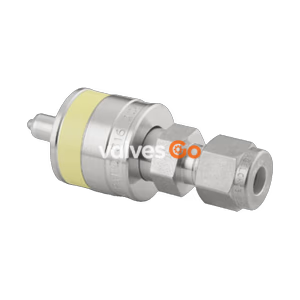
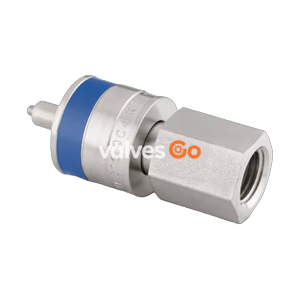
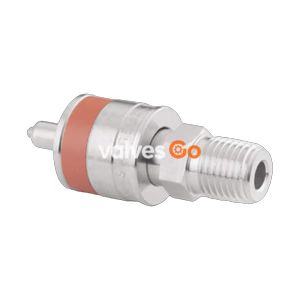
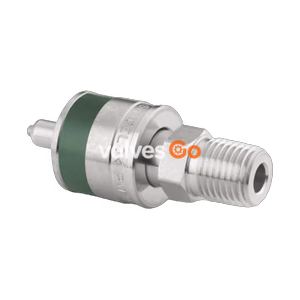
Keyed couplings help prevent accidental mixing of fluid, pressure or test circuits. The catalog uses K1 black, K2 orange, K3 green, K4 yellow, K5 blue, K6 white, K7 purple and K8 brown. Availability depends on QC size and configuration; both mating halves must match.
Bulkhead mounting can organize panel penetrations and instrument stations. The B2 low-profile option changes the mounting envelope, so panel thickness, nut access and hose routing should be reviewed against the dimensional drawing.
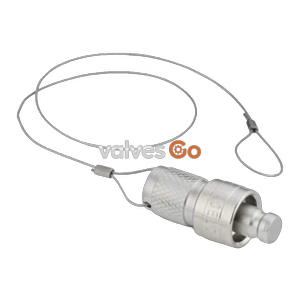
Body and stem protectors reduce contamination and physical damage while uncoupled, but they do not retain pressure. Other catalog options include special cleaning, lubrication or O-ring configurations. Specify preparation requirements at quotation stage rather than after assembly.
Provide the complete existing model number when possible. Otherwise record: QC4/QC6/QC8 size; body or SESO/DESO stem; material; both end connections; fluid; pressure and temperature; desired O-ring; required key/color; bulkhead or low-profile need; protectors; cleaning and certification requirements. Use the PDF for the final dimension and ordering-number check.
Open a model page for specifications, connection options and technical documents.