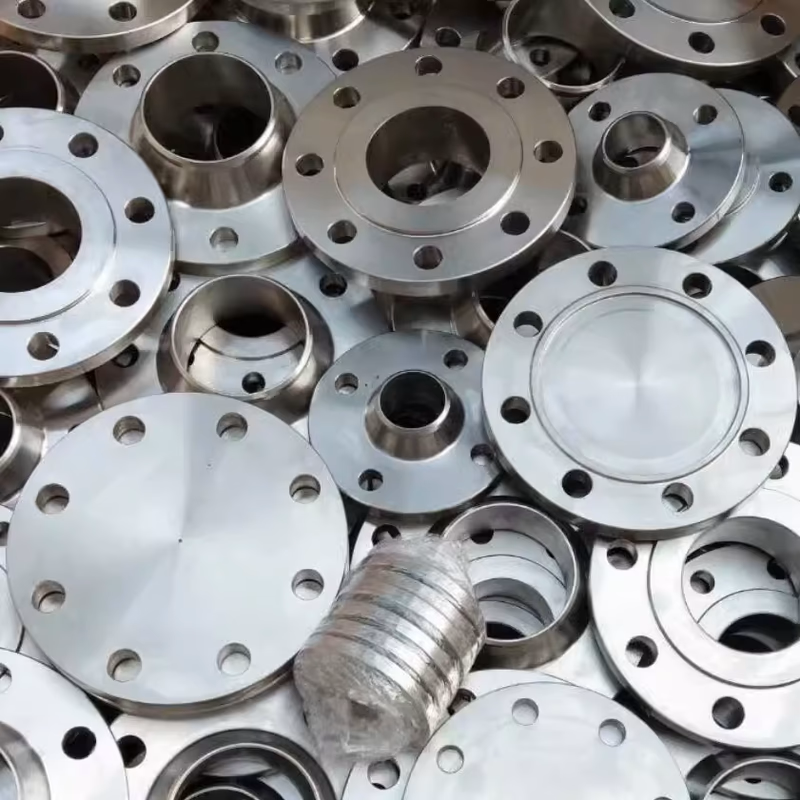
Overview
In industrial valve selection, ANSI (American) and BS/DIN (British/European) are the two most commonly used standard systems. They differ significantly in design philosophy, material standards, connection methods, pressure ratings, testing requirements, certification systems, and more. Correctly understanding these differences is crucial for valve selection, pipeline design, and equipment maintenance.
"Choosing the wrong valve standard can lead to connection mismatches, increased leakage risks, and even require redesigning the entire pipeline system." —— Senior Pipeline Engineer
I. Standard System Overview
1.1 Standard Organizations and Historical Background
| Comparison Item | ANSI/ASME (American) | BS/DIN/ISO (British/European) |
|---|
| Main Standard Organizations | ANSI (American National Standards Institute), ASME (American Society of Mechanical Engineers) | BS (British Standards Institution), DIN (German Institute for Standardization), ISO (International Organization for Standardization) |
| Historical Background | Originated from the American Industrial Revolution, emphasizing practicality and safety | Originated from European industrial standards, focusing on internationalization and unification |
| Application Scope | United States, Canada, parts of Latin America | United Kingdom, Europe, most of Asia, international projects |
| Standard Update Frequency | Regular updates, focusing on technological innovation | Focus on alignment with international standards, relatively conservative updates |
| Main Valve Standards | API 600, API 602, ASME B16.34 | BS 5150, BS 5163, EN 593, ISO 5211 |
1.2 Design Philosophy Differences
| Design Philosophy | ANSI (American) | BS/DIN (British/European) |
|---|
| Design Method | Based on empirical formulas and conservative design | Based on theoretical calculations and standardized design |
| Safety Factor | Usually adopts higher safety factors | Uses standardized safety factors |
| Material Selection | Material standards are relatively flexible | Material standards are stricter and more unified |
| Testing Requirements | Emphasizes actual working condition testing | Emphasizes standardized testing procedures |
| Quality Control | Focuses on manufacturing process control | Focuses on final product inspection |
II. Material Standards Comparison
2.1 Valve Body Material Standards
| Material Type | ANSI Standard | BS/DIN Standard | Main Differences |
|---|
| Carbon Steel | ASTM A216 WCB, A105 | EN 10213, BS 1504 | Slightly different chemical composition and mechanical property requirements |
| Stainless Steel | ASTM A351 CF8, CF8M | EN 10213, BS 1504 | ANSI focuses more on corrosion resistance, BS/DIN focuses more on strength |
| Ductile Iron | ASTM A395 | EN 1563, BS 2789 | Standards are basically consistent |
| Bronze | ASTM B62, B61 | EN 1982, BS 1400 | Slightly different composition requirements |
| Duplex Stainless Steel | ASTM A995 | EN 10213 | ANSI classification is more detailed |
| Performance Indicator | ANSI Requirements | BS/DIN Requirements | Notes |
|---|
| Tensile Strength | Determined by material grade | Determined by material grade | Requirements are basically consistent |
| Yield Strength | Has clear requirements | Has clear requirements | ANSI usually requires higher |
| Impact Toughness | According to working condition requirements | According to working condition requirements | BS/DIN requirements are stricter |
| Hardness Requirements | Has range limitations | Has range limitations | Standards are basically consistent |
| Chemical Composition | Allows wider range | Allows narrower range | BS/DIN control is stricter |
III. Pressure Rating and Temperature Rating Comparison
3.1 Pressure Rating Representation Methods
| Comparison Item | ANSI (American) | BS/DIN (British/European) |
|---|
| Representation | Class 150, 300, 600, 900, 1500, 2500 | PN6, PN10, PN16, PN25, PN40, PN63, PN100 |
| Definition Basis | Based on maximum allowable working pressure at specific temperature | Based on nominal pressure at 20°C |
| Temperature Impact | Pressure rating varies with temperature | PN value is fixed, need to check table for actual allowable pressure |
| Common Ratings | Class 150, 300, 600 | PN16, PN25, PN40, PN63 |
| Pressure Range | Covers wider range | Covers relatively narrower range |
3.2 Pressure Rating Correspondence
| ANSI Class | Corresponding Pressure (bar @ 38°C) | BS/DIN PN | Corresponding Pressure (bar @ 20°C) | Approximate Correspondence |
|---|
| Class 150 | 19.6 bar | PN16 | 16 bar | Class 150 ≈ PN16 |
| Class 300 | 51.1 bar | PN25 | 25 bar | Class 300 ≈ PN25 |
| Class 400 | 68.1 bar | PN40 | 40 bar | Class 400 ≈ PN40 |
| Class 600 | 102.1 bar | PN63 | 63 bar | Class 600 ≈ PN63 |
| Class 900 | 153.2 bar | PN100 | 100 bar | Class 900 ≈ PN100 |
| Class 1500 | 255.3 bar | - | - | No direct correspondence |
| Class 2500 | 425.5 bar | - | - | No direct correspondence |
WARNING
Note: The pressure rating correspondence is only approximate. Actual selection must be calculated in detail based on working temperature and medium characteristics, and cannot be simply replaced.
IV. Connection Methods Comparison
4.1 Flange Connection Standards
4.1.1 Flange Standard System
| Comparison Item | ANSI (American) | BS/DIN (British/European) |
|---|
| Main Standards | ANSI B16.5 / ASME B16.5 | BS 4504 / DIN EN 1092-1 |
| Pressure Rating Representation | Class 150, 300, 600, 900, 1500, 2500 | PN6, PN10, PN16, PN25, PN40, PN63, PN100 |
| Flange Types | Weld Neck, Slip-on, Socket Weld, Threaded, Lap Joint, Blind | Weld Neck, Slip-on, Socket Weld, Threaded, Blind, Loose |
| Sealing Face Forms | Raised Face (RF), Flat Face (FF), Ring Joint (RTJ), Tongue & Groove | Raised Face (RF), Flat Face (FF), Groove & Tongue |
| Bolt Hole Quantity | 4, 8, 12, 16, 20 (according to size) | 4, 8, 12, 16, 20 (according to size) |
| Bolt Hole Diameter | Varies with flange size and pressure rating | Varies with flange size and pressure rating |
4.1.2 Flange Size Comparison (Example: DN50/2")
| Parameter | ANSI B16.5 (American) | BS 4504 PN16 (British/European) | Difference Notes |
|---|
| Outer Diameter (OD) | 165.1 mm | 165 mm | Basically the same |
| Bolt Circle Diameter (PCD) | 120.7 mm | 125 mm | BS/DIN slightly larger |
| Bolt Hole Quantity | 4 | 4 | Same |
| Bolt Hole Diameter | 19.1 mm | 18 mm | ANSI slightly larger |
| Bolt Specification | M16 | M16 | Same |
| Sealing Face Outer Diameter | 108.0 mm | 110 mm | BS/DIN slightly larger |
| Sealing Face Height | 1.6 mm | 2 mm | BS/DIN slightly higher |
4.1.3 Flange Sealing Face Comparison
| Sealing Face Type | ANSI (American) | BS/DIN (British/European) | Application Scenarios |
|---|
| Raised Face (RF) | Height 1.6-6.4 mm (according to pressure rating) | Height 2-3 mm | Universal sealing face, suitable for most working conditions |
| Flat Face (FF) | Full flat | Full flat | Mainly used for low-pressure cast iron flanges |
| Ring Joint (RTJ) | Oval or octagonal ring groove | Oval ring groove | High pressure, high temperature conditions |
| Tongue & Groove | Male-female face matching | Male-female face matching | Applications requiring precise alignment |
4.2 Thread Connection Standards
4.2.1 Thread Standard System
| Comparison Item | NPT (American) | BSP (British/European) |
|---|
| Full Name | National Pipe Thread | British Standard Pipe |
| Standard Number | ANSI/ASME B1.20.1 | BS 21 / ISO 228-1 |
| Thread Type | Tapered thread | Parallel thread and Tapered thread |
| Thread Angle | 60° | 55° |
| Sealing Method | Thread itself seals (requires sealant/tape) | Parallel thread requires O-ring or gasket, tapered thread can self-seal |
| Main Application Regions | United States, Canada, parts of Latin America | United Kingdom, Europe, most of Asia |
4.2.2 Detailed Comparison of NPT and BSP Threads
| Parameter | NPT (American) | BSPP (British Parallel) | BSPT (British Tapered) |
|---|
| Thread Angle | 60° | 55° | 55° |
| Pitch | Varies with pipe diameter | Varies with pipe diameter | Varies with pipe diameter |
| Taper | 1:16 (3/4" per foot) | No taper | 1:16 |
| Sealing Principle | Thread taper creates radial pressure for sealing | Face sealing (via O-ring or gasket) | Thread taper creates radial pressure for sealing |
| Common Sizes | 1/8", 1/4", 3/8", 1/2", 3/4", 1", 1¼", 1½", 2" | G1/8, G1/4, G3/8, G1/2, G3/4, G1, G1¼, G1½, G2 | R1/8, R1/4, R3/8, R1/2, R3/4, R1, R1¼, R1½, R2 |
| Marking Method | NPT 1/2 | G1/2 | R1/2 |
| Interchangeability | Cannot interchange with BSP | Cannot interchange with NPT | Cannot interchange with NPT |
4.2.3 Common Thread Size Correspondence Table
| Nominal Size | NPT (American) | BSPP (British Parallel) | BSPT (British Tapered) | Approximate Outer Diameter (mm) |
|---|
| 1/8" | NPT 1/8 | G1/8 | R1/8 | 9.7 |
| 1/4" | NPT 1/4 | G1/4 | R1/4 | 13.2 |
| 3/8" | NPT 3/8 | G3/8 | R3/8 | 16.7 |
| 1/2" | NPT 1/2 | G1/2 | R1/2 | 20.9 |
| 3/4" | NPT 3/4 | G3/4 | R3/4 | 26.4 |
| 1" | NPT 1 | G1 | R1 | 33.2 |
| 1¼" | NPT 1¼ | G1¼ | R1¼ | 41.9 |
| 1½" | NPT 1½ | G1½ | R1½ | 47.8 |
| 2" | NPT 2 | G2 | R2 | 59.6 |
DANGER
Important Notice: NPT and BSP threads cannot be interchanged! Even if the sizes look similar, the thread angles and pitches are different. Forcing a connection will cause leakage or thread damage.
4.2.4 Thread Sealing Method Comparison
| Sealing Method | NPT (American) | BSPP (British Parallel) | BSPT (British Tapered) |
|---|
| Sealing Principle | Thread taper creates radial pressure for sealing | Face sealing (via O-ring or gasket) | Thread taper creates radial pressure for sealing |
| Common Sealing Materials | PTFE tape, thread sealant | O-ring, flat gasket, combination gasket | PTFE tape, thread sealant |
| Installation Torque | Medium (requires moderate tightening) | Lower (mainly relies on face sealing) | Medium (requires moderate tightening) |
| Removability | Good | Excellent | Good |
| Applicable Pressure | Medium-low pressure (usually < 100 bar) | Medium-low pressure (usually < 100 bar) | Medium-low pressure (usually < 100 bar) |
V. Dimension Standards Comparison
5.1 Nominal Diameter Correspondence
| ANSI (Inches) | ANSI (mm) | BS/DIN/ISO (DN) | Approximate Actual Inner Diameter (mm) |
|---|
| 1/2" | 12.7 | DN15 | 15 |
| 3/4" | 19.1 | DN20 | 20 |
| 1" | 25.4 | DN25 | 25 |
| 1¼" | 31.8 | DN32 | 32 |
| 1½" | 38.1 | DN40 | 40 |
| 2" | 50.8 | DN50 | 50 |
| 2½" | 63.5 | DN65 | 65 |
| 3" | 76.2 | DN80 | 80 |
| 4" | 101.6 | DN100 | 100 |
| 6" | 152.4 | DN150 | 150 |
| 8" | 203.2 | DN200 | 200 |
| 10" | 254.0 | DN250 | 250 |
| 12" | 304.8 | DN300 | 300 |
5.2 Valve Face-to-Face Length Comparison
| Nominal Diameter | ANSI B16.10 (mm) | BS 5150 (mm) | Difference |
|---|
| DN15 (1/2") | 108 | 108 | Same |
| DN20 (3/4") | 117 | 117 | Same |
| DN25 (1") | 127 | 127 | Same |
| DN40 (1½") | 140 | 140 | Same |
| DN50 (2") | 152 | 152 | Same |
| DN80 (3") | 178 | 178 | Same |
| DN100 (4") | 190 | 190 | Same |
| DN150 (6") | 229 | 229 | Same |
| DN200 (8") | 241 | 241 | Same |
TIP
Tip: For standard structure valves (such as gate valves, globe valves), ANSI and BS/DIN face-to-face lengths are usually the same, but special structure valves may have differences.
VI. Testing and Certification Comparison
6.1 Testing Standards Comparison
| Testing Item | ANSI Standard | BS/DIN Standard | Main Differences |
|---|
| Pressure Testing | API 598, ASME B16.34 | BS 5146, EN 12266 | Slightly different test pressure and holding time |
| Seal Testing | API 598 | EN 12266 | Testing methods are basically consistent |
| Strength Testing | 1.5 times nominal pressure | 1.5 times nominal pressure | Same requirements |
| Seal Testing | 1.1 times nominal pressure | 1.1 times nominal pressure | Same requirements |
| Material Testing | ASTM standards | EN/ISO standards | Slightly different testing methods |
6.2 Certification Requirements Comparison
| Certification Type | ANSI Requirements | BS/DIN Requirements | Notes |
|---|
| Pressure Vessel Certification | ASME certification | PED certification (EU) | Different regional mandatory certification requirements |
| Material Certification | Material Test Report (MTR) | EN 10204 3.1/3.2 certificate | Different certificate formats |
| Quality System | ISO 9001 | ISO 9001 | Same requirements |
| Special Certification | API certification (petroleum industry) | CE certification (EU) | Industry-specific certifications |
VII. Application Scenarios and Selection Recommendations
7.1 Standard Selection Guide
| Application Scenario | Recommended Standard | Reason |
|---|
| US, Canada Projects | ANSI | Local standard requirements |
| European, UK Projects | BS/DIN | Local standard requirements |
| Chinese Domestic Projects | Usually adopts GB (National Standard), but compatible with BS/DIN | National standards mostly reference ISO/BS standards |
| International Projects | According to project location or owner requirements | Need to confirm in advance |
| Equipment Replacement | Must match original equipment standard | Avoid connection mismatches |
| Petrochemical Industry | Usually adopts ANSI/API | Industry practice |
| Water Treatment | Usually adopts BS/DIN | Industry practice |
7.2 Pressure Rating Selection Recommendations
| Working Pressure Range | ANSI Recommendation | BS/DIN Recommendation | Notes |
|---|
| < 20 bar | Class 150 | PN16 | Low pressure system |
| 20-40 bar | Class 300 | PN25-PN40 | Medium pressure system |
| 40-100 bar | Class 600 | PN63-PN100 | High pressure system |
| > 100 bar | Class 900/1500 | Requires special design | Ultra-high pressure system |
7.3 Connection Method Selection Recommendations
| Connection Method | Applicable Scenarios | Advantages | Disadvantages |
|---|
| Flange Connection | Large diameter, high pressure, frequent disassembly required | Reliable connection, easy maintenance | Large space occupation, high cost |
| Thread Connection (NPT) | Small diameter, low pressure, ANSI system | Easy installation, low cost | Sealing depends on thread quality |
| Thread Connection (BSP) | Small diameter, low pressure, European system | Reliable sealing (BSPP+O-ring) | Need to pay attention to thread type selection |
| Welded Connection | Permanent connection, high pressure system | Most reliable connection | Non-removable |
VIII. Common Issues and Precautions
8.1 Standard Mixing Risks
| Risk Type | Possible Consequences | Preventive Measures |
|---|
| Flange Standard Mixing | Bolt holes misaligned, sealing faces mismatched, leakage | Unify standards, use adapter flanges |
| Thread Standard Mixing | Cannot thread in, thread damage, leakage | Clear identification, use adapters |
| Pressure Rating Mismatch | Overpressure risk, equipment damage | Select according to actual working conditions, leave margin |
| Material Standard Mixing | Performance mismatch, corrosion risk | Confirm material compatibility |
8.2 Conversion Solutions
When it is necessary to connect valves of different standards, the following solutions can be adopted:
| Conversion Scenario | Solution | Precautions |
|---|
| ANSI Flange ↔ BS Flange | Use adapter flange | Need to confirm pressure rating match |
| NPT ↔ BSP Thread | Use thread adapter | Need to use sealing materials, pressure limited |
| Different Pressure Ratings | Use pressure reducing valve or booster pump | Need to recalculate system pressure |
| Different Materials | Use transition section or special design | Need to consider electrochemical corrosion |
IX. Summary
ANSI and BS/DIN valves differ in multiple aspects, mainly reflected in:
- Standard System: Different design philosophies, standard organizations, and application scopes
- Material Standards: Slightly different material grades, performance requirements, and chemical composition control
- Pressure Ratings: Different representation methods, correspondence needs attention
- Connection Methods: Different flange and thread standards, cannot be interchanged
- Dimension Standards: Nominal diameter correspondence needs attention, face-to-face lengths are usually the same
- Testing and Certification: Different testing standards and certification requirements
- Application Regions: ANSI mainly used in Americas, BS/DIN mainly used in Europe and Asia
INFO
Selection Recommendations:
- Select standards according to project location and owner requirements
- Maintain standard uniformity within the same system
- If mixing is necessary, must use adapters and confirm compatibility
- Pressure rating selection must be calculated based on actual working conditions, cannot simply correspond
- Material selection must consider medium characteristics and environmental conditions
Correctly understanding these differences helps engineers make accurate selection decisions and avoid engineering problems caused by standard mismatches.
For more information on valve selection knowledge, please contact our technical team for professional guidance.