
PN25

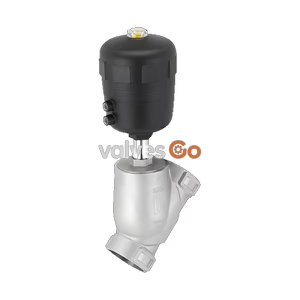
Yoshitake ASV-1000 series pneumatic angle seat valve. Features a 360-degree rotatable actuator, PTFE seat, and high Cv value. Suitable for steam, air, water, and oil up to 200°C and 1.5 MPa.
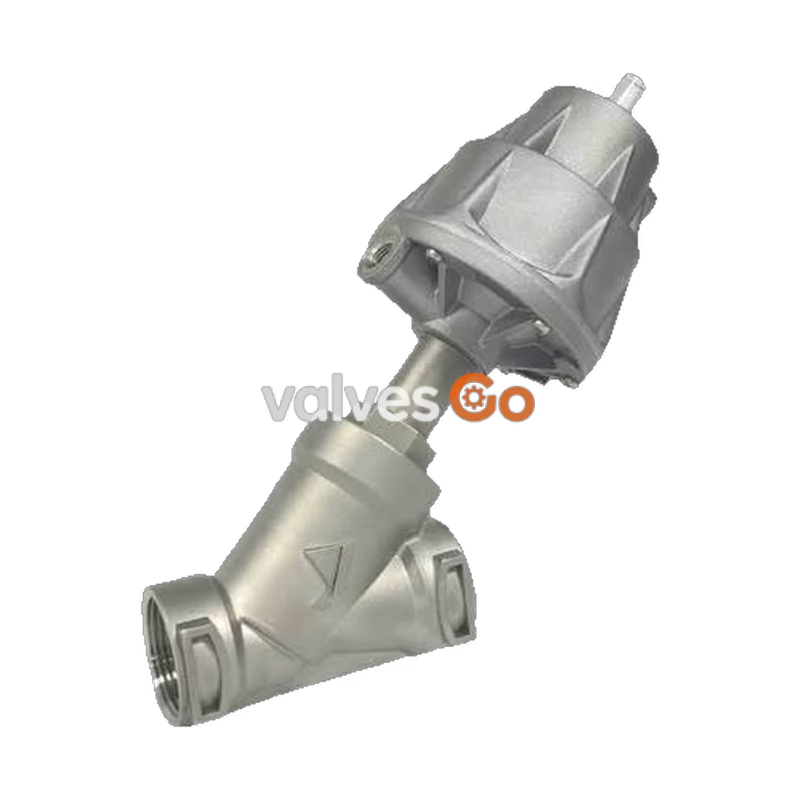
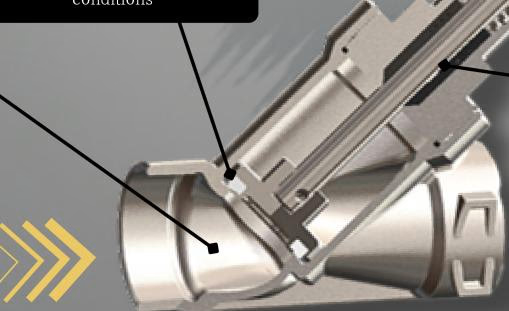
Yoshitake ASV-1000 series pneumatic angle seat valve is designed for large flow rate and low pressure loss. The optimized flow path provides a Cv value 1.4 times higher than conventional products, and the robust construction guarantees durability exceeding 10 million open/close cycles under test conditions. Designed with an aluminum pneumatic actuator and a stainless steel valve body, it uses a PTFE disc for superior sealability. The actuator is 360-degree rotatable, allowing the pilot port to be connected in any direction, simplifying plumbing work and maintenance in restricted spaces. It is an ideal on/off control valve for manufacturing systems, water treatment, chemical processing, alternative energy, and heavy-duty applications.
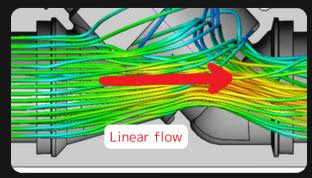
Large Flow Rate and Low Pressure Loss With an optimized flow path design, the Cv value is 1.4 times compared to conventional products. It reduces pressure loss with its angle-seat structure, providing a higher flow rate than solenoid valves or general globe valves.
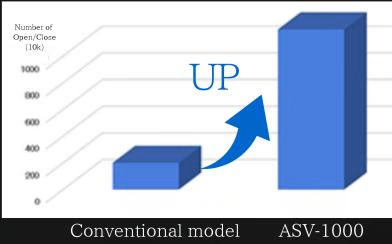
Outstanding Durability Durable with more than 10 million open/close actions.
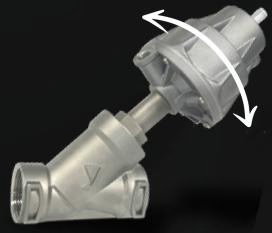
Plumbing and Maintenance The actuator can rotate 360°, and the pilot port can be connected in any direction.
Structure and Sealability
WARNING
Do not use ASV-1000-R for liquids because it may cause water hammer.
| Nominal Size | 15A | 20A | 25A | 32A | 40A | 50A |
|---|---|---|---|---|---|---|
| Cv Value | 8.4 | 13.7 | 22.0 | 34.0 | 50.6 | 64.7 |
| Max. Pressure (ASV-1000/C) | 1.5 MPa | 1.5 MPa | 0.9 MPa | 0.9 MPa | 0.6 MPa | 0.3 MPa |
| Max. Pressure (ASV-1000-R) | 1.5 MPa | 1.5 MPa | 1.5 MPa | 1.2 MPa | 1.0 MPa | 1.0 MPa |
INFO
Working temperature range is -30~200℃ (No freeze). Ambient temperature range is -15~60℃. Actuator material is aluminum, and valve body is stainless steel with a PTFE disc.
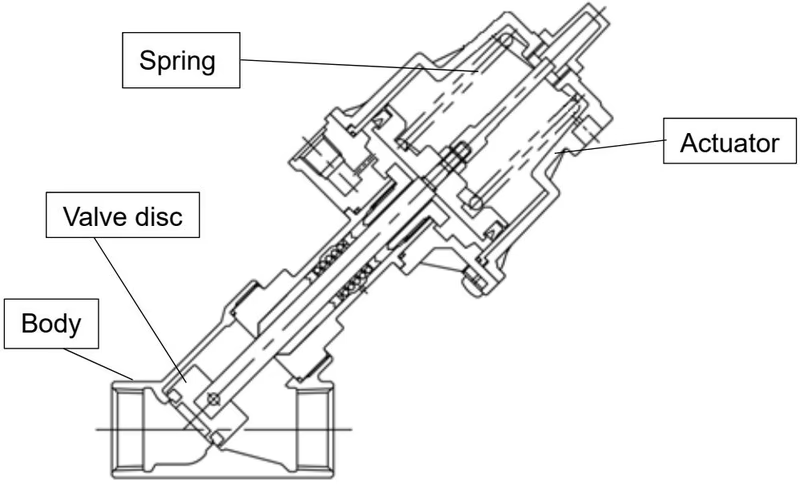
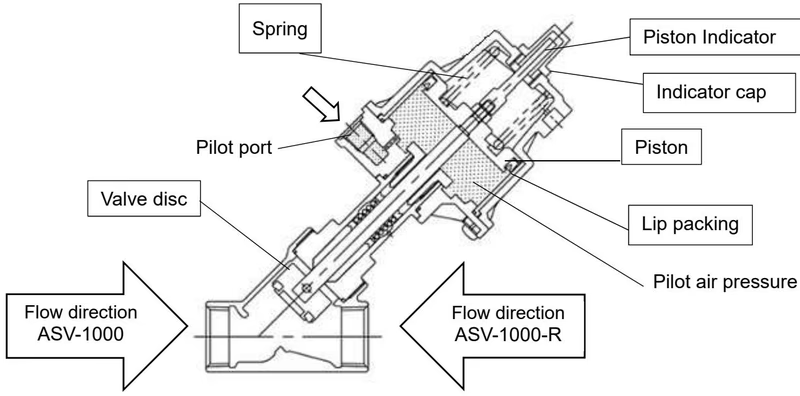
ASV-1000 / ASV-1000-R (Normally Close) When pilot air pressure is not applied in the actuator, the valve disc is closed by the power of the spring.
When compressed air is applied from the pilot port, pilot air pressure is added to the bottom part of the piston, overcoming the load of the spring and pushing the piston up, causing the valve to open.
WARNING
Yoshitake Isolation Valves / Globe Valves
GLV, BSV, FV, and HV series globe valves for threaded and flanged isolation duties.
Explore similar products in our catalog