Stainless Steel

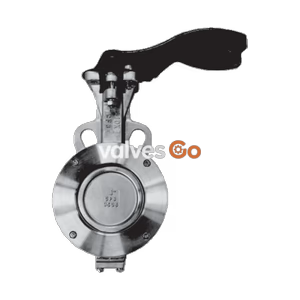
Yoshitake KBFV-1S pneumatic butterfly valve featuring a stainless steel body, double-eccentric structure, and PTFE seat for steam, air, and water applications.
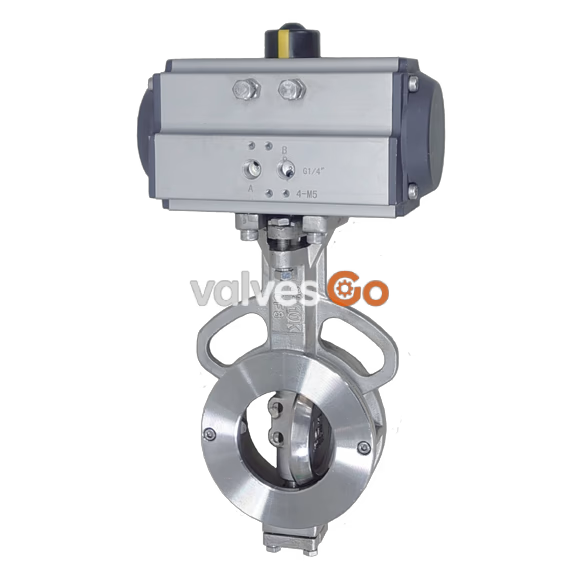
The Yoshitake KBFV-1S is a pneumatic butterfly valve designed with a stainless steel body and a double-eccentric structure. This construction provides excellent sealing performance and a long service life with minimal seat wear. The pneumatic actuator can be easily connected to accessories using NAMUR standard dimensions, making it suitable for automated control in systems handling steam, air, hot and cold water, oil, and other non-hazardous fluids.
| Specification | Details |
|---|---|
| Nominal Size | 50-150A |
| Application Fluid | Steam, air, hot and cold water, oil, and other non-hazardous fluids |
| Material (Body, Cap, Ball) | Stainless steel |
| Material (Seat) | PTFE |
| Connection | Wafer (JIS 10K, ANSI 150lb, EN PN16) |
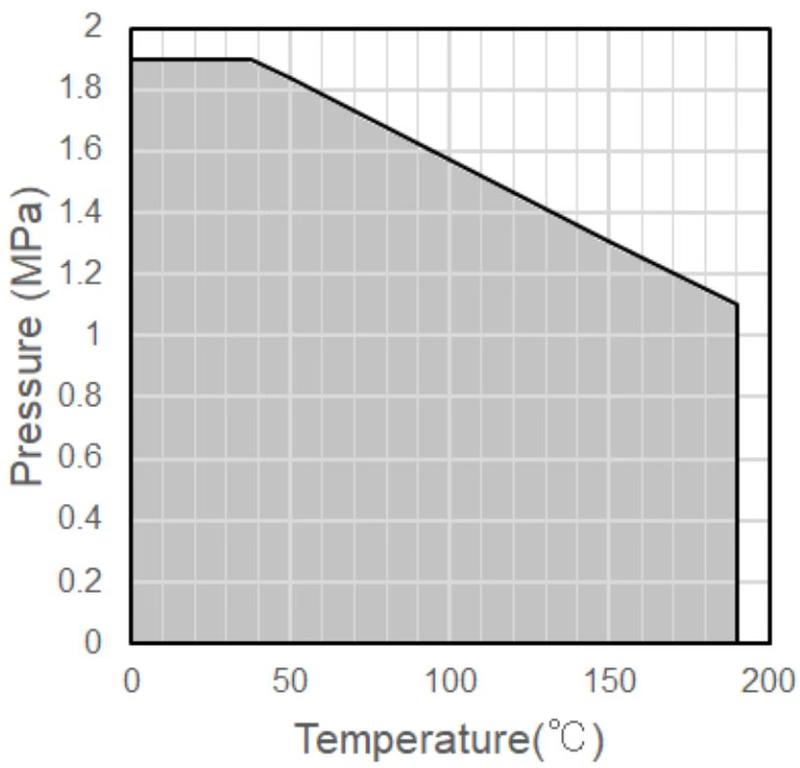
| Maximum Pressure & Temp | According to the Pressure-Temperature rating |
| Piping Orientation | Horizontal or Vertical (inverted horizontal is not allowed) |
| Actuator Model | KA50, KA75, KA110, KA160, KA255 |
|---|---|
| Operating Fluid | Air, nitrogen gas |
| Operating Pressure | 0.4 MPa to 0.8 MPa |
| Ambient Temperature | -20 to +80°C |
| Operation | Double action |
| Operation Angle | 90° ± 5° |
| Body Material | Aluminum alloy |
| Valve Size | Actuator Model |
|---|---|
| 50A, 65A | KA50 |
| 80A | KA75 |
| 100A | KA110 |
| 125A | KA160 |
| 150A | KA255 |
| Actuator | 0.4 MPa | 0.5 MPa | 0.6 MPa | 0.7 MPa | 0.8 MPa |
|---|---|---|---|---|---|
| KA50 | 40 | 50 | 60 | 70 | 80 |
| KA75 | 63 | 78 | 94 | 110 | 125 |
| KA110 | 90 | 113 | 135 | 158 | 181 |
| KA160 | 132 | 165 | 198 | 231 | 264 |
| KA255 | 200 | 251 | 301 | 351 | 401 |
Opening the Valve When the operating air is supplied into port A, the pistons move outward discharging air from port B, and the drive pinion rotates counterclockwise (0° to 90°). As a result, the valve opens. 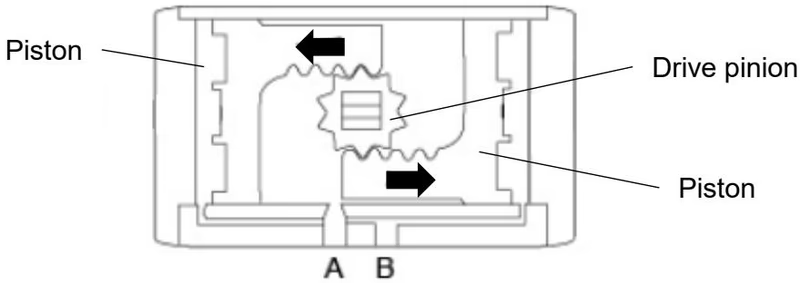
Closing the Valve When the operating air is supplied into port B, the pistons move inward discharging air from port A, and the drive pinion rotates clockwise (90° to 0°). As a result, the valve closes. 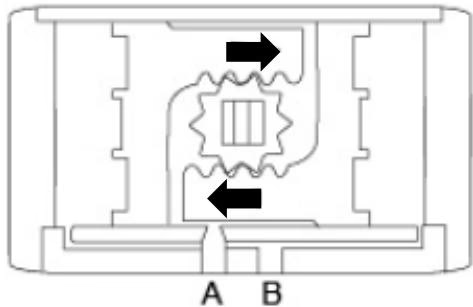
Installation Recommendations
Restrictions
High Temperature Hazard
For high-temperature fluids, do not touch the product directly with bare hands as there is a risk of severe burns. Always ensure the pressure inside the product and piping is at atmospheric pressure before maintenance.
The actuator is lubricated at the factory and does not require further lubrication. Regular inspections should be performed approximately once a year.
| Fault | Possible Cause | Countermeasure |
|---|---|---|
| External leak from the gland part | Nut is loose | Tighten nut. If the leak does not stop, replace the product. |
| Seat leakage | Damaged seat/disc or foreign object caught | Remove the foreign object or replace the product. |
| Actuator not operating | Operating torque is not enough or locked by foreign substances | Check if the operating air pressure is appropriate or clean the valve. |
| Stops at intermediate position | Valve is locked due to foreign substances stuck inside | Clean the valve. |
Yoshitake Isolation Valves / Butterfly Valves
BFV and KBFV series butterfly valves for compact isolation and automated control on larger pipe sizes.
Explore similar products in our catalog