Lift Type

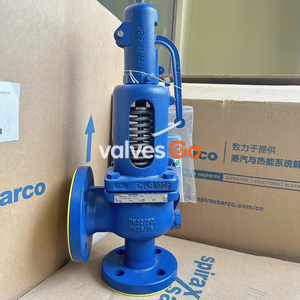
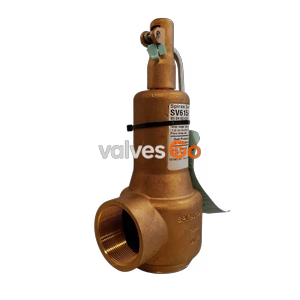
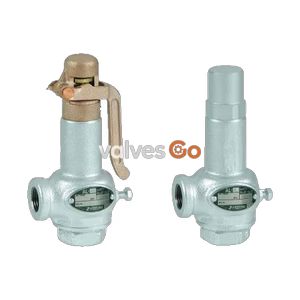
Yoshitake AL-300 series safety relief valves for steam, air, water, and oil. Features ductile cast iron body, closed type structure, and JIS 10K FF flanged connection. Working pressure up to 1.6 MPa.
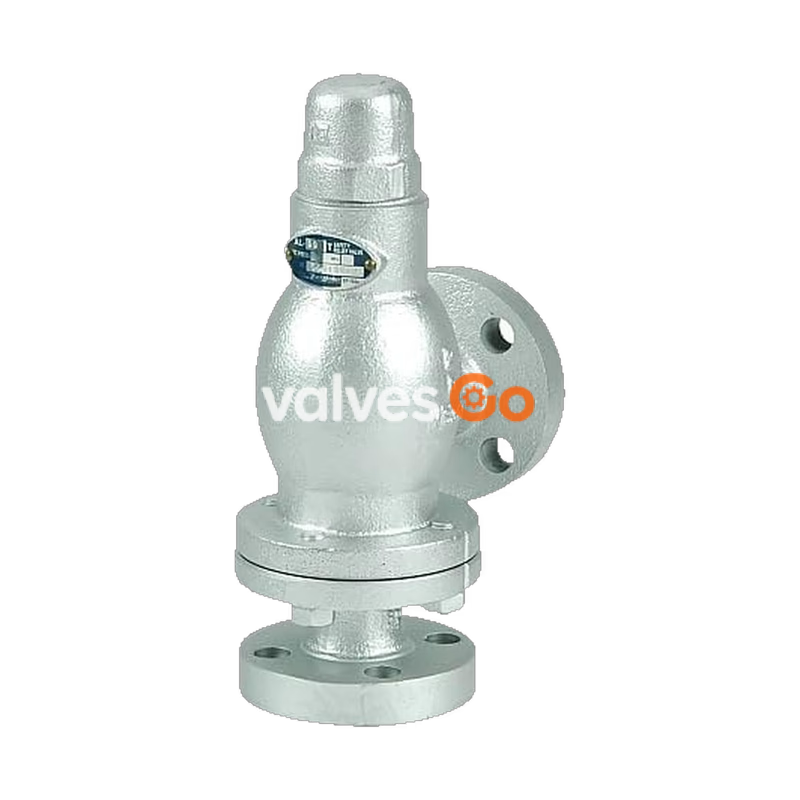
Yoshitake AL-300 series safety relief valves are used in small boilers, various pressure vessels, instrumentation devices, pumps, and at the outlet of pressure reducing valves. The series includes the AL-300 and AL-301 models for steam, as well as the AL-300T and AL-301T models for air, water, oil, and other non-dangerous fluids. These closed-type valves feature a ductile cast iron body and a simple structure that is easy to maintain and adjust.
WARNING
Please confirm that the indications on the product correspond with the specifications of the ordered product model before use. If they are different, please contact the manufacturer without using the product.
AL-300 and AL-301 (For Steam)
| Model | AL-300 | AL-301 |
|---|---|---|
| Structure | Closed type | Closed type |
| Application | Steam | Steam |
| Working pressure | 0.05-1.0 MPa | 0.05-1.6 MPa |
| Max. temperature | 220℃ | 220℃ |
| Valve case, spring case | Ductile cast iron | Ductile cast iron |
| Valve, valve seat | Cast bronze | Stainless steel |
| Connection | JIS 10K FF flanged | JIS 10K FF flanged |
Note: JIS 16K FF flanged when working pressure is more than 1.0 MPa.
AL-300T and AL-301T (For Air, Water, Oil, Non-dangerous fluid)
| Model | AL-300T | AL-301T |
|---|---|---|
| Structure | Closed type | Closed type |
| Application | Air, Cold and hot water, Oil, Other non-dangerous fluid | Air, Cold and hot water, Oil, Other non-dangerous fluid |
| Working pressure | 0.05-1.0 MPa | 0.05-1.3 MPa |
| Max. temperature | 150℃ | 150℃ |
| Valve case, spring case | Ductile cast iron | Ductile cast iron |
| Valve, valve seat | Cast bronze and PTFE | Stainless steel and PTFE |
| Connection | JIS 10K FF flanged | JIS 10K FF flanged |
Note: JIS 16K FF flanged when the working pressure is more than 1.0 MPa. Please contact the manufacturer if working pressure is between 1.31 MPa and 1.6 MPa.
AL-300, AL-301
| Nominal size | L (mm) | H (mm) | H₁ (mm) | d (mm) | Flow area (mm²) | Weight (kg) |
|---|---|---|---|---|---|---|
| 15A | 90 | 245 | 108 | 25 | 49.1 | 4.7 |
| 20A | 90 | 245 | 108 | 25 | 49.1 | 5.0 |
| 25A | 90 | 245 | 108 | 25 | 49.1 | 6.2 |
| 32A | 91 | 285 | 115 | 37 | 107.6 | 8.6 |
| 40A | 91 | 285 | 115 | 38 | 113.5 | 8.8 |
| 50A | 105 | 311 | 132 | 50 | 196.4 | 12.6 |
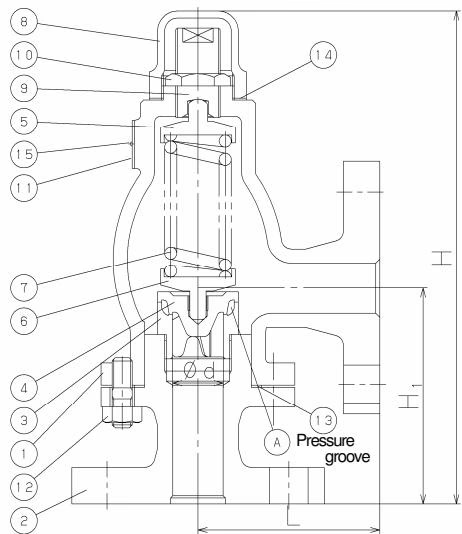
AL-300T, AL-301T
| Nominal size | L (mm) | H (mm) | H₁ (mm) | d (mm) | Flow area (mm²) | Weight (kg) |
|---|---|---|---|---|---|---|
| 15A | 90 | 245 | 108 | 29 | 66.1 | 4.7 |
| 20A | 90 | 245 | 108 | 29 | 66.1 | 5.0 |
| 25A | 90 | 245 | 108 | 29 | 66.1 | 6.2 |
| 32A | 91 | 285 | 115 | 37 | 107.6 | 8.6 |
| 40A | 91 | 285 | 115 | 37 | 107.6 | 8.8 |
| 50A | 105 | 311 | 132 | 50 | 196.4 | 12.6 |
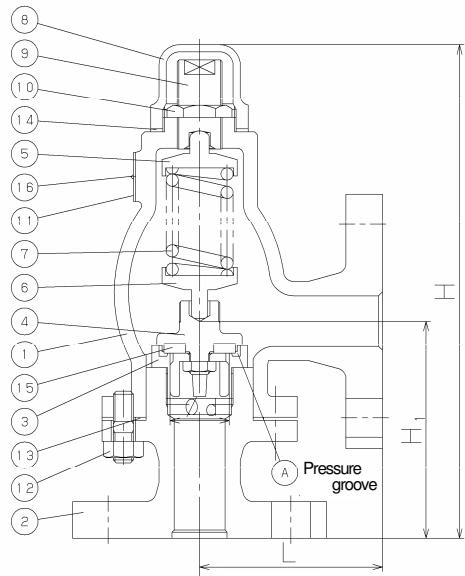
As the inlet pressure approaches the opening pressure, the force of fluid pushing up the valve approaches the force pressing down the valve. The safety relief valve starts to discharge when the inlet pressure reaches around 3% below the opening pressure, and the fluid accumulates gradually on the pressure groove. When the fluid pressure reaches the opening pressure, the valve pops.
Since the inlet pressure of the safety relief valve decreases when the fluid is released into the atmosphere by the pop action of the valve, the fluid lift force is lowered. At this point, the repelling force of the spring becomes larger than the force of fluid lift and thus the valve closes.
DANGER
Do not install any closing device such as a stop valve at inlet and outlet sides of the product. Lead outlet pipe to a place where there is no risk of physical damage even if fluid blows out. Failure to follow this notice may result in injury and scalds.
WARNING
Do not disassemble the product unnecessarily. Do not apply viscous fluid that may make fixation of the valve and valve seat.
Installation Guidelines:
WARNING
Do not apply the product to devices which do not allow any valve seat leakage. The product has allowable valve seat leakage and does not close completely (the valve seat leakage cannot be zero). Do not touch the product with bare hands when fluid is hot.
DANGER
Disassembly and inspection must be done by an experienced professional. Completely discharge inside pressure from the product, piping and equipment prior to disassembly or inspection. When fluid is hot, cool down the product to the condition that it can be touched with bare hands.
Clean the parts before reassembling. Reassemble them in the reverse order of disassembly.
Yoshitake Safety Valves / Relief Valves
AF and AL series safety and relief valves for overpressure protection of steam, water, and air equipment.