Type 2032

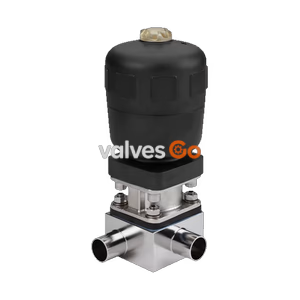
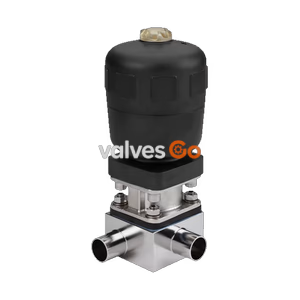
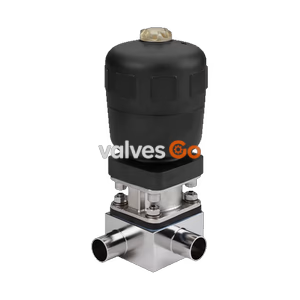
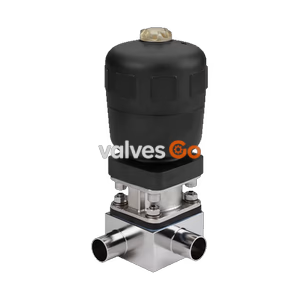
BURKERT Type 2104 (SKU 20033099) pneumatic diaphragm T-valve. Features stainless steel body, PTFE/EPDM diaphragm, 0-10 bar pressure range, and hygienic design for decentralised automation.
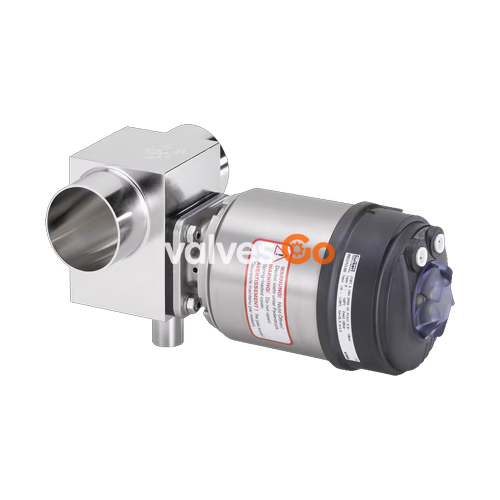
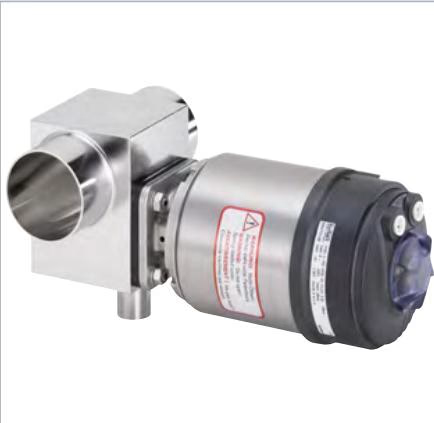
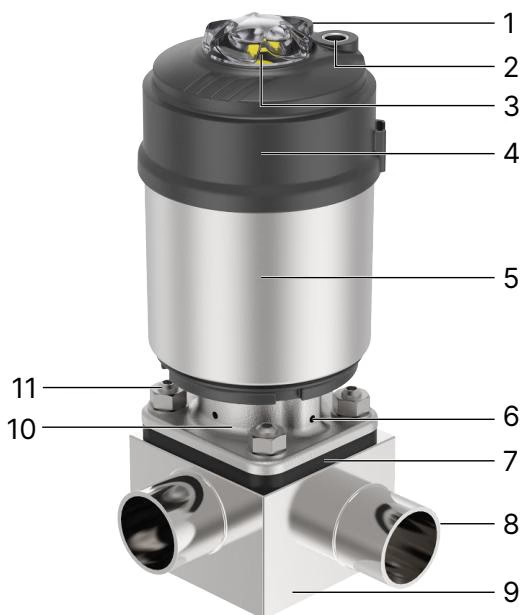
BURKERT Type 2104 (SKU 20033099) is an externally controlled diaphragm T-valve consisting of a pneumatically operated piston actuator, a diaphragm, and a T-valve body. The proven and robust actuator with a stainless steel or PPS housing ensures reliable use in hygienic or aggressive ambient conditions. The flow-efficient valve bodies with minimal dead space enable high flow rates and a wide range of possible uses. The actuator features a compact, autoclavable design with gap-free seals, making it ideal for decentralised automation.
It is a highly integrated system consisting of a valve and an automation unit with integrated pilot air ducts (no intake of ambient air). The valve offers IP65/67 and NEMA Type 4X degrees of protection and displays high chemical resistance. It is designed to meet stringent hygienic requirements, including FDA, USP Class VI, and 3-A Sanitary Standards.
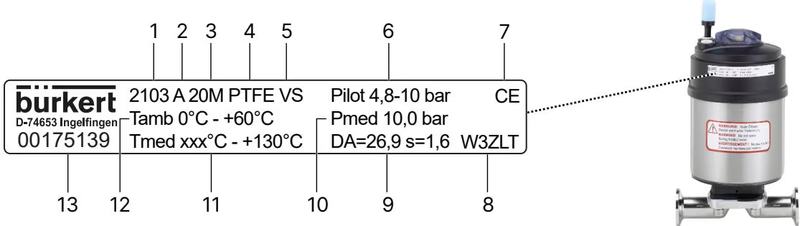
The type label provides essential information including the type, control function, diaphragm size, materials, pilot pressure, operating pressure, and permitted temperatures.
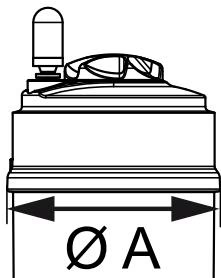
| ∅ A [mm] | Corresponds to actuator size |
|---|---|
| 64.5 | 50 (D) |
| 91 | 70 (M) |
| 120 | 90 (N) |
| 159 | 130 (P) |
| 245 | 225 (L) |
| Diaphragm material | Medium temperature [°C] | Comments |
|---|---|---|
| EPDM (AD) | -10...+143 | Steam sterilisation max. +150°C for 60 min |
| FKM (FF) | 0...+130 | No steam, dry heat max +150°C for 60 min |
| PTFE (EA) | -10...+130 | Steam sterilisation max. +140°C for 60 min |
| Advanced PTFE (EU) | -5...+143 | Steam sterilisation max. +150°C for 60 min |
| GYLON® (ER) | -5...+130 | Steam sterilisation max. +140°C for 60 min |
WARNING
Do not use the diaphragms as a steam shut-off element. The functional properties and service life of the diaphragm can deteriorate as the medium temperature rises.
DANGER
Explosion Hazard (ATEX/IECEx variants): If the device is used in a potentially explosive area, electrostatic charging must be avoided. Ground the actuator and valve body. Only use approved cleaning agents. Do not open the spring-loaded actuator.
The valve can be installed in any position, preferably with the actuator facing up. For circular pipelines, specific inclination angles are recommended to ensure self-draining capabilities.
For supply of medium: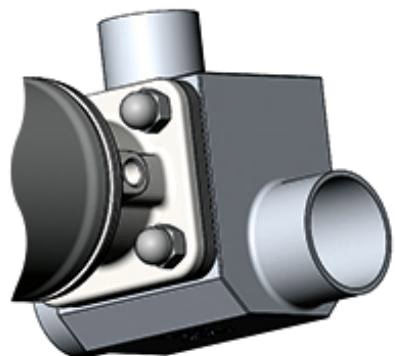
For removal of medium: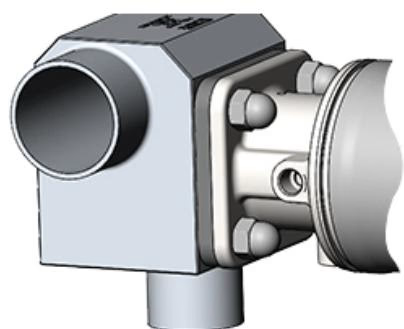
Installation for leakage detection: One of the relief bores in the diaphragm bonnet for monitoring leakages must be at the lowest position.
WARNING
Damage to the diaphragm or the actuator: The diaphragm and actuator can be damaged when welding the valve body into the pipeline. Remove the actuator and diaphragm from the valve body before installation.
When reinstalling the actuator, tighten the body screws crosswise in three stages (approx. 1/3, then 2/3, and then full tightening torque).
| Diaphragm size | EPDM, FKM [Nm] | PTFE, advanced PTFE, GYLON® [Nm] |
|---|---|---|
| 8 | 2 | 2.5 |
| 15 | 3.5 | 4 |
| 20 | 4 | 4.5 |
| 25 | 5 | 6 |
| 40 | 8 | 10 |
| 50 | 12 | 15 |
| 65 | 20 | 30 |
| 80 | 30 | 40 |
| 100 | 40 | 50 |
The device actuator is maintenance-free if operated correctly. The diaphragm and seals are wearing parts.
Explore similar products in our catalog