Type 2032

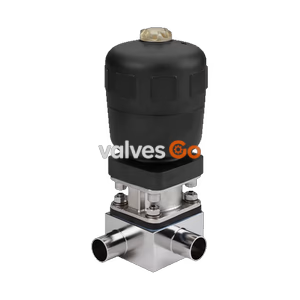
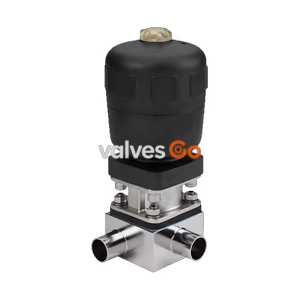
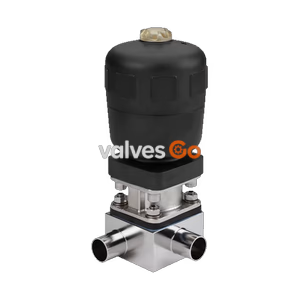
BURKERT 20012212 (Type 2032) is a pneumatically operated 3/2-way NC stainless steel T-diaphragm valve featuring an ASME BPE 3/8" weld connection, PTFE/EPDM diaphragm, PPS actuator, and 0 to 10 bar operating pressure.
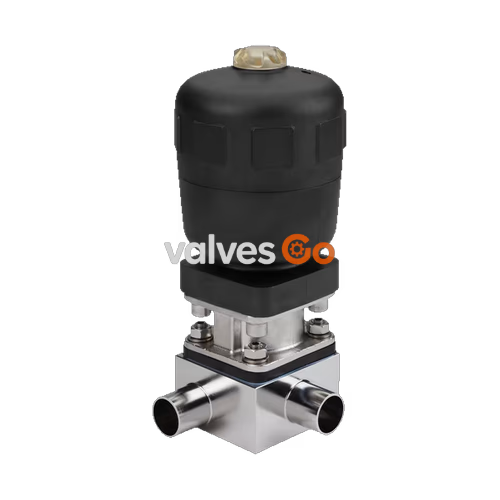
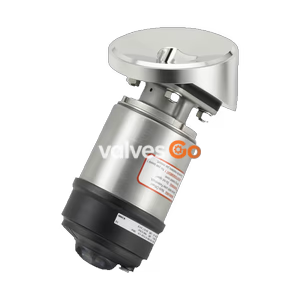
BURKERT 20012212 (Type 2032) is an externally piloted CLASSIC series T-diaphragm valve designed for ultra-pure, sterile, and hygienic process installations. The assembly consists of a pneumatically operated PPS piston actuator (size 40 / C), an internal PTFE/EPDM backing membrane, and a zero-deadleg T-valve body machined from high-purity stainless steel block material 1.4435 (316L). Configured with Control Function A (normally closed by spring force), the valve controls fluid routing across three process ports with weld-end connections configured to ASME BPE and DIN 11866 Series C (3/8" outer diameter, 9.53 mm OD x 0.89 mm wall thickness, DN 10 / diaphragm size 8).
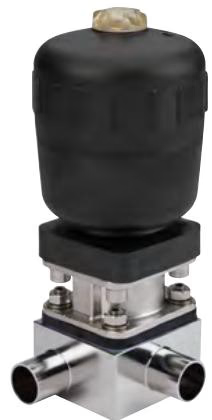
The unit features a static operating pressure range of 0 to 10 bar, an internal electropolished surface finish of Ra ≤ 0.38 µm (ASME BPE SF4 / DIN HE4), and full compatibility with CIP and SIP cleaning regimens. The high-performance PPS actuator body is autoclavable, operates across ambient temperatures from +5 °C to +140 °C, and includes an optical position indicator as standard. Each valve ships complete with an EN 10204 3.1 inspection certificate and a 2.1 factory certification for the diaphragm.
| Specification Parameter | Value / Range |
|---|---|
| Model / SKU | 20012212 |
| Type Series | 2032 CLASSIC |
| Configuration Type | Valve complete, 3/2-way T-pattern |
| Operating Mode | Pneumatic, externally piloted |
| Control Function | Control Function A (normally closed, NC) |
| Diaphragm Size | Size 8 mm |
| Process Port Size | DN 10 (3/8" outer diameter) |
| Port 1 Outer Diameter (OD) | 9.53 mm (0.375") |
| Port 1 Inner Diameter (ID) | 7.75 mm |
| Port 1 Wall Thickness | 0.89 mm (0.035") |
| Connection Standard | ASME BPE, DIN 11866 Series C |
| Connection End | Butt weld end |
| Medium Operating Pressure (Static) | 0.00 to 10.00 bar |
| Nominal Pressure Class | PN 16 (DIN EN 1333), Class 150 (DIN EN 1759) |
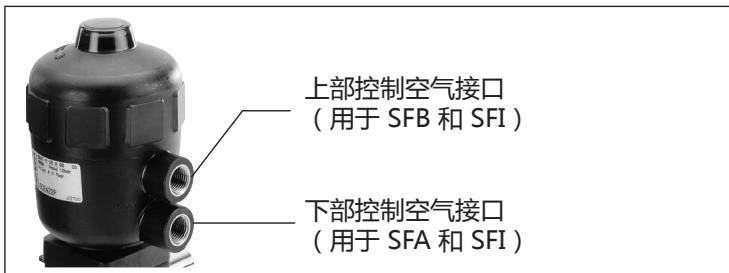
| Pilot Air Pressure Range | 5.0 to 7.0 bar |
| Pilot Air Connection | G 1/8" female thread |
| Medium Temperature (PTFE/EPDM) | -10 °C to +130 °C (SIP max. +140 °C for 60 min) |
| Ambient Temperature (PPS Actuator) | +5 °C to +140 °C |
| Valve Body Material | Stainless steel block 1.4435 (DIN EN 10088) / 316L (ASME BPE) |
| Actuator Housing Material | Polyphenylene sulphide (PPS), size 40 (C) |
| Diaphragm Material | PTFE with EPDM backing membrane (EA code) |
| Piston Seal Material | FKM (fluor rubber) |
| Surface Roughness (Wetted) | Internal electropolished: Ra ≤ 0.38 µm (external Ra ≤ 1.6 µm) |
| Cleanability Compliance | CIP capable, SIP capable |
| Documentation Included | EN 10204 3.1 manufacturer certificate, 2.1 diaphragm certificate |
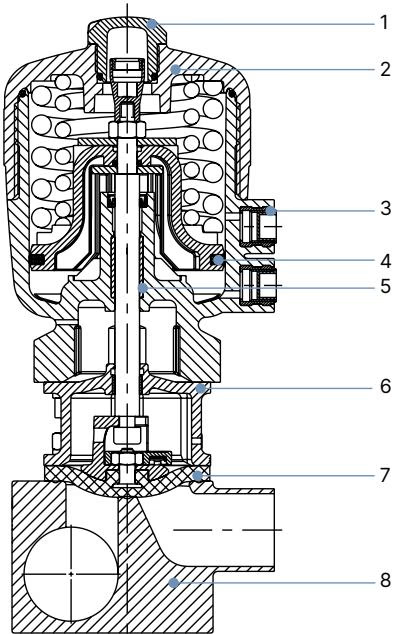
The CLASSIC actuator housing for sizes 40 to 125 uses an autoclavable thermoplastic construction designed for aggressive ambient atmospheres and washdown environments. Individual components are selected for resistance to sterilisation cycles and process chemicals:
| Item No. | Element | Material |
|---|---|---|
| 1 | Transparent Cap | Polysulfone (PSU) |
| 2 | Cover / Actuator Body | Polyphenylene sulphide (PPS standard, PA optional) |
| 3 | Pilot Air Ports | Stainless steel 1.4305 |
| 4 | Piston Seal | Fluor rubber (FKM) |
| 5 | Socket | Sinter metal |
| 6 | Interface | Stainless steel 1.4404 |
| 7 | Diaphragm | PTFE/EPDM (EA), Advanced PTFE/EPDM (EU), EPDM (AD), GYLON®/EPDM (ER) |
| 8 | Valve Body | Stainless steel block material 1.4435 / 316L |
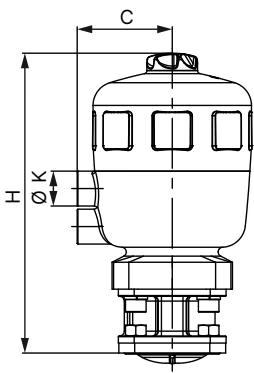
| Diaphragm Size | Actuator Size ∅ | ∅ A [mm] | C [mm] | Pilot Port K | H [mm] | Height with MT85 / Type 8697 (HM + MT85) [mm] |
|---|---|---|---|---|---|---|
| 8 | 40 (C) | 53 | 34 | G 1/8" | 111 | 207 |
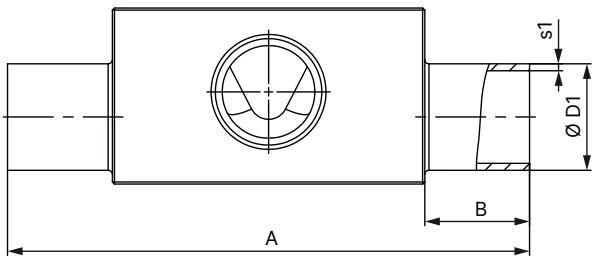
| Diaphragm Size | Main Run DN – Branch DN | Run ∅D1 [mm] | Run Wall s1 [mm] | Branch ∅D2 [mm] | Branch Wall s2 [mm] | A [mm] | B [mm] | C [mm] | E [mm] | F [mm] | G [mm] | H [mm] | I [mm] | Product Key Code |
|---|---|---|---|---|---|---|---|---|---|---|---|---|---|---|
| 8 | 20 to 8 | 19.05 | 1.65 | 6.35 | 0.89 | 88.0 | 25 | 49.90 | 20 | 61 | 32 | 20 | 10.0 | SA93-SA90 |
| 8 | 25 to 10 | 25.40 | 1.65 | 9.53 | 0.89 | 88.0 | 25 | 53.00 | 20 | 68 | 38 | 23 | 13.0 | SODF-SA91 |
| 8 | 40 to 8 | 38.10 | 1.65 | 6.35 | 0.89 | 88.0 | 25 | 59.40 | 20 | 80 | 49 | 28 | 18.0 | SODH-SA90 |
| 8 | 50 to 8 | 50.80 | 1.65 | 6.35 | 0.89 | 98.0 | 30 | 65.80 | 20 | 93 | 59 | 32 | 22.0 | SODI-SA90 |
| 8 | 65 to 8 | 63.50 | 1.65 | 6.35 | 0.89 | 98.0 | 30 | 72.10 | 20 | 106 | 70 | 36 | 26.0 | SODJ-SA90 |
For Control Function A (normally closed), static pressure limits depend on actuator sizing and diaphragm elastomer characteristics:
| Diaphragm Size [mm] | Actuator Size ∅ | Pilot Pressure [bar] | Max Static Operating Pressure: EPDM, FKM [bar] | Max Static Operating Pressure: PTFE/EPDM, GYLON® [bar] |
|---|---|---|---|---|
| 8 | 40 (C) | 5.0 to 7.0 | 10 | 10 |
| 15 | 50 (D) | 5.0 to 7.0 | 10 | — |
| 15 | 63 (E) | 5.0 to 7.0 | 10 | 10 |
| 20 | 63 (E) | 5.5 to 7.0 | 10 | 10 |
| 20 | 80 (F) | 5.0 to 7.0 | 10 | 10 |
| 25 | 80 (F) | 5.5 to 7.0 | 10 | 10 |
| 40 | 100 (G) | 5.5 to 7.0 | 10 | 9 (6 bar for GYLON®) |
| 40 | 125 (H) | 5.5 to 7.0 | 10 | 10 |
| 50 | 125 (H) | 5.5 to 7.0 | 10 | 10 |
Medium Pressure Definition
All stated pressure values represent gauge pressure relative to atmospheric pressure. Static pressure refers to conditions where maximum operating pressure is applied to one side of the valve in the closed state.
BURKERT Type 2032 valves comply with relevant European Directives and global sanitary manufacturing criteria:
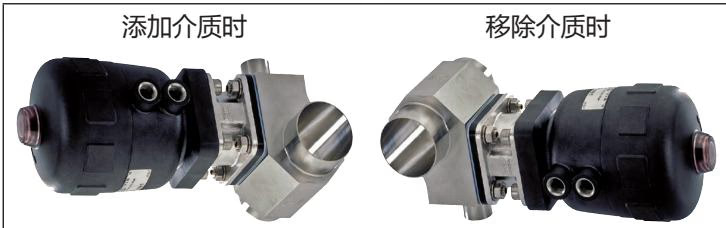
The valve can be mounted in any orientation, but positioning the actuator upright is recommended for prolonged cycle life. When integrating the T-valve into loop distribution piping, observe the manufacturer-defined orientation to prevent fluid hold-up:
Dismount Actuator and Diaphragm Before Welding
Thermal damage from orbital or manual welding will destroy elastomer diaphragms and actuator internal seals. Always remove the actuator and diaphragm prior to welding the valve body into the line.
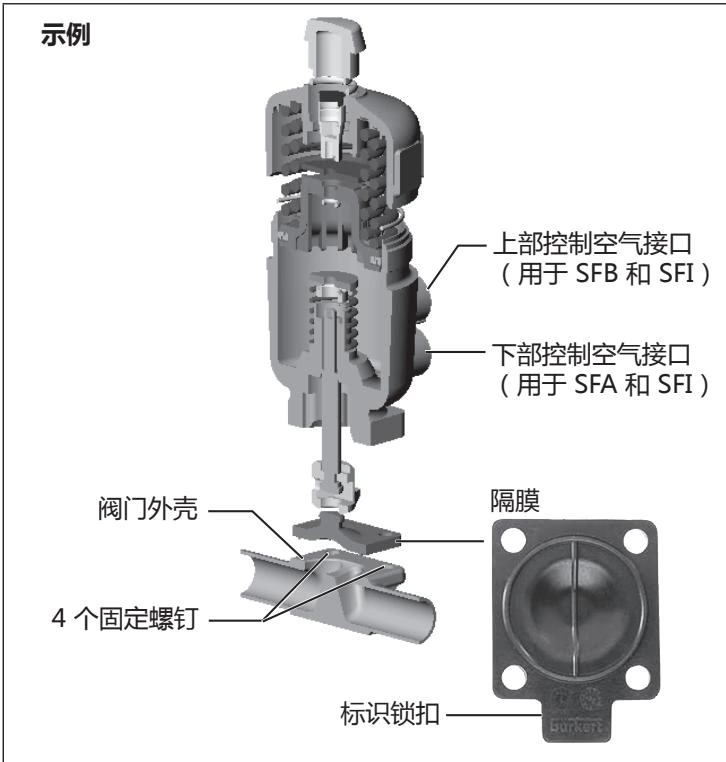
For diaphragm size 8, the valve uses a snap-in mounting mechanism (unthreaded snap connection). Inspection of the overflow weep hole should be performed routinely for any media ingress.
| Diaphragm Size | Forged / Block / Cast Bodies (VS, VG, Block): EPDM/FKM [Nm] | Forged / Block / Cast Bodies: PTFE / Advanced PTFE [Nm] | Tube-Formed Bodies (VA, VP): EPDM/FKM [Nm] | Tube-Formed Bodies: PTFE / Advanced PTFE [Nm] |
|---|---|---|---|---|
| 8 | 2.0 | 2.5 | 2.5 | 2.5 |
| 15 | 3.5 | 4.0 | 3.5 | 4.0 |
| 20 | 4.0 | 4.5 | 4.0 | 4.5 |
| 25 | 5.0 | 6.0 | 7.0 | 8.0 |
| 32 | 6.0 | 8.0 | 8.0 | 10.0 |
| 40 | 8.0 | 10.0 | 12.0 | 15.0 |
| 50 | 12.0 | 15.0 | 15.0 | 20.0 |
| 65 | 20.0 | 30.0 | 20.0 | 30.0 |
Torque Limits
Tightening torque tolerance is +10%. For size 8 PTFE/EPDM diaphragms, exact nominal torque is 2.5 Nm. Over-tightening fasteners will reduce diaphragm operating life. Re-torque fasteners crosswise after the initial steam sterilisation run.
| Component Description | Order Code / Article No. |
|---|---|
| Seal kit for PPS Actuator Size C (Size 8) | 011 465 |
| Replacement Diaphragm Size 8: PTFE (EA) | 677 674 (marking L04/L10) |
| Replacement Diaphragm Size 8: Advanced PTFE (EU) | 679 540 (marking L05/L09) |
| Replacement Diaphragm Size 8: EPDM (AD) | 688 421 (marking E03/E04) |
| Replacement Diaphragm Size 8: GYLON® Laminate (ER) | 693 175 (marking L06/L08) |
Explore similar products in our catalog