Type 2032

Burkert Type 2933 (Model 20050334) manual actuator diaphragm valve. Features a 45mm PPS handwheel, stainless steel bonnet, optical position indicator, and single min-stroke limiter.
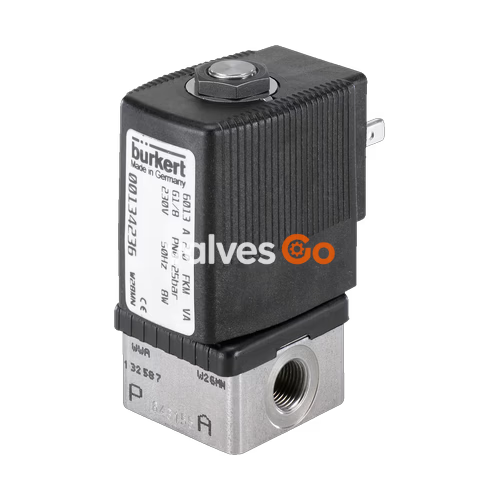
Burkert 20050334 (Type 2933) is a manually operated diaphragm valve actuator designed for hygienic or aggressive ambient conditions. This specific model features a diaphragm size of 25, a 45 mm PPS (Polyphenylene sulphide) handwheel, and a stainless steel bonnet. It is supplied without a valve body or diaphragm seal, allowing for flexible integration into existing systems or as a replacement actuator. The actuator has a compact, autoclavable design and is equipped with an optical position indicator with a scale and a single minimum stroke limiter (closing limiter).
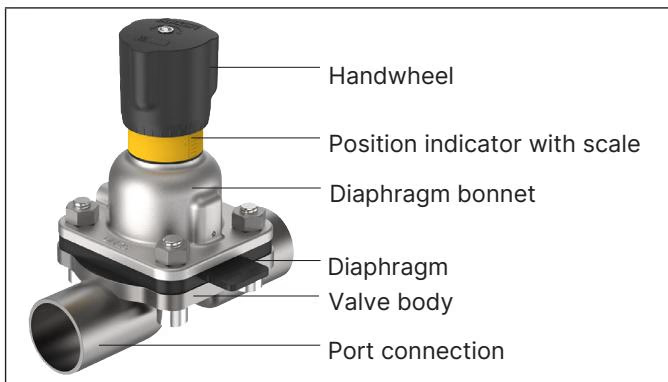
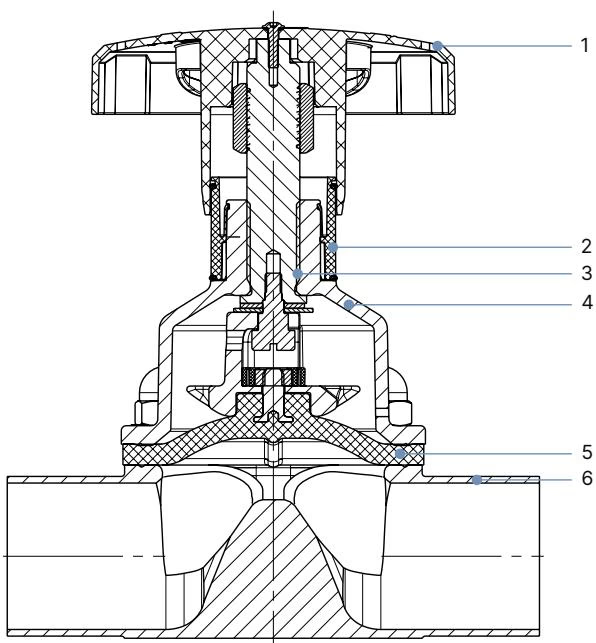
| Element | Material |
|---|---|
| Handwheel | Polyphenylene sulphide (PPS), stainless steel 1.4308 |
| Visual position indicator | Polyamide (PA), Stainless steel 1.4305 |
| Valve spindle | Stainless steel 1.4305 |
| Diaphragm bonnet | Stainless steel 1.4308, polyphenylene sulphide (PPS) |
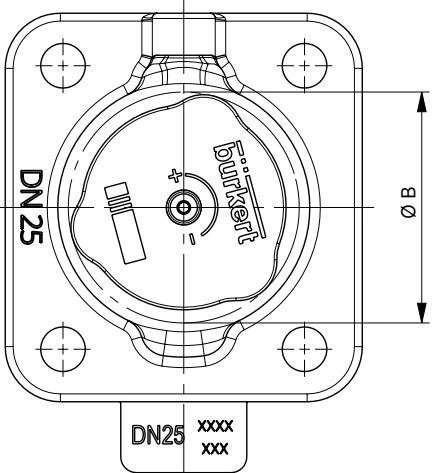
Note: Dimensions in mm, unless otherwise stated.
| Diaphragm size | H1 | H2 | ∅ B |
|---|---|---|---|
| 8 | 54 | 49 | 35 |
| 15 | 84 | 78 | 45 |
| 20 | 95 | 86 | 45 |
| 25 | 101 | 90 | 45 |
By manually overriding the handwheel, the force is transmitted via a spindle and the valve is opened or closed. Turning the handwheel anticlockwise opens the valve, turning it clockwise closes it. To protect the actuator, we recommend not closing the actuator with more force than is required to close the valve tightly.
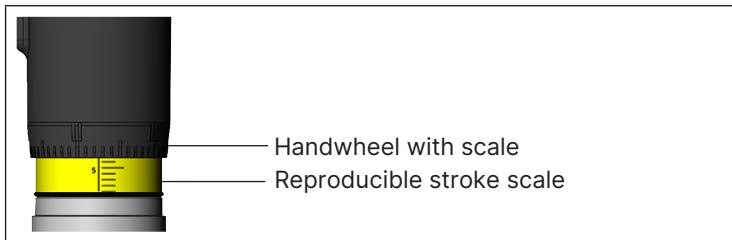
Turning the handwheel counterclockwise reveals the yellow position indicator and the scale marked on it as the valve opens further. The scale on the handwheel determines the rotation position of the handwheel (30 positions for Type 2933). The stroke scale shows the relative position of the valve and serves as a fixation point for determining the rotation position.
INFO
The visibility of the yellow mark is not directly correlated with the closed position of the valve. Depending on the structure of the valve, the marking may not be visible when the valve is open, or be visible when the valve is closed.
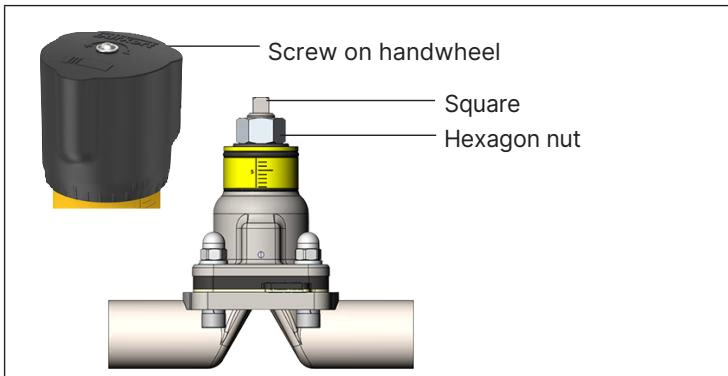
A minimum stroke limit can be set for Type 2933. This setting also serves as a closing limiter to protect the diaphragm. A hexagon nut is used to do this.
WARNING
Damage to the device by incorrectly positioning the hexagon nut.
Explore similar products in our catalog