Type 2032

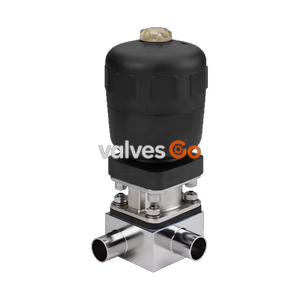
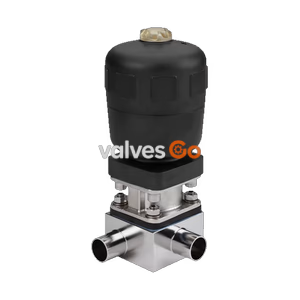
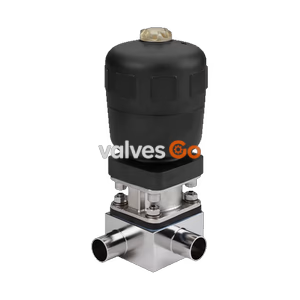
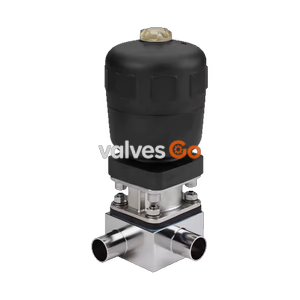
Burkert Type 2103 (SKU 20077396) 2/2-way pneumatic diaphragm valve. Features a stainless steel body, weld end connection, EPDM diaphragm, and PPS actuator for hygienic and sterile applications.
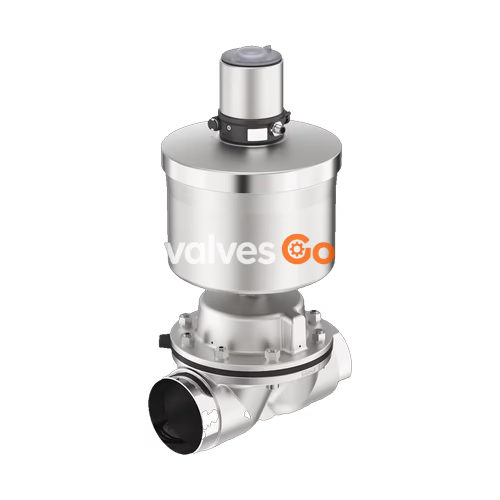
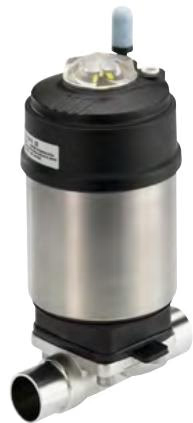
Burkert Type 2103 (SKU 20077396) is an externally controlled diaphragm valve consisting of a pneumatically operated piston actuator, a diaphragm, and a 2-way valve body. The proven and robust actuator with a stainless steel or PPS housing ensures use in hygienic or aggressive ambient conditions. The flow-efficient valve bodies with little dead space enable high flow rates and a wide range of possible uses.
The actuator has a compact, autoclavable design with gap-free seals. The integration of automation units Type ELEMENT is possible in all configuration levels (can be retrofitted); a fieldbus interface can also be integrated. It is a compact, smooth-surfaced and highly integrated system consisting of a valve and an automation unit with integrated pilot air ducts (no intake of ambient air).
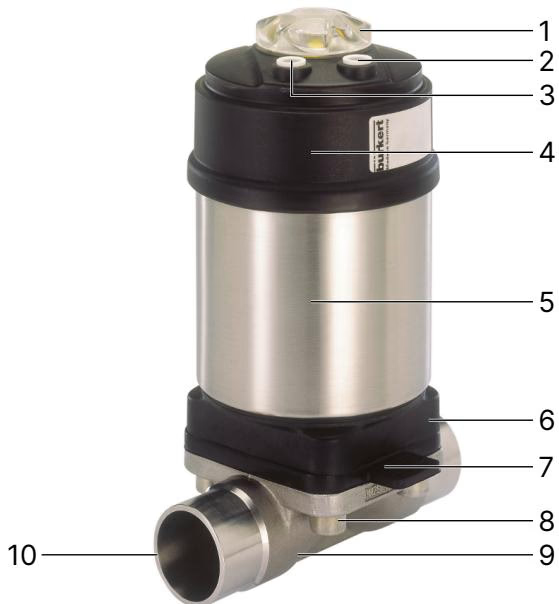
| Component | Description |
|---|---|
| 1 | Transparent cap with position |
| 2 | Pilot air port 1 for CF A, CF B and CF I |
| 3 | Pilot air port 2 for CF I, exhaust port for CF A and CF B |
| 4 | Actuator cover |
| 5 | Actuator housing |
| 6 | Diaphragm bonnet |
| 7 | Diaphragm |
| 8 | Body screw |
| 9 | Valve body |
| 10 | Port connection |
| Property | Value |
|---|---|
| Valve body material | Forged stainless steel, Tube valve body, Cast valve body, Plastic (PVC-C, PVC-U, PP, PVDF) |
| Diaphragm material | EPDM (AD), PTFE/EPDM (EA), Advanced PTFE/EPDM (EU), laminate of GYLON® and EPDM (ER) |
| Actuator material | DN 08...65: PPS; DN 65...100: Stainless steel 1.4308 |
| Maximum pilot pressure | 10 bar (7 bar for actuator size 130, 225) |
| Operating medium | Neutral gases and liquids, highly purified, sterile, aggressive or abrasive mediums |
| Control medium | Neutral gases, air |
| Ambient temperature | -10...+60 °C (autoclavable) |
Explosion Hazard due to Electrostatic Discharge
If statically charged devices or persons discharge suddenly, there is an explosion hazard in the potentially explosive area.
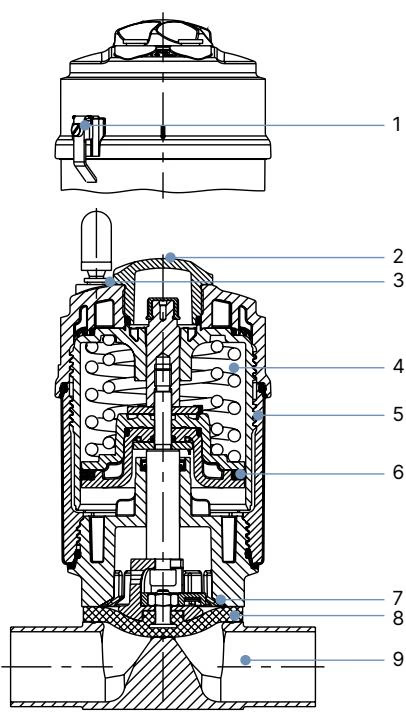
| No. | Element | Material |
|---|---|---|
| 1 | Ground terminal | Stainless steel 1.4301/1.4305 (only for ATEX/IECEx variant) |
| 2 | Transparent cap | Polysulfone PSU |
| 3 | Pilot air ports | Push-in connector PP (standard), Thread G 1/8" stainless steel 1.4305 |
| 4 | Actuator | Polyphenylene sulphide PPS |
| 5 | Cover | Stainless steel 1.4561 (316Ti) |
| 6 | Piston seal | FKM |
| 7 | Interface | Polyphenylene sulphide PPS (standard), Stainless steel 1.4308 (360° rotatable on request) |
| 8 | Diaphragm | EPDM (AD), PTFE/EPDM (EA), Advanced PTFE/EPDM (EU), laminate of GYLON® and EPDM (ER) |
Installation Note
For optimum self-draining, the inclination angle of the pipeline and the self-draining angle of the valve body must be observed. The marking for self-draining angles on the port connection serves as a guide and must point upwards.
Explore similar products in our catalog