PN16

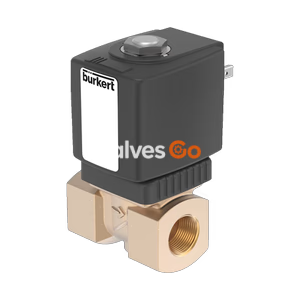
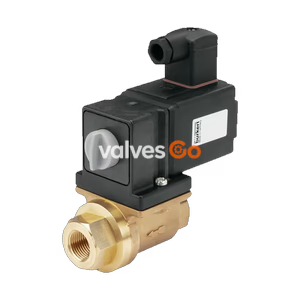
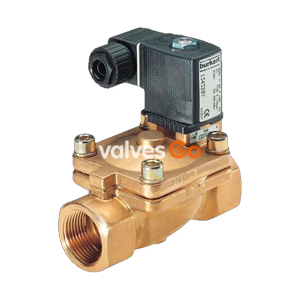
Bürkert 20098485 (Type 5282) is a servo-assisted 2/2-way diaphragm valve featuring an isolating diaphragm, adjustable switching times, manual override, and ATEX/IECEx approvals for aggressive media.
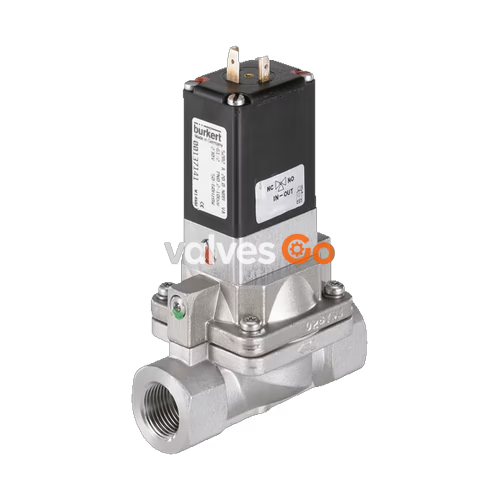
The Bürkert 20098485 (Type 5282) is a servo-assisted 2/2-way diaphragm valve designed for reliable control of neutral, aggressive, and contaminated media. A minimum differential pressure is required for the valve to function properly. The valve features a separating diaphragm that isolates the solenoid system from the operating medium, ensuring high durability and resistance to corrosion.
Depending on the application, various diaphragm material combinations (NBR, EPDM, FKM) and circuit functions are available. The 3/2-way pilot valve can be easily converted from a Normally Closed (NC) to a Normally Open (NO) circuit function by simply rotating it 180° on the armature. The solenoid coils are moulded with a chemically resistant epoxy, and the valve is equipped with a service-friendly manual override for start-up and testing.
| Feature | Specification |
|---|---|
| Orifice | DN 13 to DN 65 |
| Body Material | Brass, Stainless steel (1.4581/316CB, CF3M) |
| Seal Material | NBR, EPDM, FKM |
| Duty Cycle | 100% continuous operation |
| Voltage Tolerance | ±10% |
| Degree of Protection | IP65 (with correctly installed cable plug or terminal box) |
| Installation Position | As required, preferably with actuator upright |
| Ambient Temperature | Max. +55 °C |
Switching Times
The switching times can be adjusted individually by turning the throttle screws located in the housing lid. Typical opening times range from 0.1 to 0.8 s, and closing times from 1.0 to 4.0 s, depending on the orifice and pressure.
The Type 5282 series offers variants that comply with major international standards for hazardous locations and specific applications:
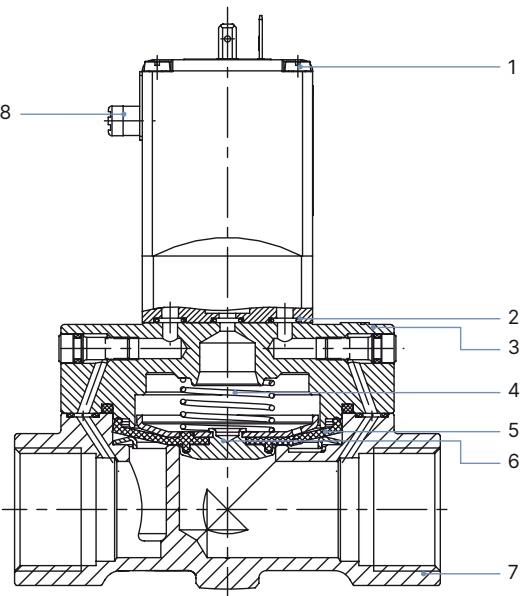
| No. | Element | Material |
|---|---|---|
| 1 | Coil | Epoxy |
| 2 | O-ring | NBR, EPDM, FKM |
| 3 | Cover | Brass, Stainless steel 1.4408/316 (DN 13), Stainless steel 1.4581/316CB (DN 20-50) |
| 4 | Spring | Stainless steel 1.4310/302 |
| 5 | Diaphragm | NBR, EPDM, FKM |
| 6 | Diaphragm holder | Brass, Stainless steel 1.4401/316 |
| 7 | Valve body | Brass, Stainless steel CF3M (DN 13), Stainless steel 1.4581/316CB (DN 20-50) |
| 8 | Manual override | PA |
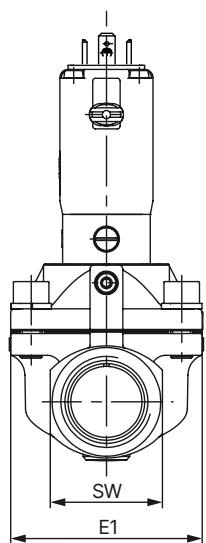
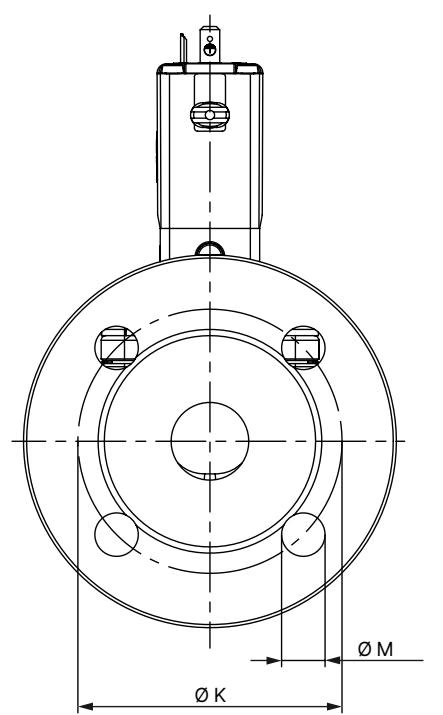
Note: Dimensions D1 and F1 apply to G thread. Dimensions in mm.
DANGER
Risk of injury from high pressure and electrical shock. Before reaching into the device or equipment, switch off the power supply and secure it to prevent reactivation. Turn off the pressure and vent the pipes before loosening any connections.
The delivery condition corresponds to the order key. Turning the pilot valve through 180° changes the circuit function of the valve from Normally Closed (NC) to Normally Open (NO).
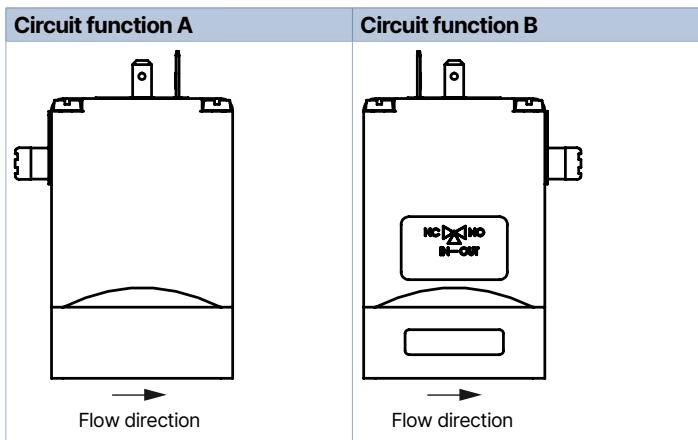
Note: The circuit function can only be changed for variants rated up to 10 bar.
The closing and opening times of the valve can be changed if required using the side throttle screws.
TIP
If closing times are set too short, liquid media can cause high pressure surges (water hammer). This may reduce the service life of the diaphragm and damage other components in the system. Adjust the throttle screws carefully to balance response time and system protection.
| Malfunction | Possible Cause |
|---|---|
| Valve does not switch | Short-circuit or coil interrupted. |
| Medium pressure outside the permitted pressure range. | |
| Manual emergency actuation is locked. | |
| Valve does not close | Internal space of the valve is dirty. |
| Manual emergency actuation is locked. |
Explore similar products in our catalog