
Skip to content
Type 2973DN 250-10 barATEX/IECExFDA/USP Class VI

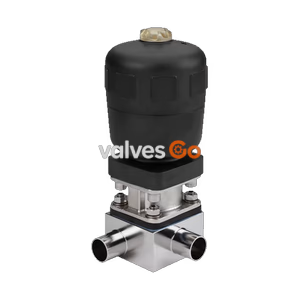
BURKERT 20099757 2/2-Way Manual Diaphragm Valve, Type 2973, DN 25

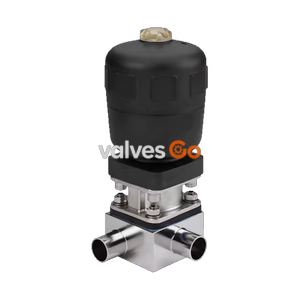
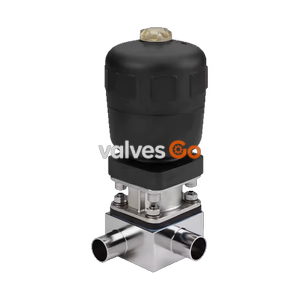
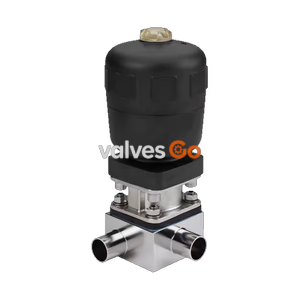
Burkert Type 2973 (SKU 20099757) 2/2-way manual diaphragm valve. Features a stainless steel tube body, advanced PTFE/EPDM diaphragm, and PPS handwheel. Rated for 0-10 bar and -5 to 143°C.
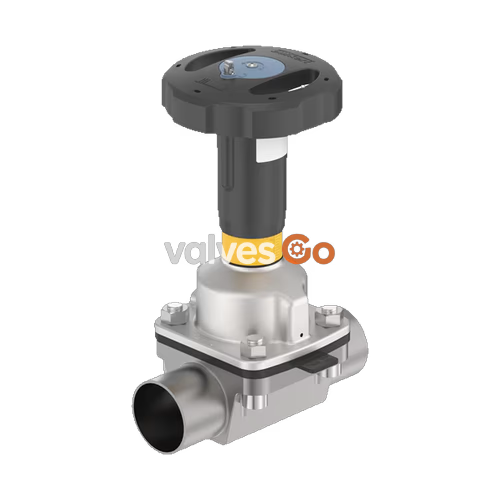
BURKERT 20099757 2/2-Way Manual Diaphragm Valve, Type 2973, DN 25

Burkert Type 2973 (SKU 20099757) manually operated diaphragm valve consists of a manually operated actuator, a diaphragm, and a 2-way body. The manual actuator with a plastic handwheel ensures use in hygienic or aggressive ambient conditions. The flow-optimized valve body with minimum dead space enables high flow values and a wide range of possible applications. The actuator has a compact, autoclavable design and is compatible with all other Bürkert diaphragm valves. The manual actuator possesses a visual position indicator with a reproducible stroke scale, as well as an adjustable minimum and maximum stroke limitation and locking mechanism.

This specific model features a DN 25 welded stainless steel tube body (316L/1.4435 BN2) and an Advanced PTFE diaphragm with an EPDM backing membrane, making it suitable for demanding process environments with temperatures ranging from -5 °C to +143 °C and pressures up to 10 bar.
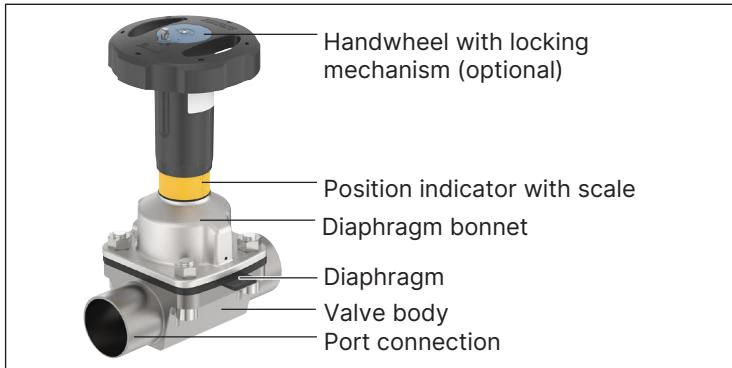
Key Features

  • Valve Body: 2-way stainless steel tube body with welded connections (ASME BPE / DIN 11866 Series C / BS4825).
  • Diaphragm: Advanced PTFE with EPDM backing membrane, offering excellent chemical resistance and hygienic properties.
  • Actuator: PPS (Polyphenylene sulphide) handwheel (45 mm diameter) with optical position indicator and scale.
  • Surface Quality: Internally electrically polished (Ra ≤ 0.38 μm).
  • Approvals: FDA-compliant, USP Class VI-compliant, EC 1935/2004 compliant, and ATEX/IECEx certified for explosion protection.

Burkert 20099757 Type 2973 manual diaphragm valve

Approvals and Conformities

  • Explosion Protection: ATEX (EPS 18 ATEX 2 008 X II 2G Ex h IIC T4...T2 Gb / II 2D Ex h IIIC T135°C...T300°C Db) and IECEx (IECEx EPS 18.0007X). Suitable as a category 2 device for zone 1/21 and zone 2/22.
  • FDA: The diaphragms comply with the Code of Federal Regulations published by the FDA.
  • USP: Diaphragms are tested according to United States Pharmacopeial Convention (USP) Class VI.
  • EC Regulation 1935/2004: Suitable for use with food and beverages.

Technical Data

PropertyValue
Nominal DiameterDN 25 (1")
Port ConnectionWelded (25.4 x 1.65 mm)
Valve Body MaterialStainless Steel Tube 316L/1.4435 BN2
Diaphragm MaterialAdvanced PTFE with EPDM backing membrane
Medium Temperature-5 °C to +143 °C (steam sterilisation +150 °C for 60 min)
Ambient Temperature-10 °C to +130 °C (short-term up to +150 °C), autoclavable
Maximum Medium Pressure10 bar
Kv Value (Water)12.7 m³/h

Function and Position Indicator

By manually overriding the handwheel, the force is transmitted via a spindle and the valve is opened or closed. Turning the handwheel anticlockwise opens the valve, turning it clockwise closes it.
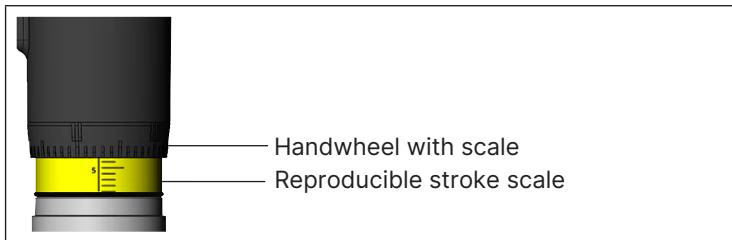
Burkert 20099757 optical position indicator on manual actuator

Turning the handwheel counterclockwise reveals the yellow position indicator and the scale marked on it as the valve opens further. The stroke scale shows the relative position of the valve and serves as a fixation point for determining the rotation position.

TIP

To protect the actuator, we recommend not closing the actuator with more force than is required to close the valve tightly.

Setting Minimum and Maximum Stroke Limits

A minimum and maximum stroke limit can be set for Type 2973. An adjusting sleeve is used for this purpose.
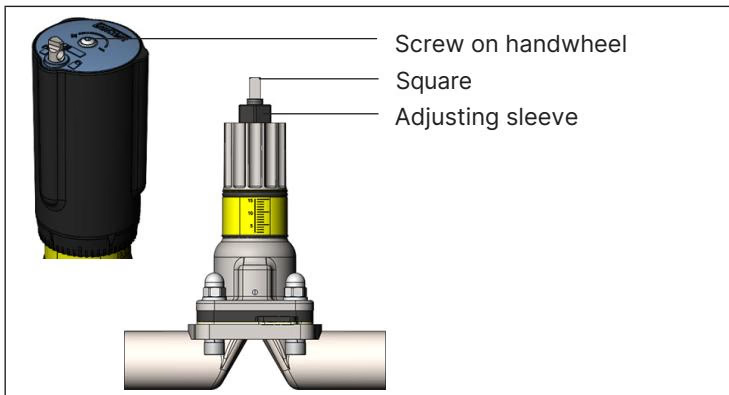
Burkert 20099757 setting minimum and maximum stroke limits

  1. By turning the handwheel clockwise, the valve is moved to the closed position.
  2. Loosen the screw on the handwheel (hexagon socket, width across flats 2) and remove the handwheel.
  3. Screw the adjusting sleeve clockwise until it comes to a stop. Minimum stroke is set.
  4. Mount the handwheel on the actuator. The square on the spindle and the hexagon head of the adjusting sleeve must be correctly aligned.
  5. Move the valve to the desired maximally open position.
  6. Loosen the screw on the handwheel and remove the handwheel.
  7. Pull the adjusting sleeve upwards and at the same time, screw anticlockwise until it comes to a stop. Maximum stroke is set.
  8. Mount the handwheel and tighten the screw with 0.9 Nm.

Locking the Handwheel

For Type 2973, a locking mechanism is available to prevent accidental or unauthorized operation. The handwheel can be locked in multiple positions per revolution.
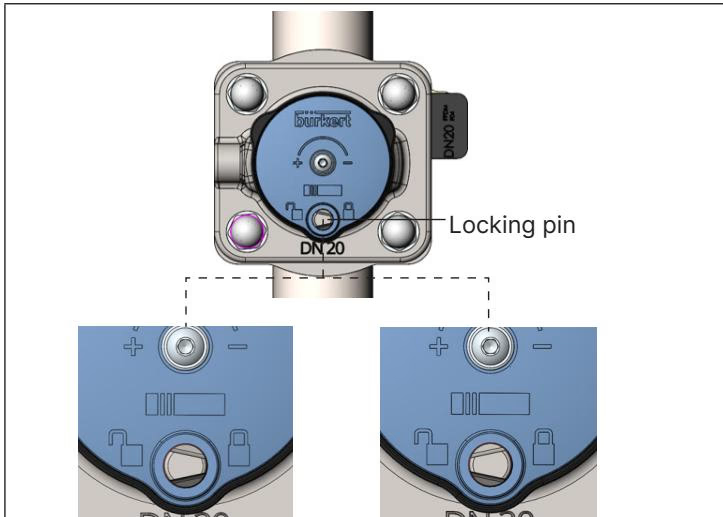
Burkert 20099757 locking mechanism for handwheel

  1. Push the locking pin down and rotate by 180° (either clockwise or anticlockwise). It may be necessary to turn the handwheel slightly so that the locking pin reaches its end position.
  2. The locking pin has a bore (Ø 3.8) and can be secured against unauthorized use with a padlock.

Installation Notes

WARNING

Risk of injury due to high pressure and escaping medium. Switch off the pressure before working on the device or system. Vent or empty the lines.

  • Installation Position: Any, preferably with the actuator facing up.
  • Self-Draining: It is the responsibility of the installer and the operator to ensure self-draining. The angle of inclination should correspond to the angle of inclination of the pipeline (recommended according to ASME BPE).
  • Welding: Dismantle the actuator and diaphragm before welding the valve body into the pipeline to prevent damage to the elastomers and plastics.