PN16

Burkert 20129075 Type 8640 modular valve island for pneumatics. Features a 33mm 6-bank block, 3/2-way valve function, G 1/2 pressure port, and DIN-rail mounting.
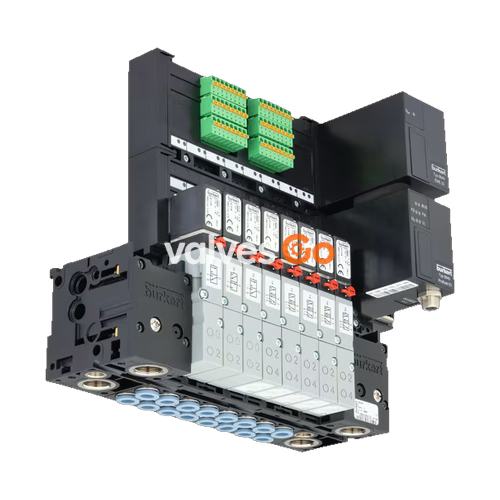
Burkert 20129075 Type 8640 is a modular valve island designed for pneumatic applications. This specific configuration is a 33mm 6-bank valve block featuring a 3/2-way valve function, a G 1/2 pressure port, and G 1/4 working ports located opposite the supply side. It operates reliably within a pressure range of 2 to 8 bar and is suitable for medium temperatures between 0 °C and 50 °C. The unit is designed for standard DIN-rail installation and utilizes a single wiring configuration, providing an IP20 protection rating.
The Type 8640 valve unit system is engineered to solve diverse and complex control problems through its systematic modular construction and combination of pneumatic and electrical interfaces. By assembling a row of pneumatic modules with different numbers of valves, multiple valve functionalities can be realized on a single valve unit. The bodies and connection modules are constructed from high-quality plastic (polyamide) and are easily assembled using built-in snap connectors.

WARNING
Pilot pressure for the pneumatic control unit depends on the pressure of the flow medium; it must be between 2 ... 10 bar (at least 70% of operating pressure). The pressure difference between port 1 and 3 must be at least 2 bar. When temperatures are below 0 °C, operation is restricted to dried air.
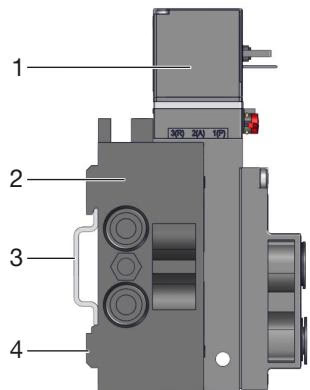
Standard rail installation (EN 50022 35 x 15 or 35 x 7.5):
DANGER
Risk of injury due to high pressure and escaping medium. Switch off the pressure before working on the device or system. Vent or drain the pipes.
DANGER
Risk of injury due to electric shock. Switch off voltage before working on the device or system. Secure against reactivation.
| Fault | Possible Cause | Remedy |
|---|---|---|
| Valves do not switch | No operating voltage or operating voltage too low | Check electrical connection. Ensure operating voltage according to type label. |
| Manual override not in zero position | Bring manual override to zero position. | |
| Pressure supply insufficient or not available | Set up large-volume pressure supply. Minimum operating pressure ≥ 2 bar. | |
| Valves switch with a delay or blow off at the exhaust ports | Pressure supply insufficient or not available | Set up large-volume pressure supply. Minimum operating pressure ≥ 2 bar. |
| Valves are not in the home position (de-energised) during pressure build-up | Apply pressure to the valve block before the valves are switched. | |
| Insufficient ventilation of the exhaust air ducts due to too small or dirty silencers | Use suitably sized silencers or expansion vessels. Clean the dirty silencers. | |
| Impurities or foreign matter in the pilot or pneumatic valve | Apply pulsed pressure to the exhaust air ducts to blow out the impurities. Install a new pilot or pneumatic valve. | |
| Leaky valve blocks | Missing or crushed O-rings between the modules | Identify leak or missing seals. |
| Missing or incorrectly positioned flat seals between valve and base plate | Insert missing seals or replace damaged seals. |
Explore similar products in our catalog