Type 2032

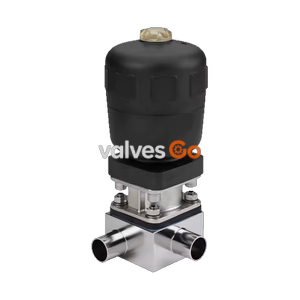
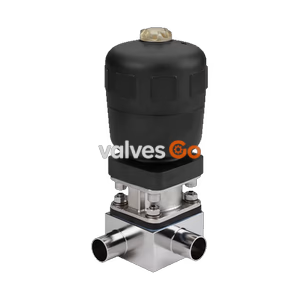
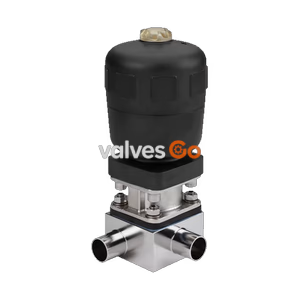
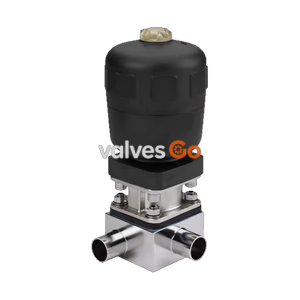
BURKERT 20130434 Type 2934 manually operated T-diaphragm valve. Features DN 32 welded connection, advanced PTFE/EPDM diaphragm, and stainless steel block body for hygienic applications.
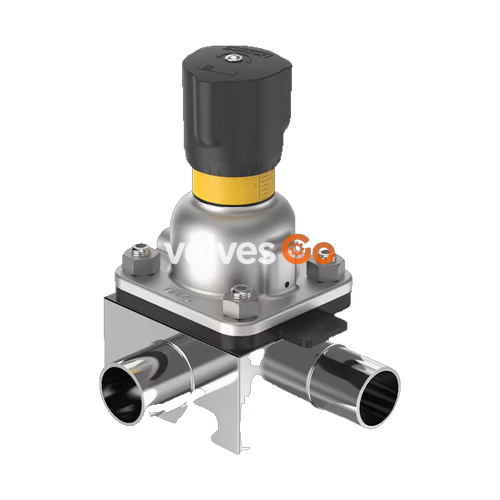
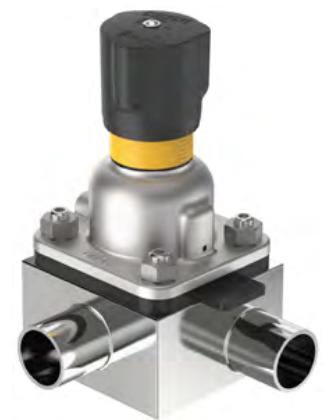
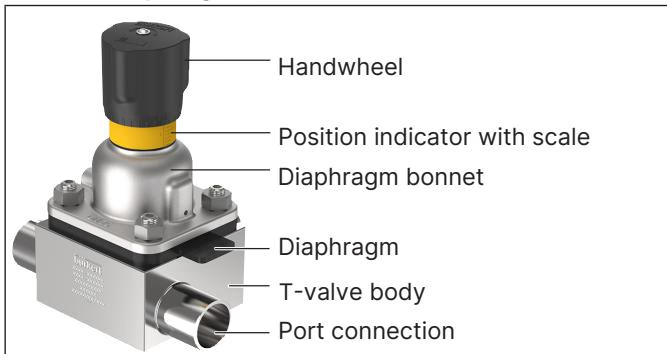
BURKERT 20130434 Type 2934 manually operated T-diaphragm valve consists of a manually operated actuator, a diaphragm, and a T-valve body. The manual actuator with a plastic or stainless steel handwheel is available with a diaphragm bonnet made of stainless steel or plastic, ensuring reliable use in hygienic or aggressive ambient conditions. The flow-optimised valve body with minimum dead space enables high flow values and a wide range of possible applications. The actuator has a compact, autoclavable design and is equipped with an integrated visual position indicator, a reproducible stroke scale, and an adjustable closing limiter.
| Product Properties | Description |
|---|---|
| Block body (VI) | Stainless steel block material 1.4435 according to DIN EN 10088 and 316L according to ASME BPE (Table MM-2.1.1, Ed. 2024) |
| Diaphragm | Advanced PTFE/EPDM (EU) |
| Actuator | Stainless steel/PPS, PPS/PPS, stainless steel/stainless steel |
| Standard surface quality | Internally electrically polished: Ra ≤ 0.38 μm (ASME BPE SF4/DIN HE4) (externally: Ra ≤ 1.6 μm) |
| Operating medium | Neutral gases and liquids, highly purified, sterile, aggressive or abrasive mediums |
| Medium temperature | -5...+143 °C (steam sterilisation + 150 °C for 60 min) |
| Ambient temperature | -10...+130 °C (short-term up to + 150 °C), autoclavable |
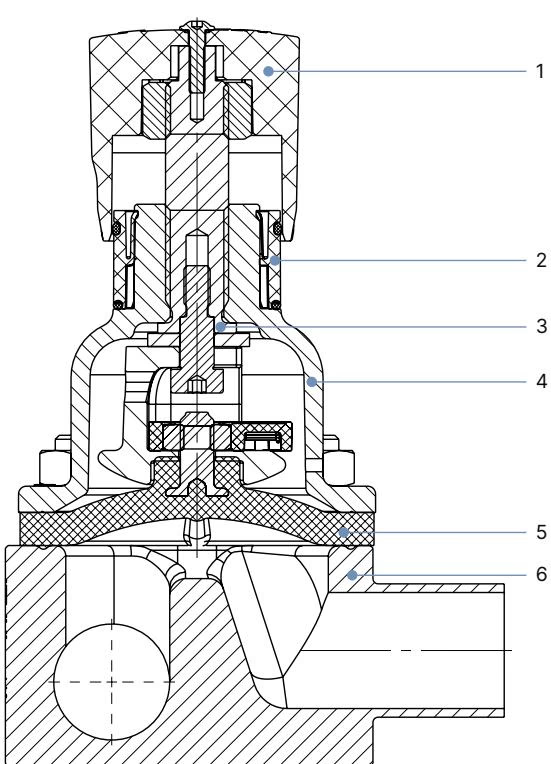
| No. | Element | Material |
|---|---|---|
| 1 | Handwheel | Polyphenylene sulphide (PPS), stainless steel 1.4308 |
| 2 | Visual position indicator | Polyamide (PA), Stainless steel 1.4305 |
| 3 | Valve spindle | Stainless steel 1.4305 |
| 4 | Diaphragm bonnet | Stainless steel 1.4308, polyphenylene sulphide (PPS) |
| 5 | Diaphragm | Advanced PTFE/EPDM (EU) |
| 6 | Valve body | Stainless steel block material |
WARNING
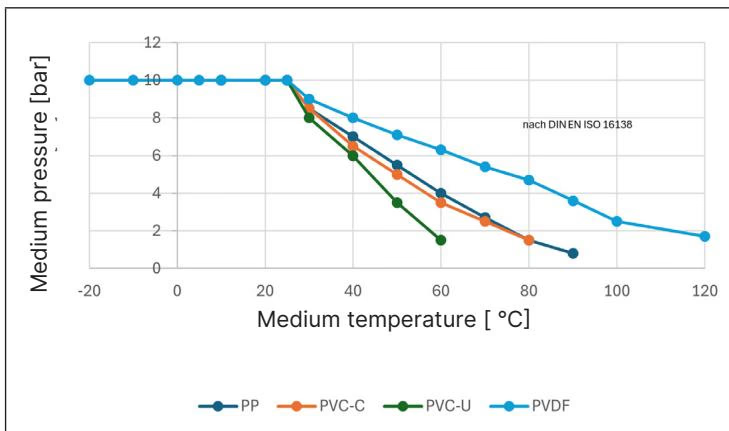
The following tightening torques refer to the static media pressures specified. Excessive torque can shorten the service life of the diaphragm. Pressure data [bar]: Overpressure to atmospheric pressure.
| Diaphragm size | Maximum permitted medium pressure [bar] (PTFE/advanced PTFE) |
|---|---|
| 8 to 40 | 10 |
| 50 | 7 (for PPS handwheel) / 10 |
| 65 to 80 | 10 |
| 100 | 6 |
| Diaphragm size | Maximum static operating pressure [bar] | Tightening torque (PTFE/advanced PTFE) [Nm] |
|---|---|---|
| 8 | 10 | 1.1 |
| 15 | 10 | 1.7 |
| 20 | 10 | 3 |
| 25 | 10 | 3.5 |
| 32 | 10 | 4 |
| 40 | 10 | 7 |
| 50 | 10 | 11 |
| 65 | 10 | 21 |
| 80 | 10 | 23 |
| 100 | 10 | 24 |
DANGER
Risk of injury due to high pressure and escaping medium. Switch off the pressure before working on the device or system. Vent or empty the lines.
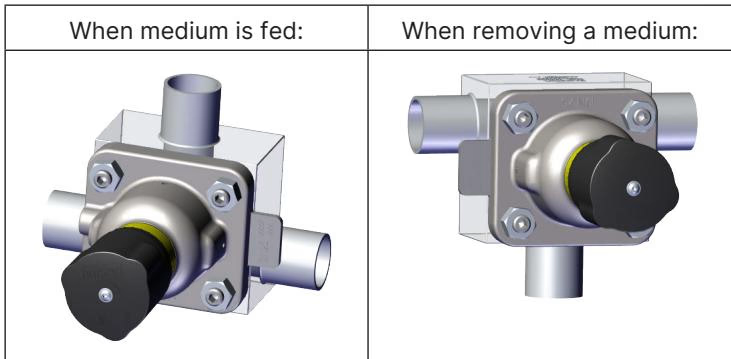
The following installation positions are recommended for the installation of the T-valves in circular pipelines to ensure proper self-draining capabilities:
TIP
For devices with welded connections, dismantle the actuator and diaphragm before welding the valve body to prevent damage. After welding, smooth the body surface if necessary and clean thoroughly before reassembly.
Tighten each fastening screw in 3 stages (approx. 1/3, approx. 2/3, 3/3 of the tightening torque) crosswise. The diaphragm should be positioned and pressed evenly all around the actuator and valve body.
| Diaphragm size | Tightening torques [Nm] (PTFE/advanced PTFE) |
|---|---|
| 8 | 2.5 |
| 15 | 4 |
| 20 | 4.5 |
| 25 | 6 |
| 32 | 8 |
| 40 | 10 |
| 50 | 15 |
| 65 | 30 |
| 80 | 40 |
| 100 | 40 |
When used in accordance with the operating instructions, the actuator of the diaphragm valve is maintenance-free.
Explore similar products in our catalog