Type 2032

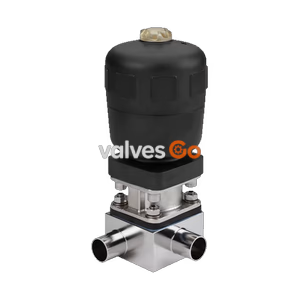
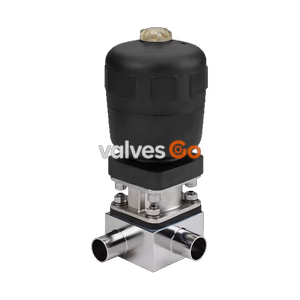
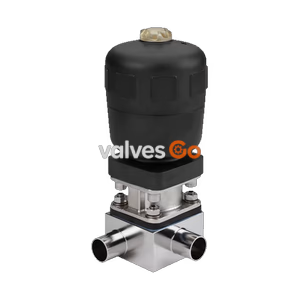
Burkert 347758 Type 2031 2/2-way pneumatic diaphragm valve. Features a stainless steel body, weld end, DN32, advanced PTFE/EPDM diaphragm, and PPS actuator for hygienic and aggressive environments.
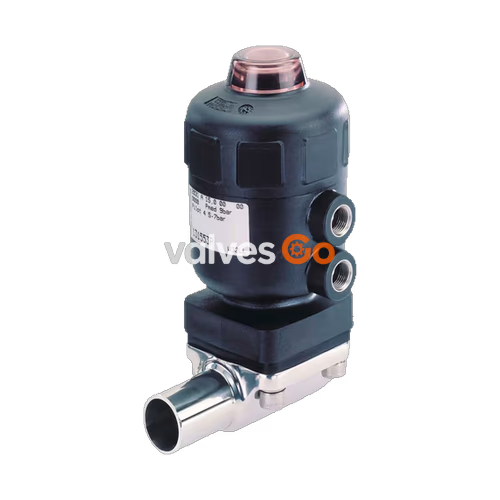
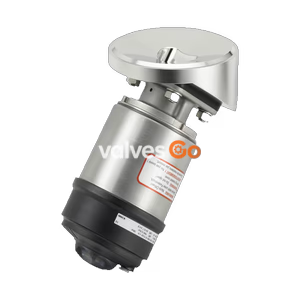
BURKERT 347758 Type 2031 is an externally controlled 2/2-way diaphragm valve consisting of a pneumatically operated piston actuator, a diaphragm, and a stainless steel valve body. The proven and robust PPS actuator ensures reliable operation in hygienic or aggressive environments. The flow-optimised valve body with minimal dead space enables high volume flow rates and a wide range of possible applications.
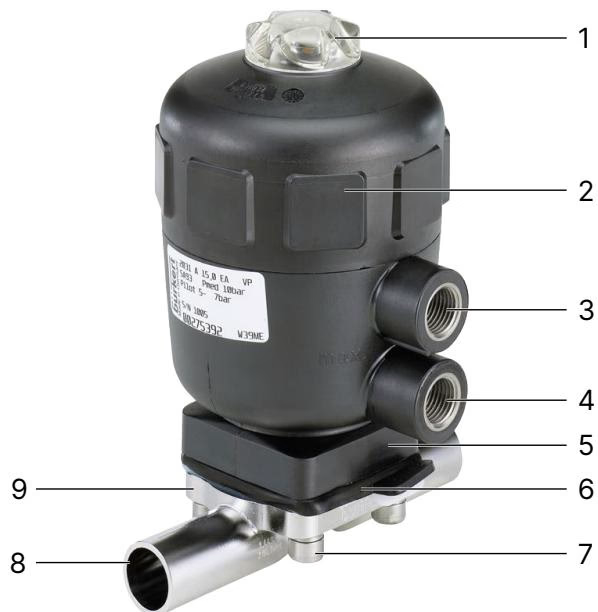
Depending on the control function, spring force or pneumatic pilot pressure generates the closing force. A spindle connected to the actuator piston transfers the force to the compressor, which presses the diaphragm against the weir in the valve body.
Risk of bursting due to overpressure
Do not exceed the maximum permissible pilot pressure or maximum permissible operating pressure. Observe specifications on the type label.
The valve can be installed in any position, preferably with the actuator facing up.
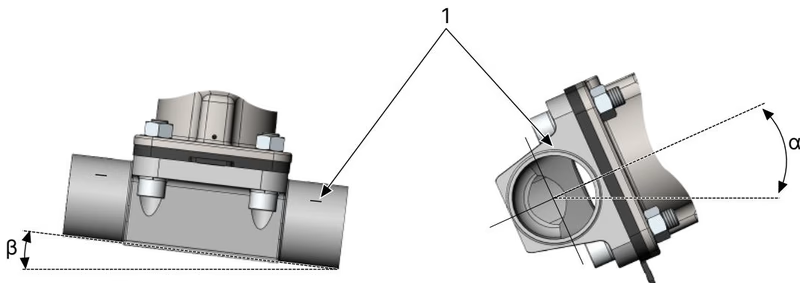
The installer and the operator are responsible for ensuring self-draining. For optimum self-draining, the inclination angle of the pipeline should correspond to the valid ASME BPE standard. The self-draining angle (α) depends on the size of the valve body and the inner diameter of the port connection.
Damage to the diaphragm or the actuator
The diaphragm and actuator can be damaged when welding or bonding the valve body into the pipeline. Remove the actuator and diaphragm from the valve body before installation.
The device actuator is maintenance-free if the instructions are followed. Components subject to natural wear are seals and the diaphragm.
Explore similar products in our catalog