Type 2032

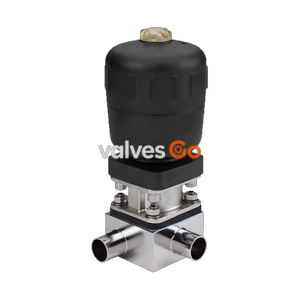
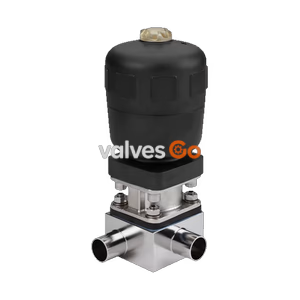
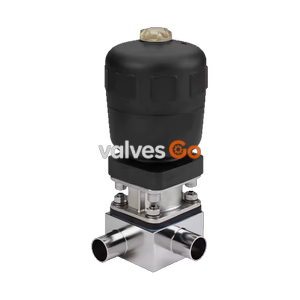
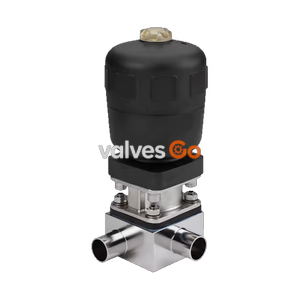
BURKERT 347822 Type 2031 pneumatic 2/2-way diaphragm valve actuator. Features PPS housing, FKM seal, DN8 size, control function A (NC), and CIP/SIP capability.
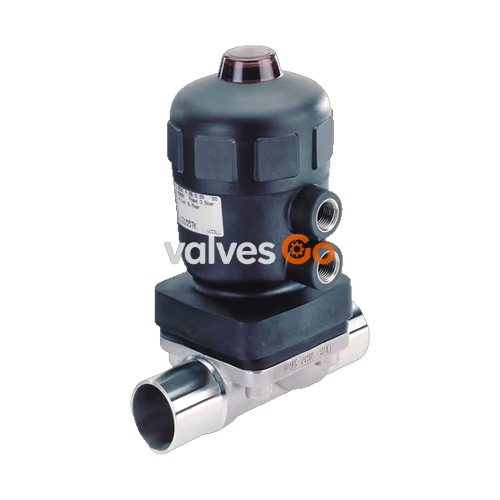
BURKERT 347822 Type 2031 is a pneumatically operated plastic actuator designed for 2/2-way diaphragm valves. It features a Polyphenylene sulphide (PPS) housing and an FKM (Fluor rubber) piston seal. This specific model operates with Control Function A (normally closed by spring force) and is designed to fit a nominal body size of 8 mm (DN8). The actuator is suitable for controlling neutral gases and liquids, as well as highly purified, sterile, aggressive, or abrasive media when paired with an appropriate valve body and diaphragm.
The proven and robust actuator ensures reliable operation in hygienic or aggressive environments. It has a compact, autoclavable design and is CIP (Clean-In-Place) and SIP (Sterilization-In-Place) capable. The actuator is equipped with an integrated optical position indicator as standard.
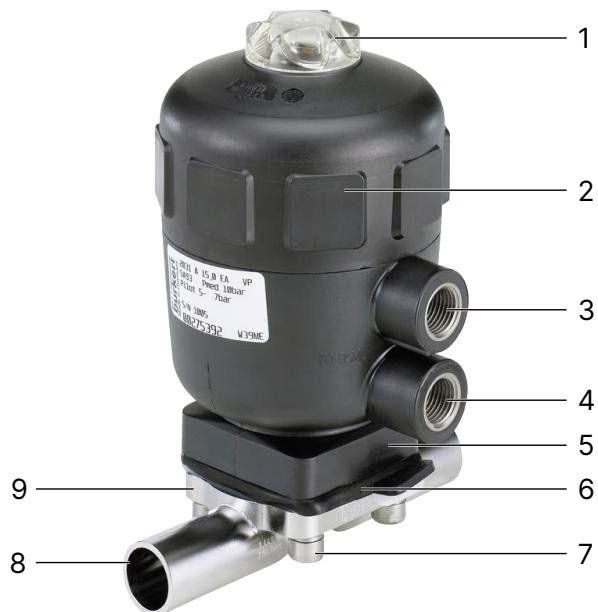

The type label provides essential information including the type, control function, diaphragm size, operating pressure, and pilot pressure.
Ambient temperature for PPS Actuator:
| Actuator housing material | Actuator size | Permissible ambient temperature [°C] |
|---|---|---|
| PPS | ≤80 (F) | +5...+140 |
| PPS | 100 (G), 125 (H) | +5...+90 (short-term up to +140) |
Risk of bursting due to overpressure
If the device bursts, escaping media may cause injuries, burns or scalds. Do not exceed the maximum permissible pilot pressure or maximum permissible operating pressure. Observe specifications on the type label.
Minimum pilot pressure for control function A (Diaphragm size 8, Actuator size 40):
| Diaphragm size | Actuator size | Minimum pilot pressure [bar] at 0 bar operating pressure | Minimum pilot pressure [bar] at maximum operating pressure |
|---|---|---|---|
| 8 | 40 (C) | 5 | 4 |
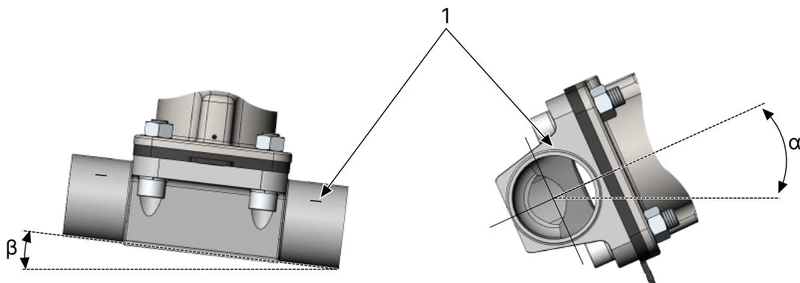
The installer and the operator are responsible for ensuring self-draining. The inclination angle should correspond to the inclination angle of the pipeline. For pipelines, the inclination angles specified in the valid ASME BPE standard are recommended.
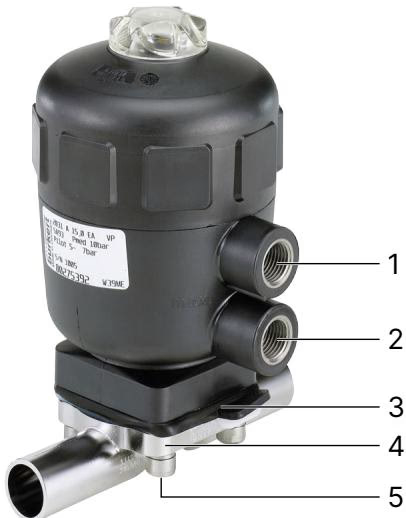
Tightening torques for body connection (Diaphragm size 8):
| Diaphragm size | EPDM, FKM [Nm] | PTFE, advanced PTFE, GYLON® [Nm] |
|---|---|---|
| 8 | 2 | 2.5 |
Risk of crushing
If the compressor is not positioned correctly and the actuator is actuated, this may result in injuries and damage to the device. Before actuating the actuator, ensure that the compressor is in the correct position.
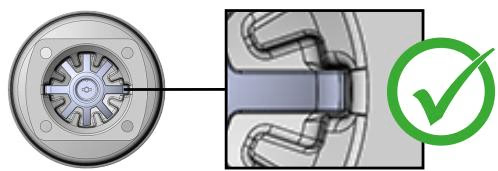
Risk of injury from sudden discharge of pressure and escaping medium
Disassembling a pressurised device can cause medium to escape unexpectedly or a sudden discharge of pressure. This can cause serious injuries. Before disassembly, shut off the pressure and vent all lines.
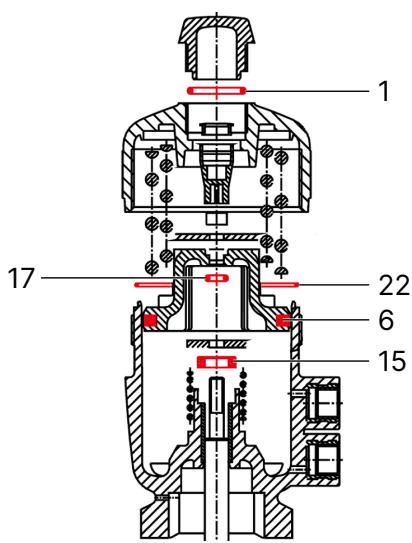
The valve must be completely disassembled to replace all seals. Required spare parts and tools include the seal set, installation wrench for actuator cover, Allen key or slotted screwdriver, open-end wrench, silicone grease OKS 1110-1, and screw lock LOCTITE 274.
Explore similar products in our catalog