
Up to 99.8% Efficiency

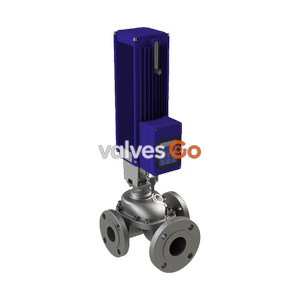
Burkert Type 2300 (SKU 355464) pneumatically operated 2-way angle seat control valve. Features DN32 weld end, stainless steel body, and PPS actuator for media up to 185°C.
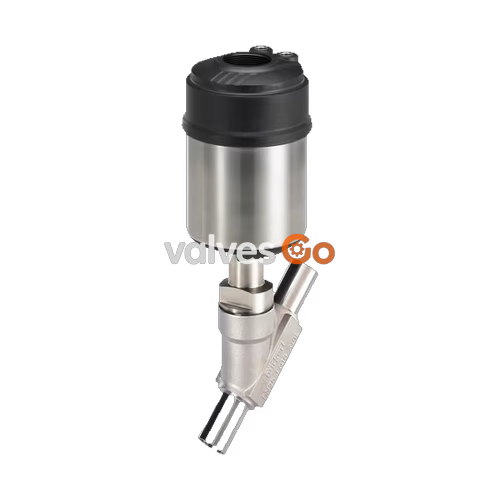
Burkert Type 2300 (SKU 355464) is a pneumatically operated 2-way angle seat control valve ELEMENT. In line with Bürkert’s philosophy for modular valves and sensors, the construction of the Type 2300 angle-seat valve fulfils tough criteria for process environments. Unrivalled cycle life and sealing integrity are guaranteed by the proven self-adjusting packing gland. The parabolic trim results in a flow characteristic approximately 35% larger than conventional control valves.
This specific model (355464) features a DN32 weld end connection, a stainless steel valve body, a stainless steel seat seal, and operates with Control Function A (normally closed). It is designed for media temperatures ranging from -10 °C to +185 °C and operating pressures up to 6 bar. The design enables the easy integration of automation modules whether they are digital electropneumatic positioners or process controllers.

| Product properties | Description |
|---|---|
| Design | Angle seat control valve |
| Nominal diameter | DN 10...DN 65, NPS 3/8...NPS 2 1/2 (Model 355464 is DN 32) |
| Safety setting | Normally closed (control function A), normally open (control function B) |
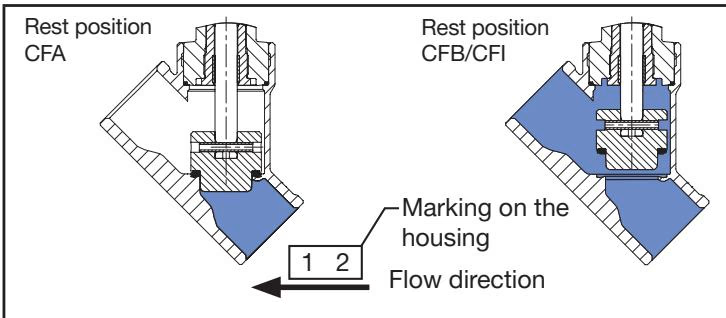
| Flow direction | Flow to open (below seat) |
| Operating pressure | 0 bar(g)...25 bar(g) (Model 355464 max 6 bar) |
| Nominal pressure | PN 25 (DIN EN 1333), Class 150 (DIN EN 1759) |
| Pilot pressure | 5.6 bar(g)...7 bar(g) |
| Seat leakage | DIN EN 60534-4:2006 (Leakage class III and IV for Stainless steel) |
| Operating characteristic | Modified equal percentage |
| Process medium | Steam, water, neutral gases, alcohols, oils, fuels, hydraulic fluids, salt solutions, alkalis, organic solvents and oxygen |
| Medium temperature | -40 °C...+230 °C (Model 355464 is -10 °C to +185 °C) |
| Control medium | Air, neutral gases |
| Degree of protection | IP65/67 |
WARNING!
For control function I – risk of pilot pressure failure! With control function I, the control unit and reset are pneumatic. No defined position is reached during a pressure failure. To ensure a controlled restart of the device, first apply pilot pressure and then activate the medium.
The angle-seat control valve consists of a pneumatically operated piston actuator, a control cone and a 2/2-way angle-seat valve body. The control cone is modularly connected to the actuator spindle via a spring-type straight pin, and can thus be quickly replaced.
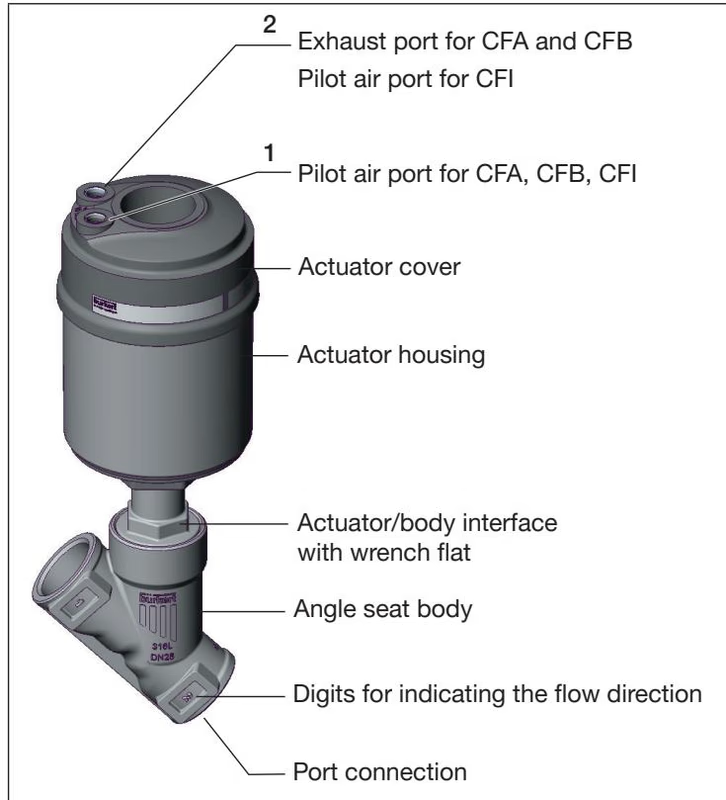
Depending on the variant, the valve is closed against the medium flow either with spring force (control function A) or pilot pressure (control function B or I). Because the medium pressure is below the control cone, it helps open the valve.
WARNING!
Valve leak if there is too little minimum pilot pressure or high medium pressure! Minimum pilot pressure for CFB and CFI that is too low, or failing to meet the permitted medium pressure, can cause a leak in the valve seat. Adhere to minimum pilot pressure and do not exceed the medium pressure.
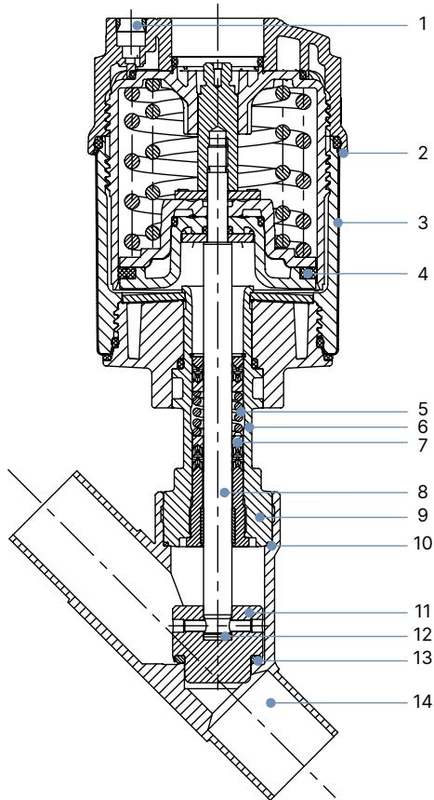
| No. | Element | Material |
|---|---|---|
| 1 | Pilot air ports | Push-in connector PP (standard) |
| 2 | Actuator cover | PPS |
| 3 | Actuator casing | Stainless steel 1.4561 (316Ti) |
| 4 | Piston seal | FKM |
| 5 | Spring | Stainless steel 1.4310 |
| 6 | Pipe | Stainless steel CF3M |
| 7 | Packing gland | PTFE V-rings (filled), with spring compensation |
| 8 | Spindle | Stainless steel 1.4401 (316)/1.4404 (316L) |
| 9 | Spindle guide | Stainless steel 1.4404 (316L) |
| 10 | Body seal | Graphite or PTFE |
| 11 | Control cone | Stainless steel 1.4571 |
| 12 | Spring pin | Stainless steel 1.4310 |
| 13 | Seat seal | Stainless steel 1.4571, PTFE or PEEK (Model 355464 uses Stainless steel) |
| 14 | Valve body | Stainless steel CF3M |
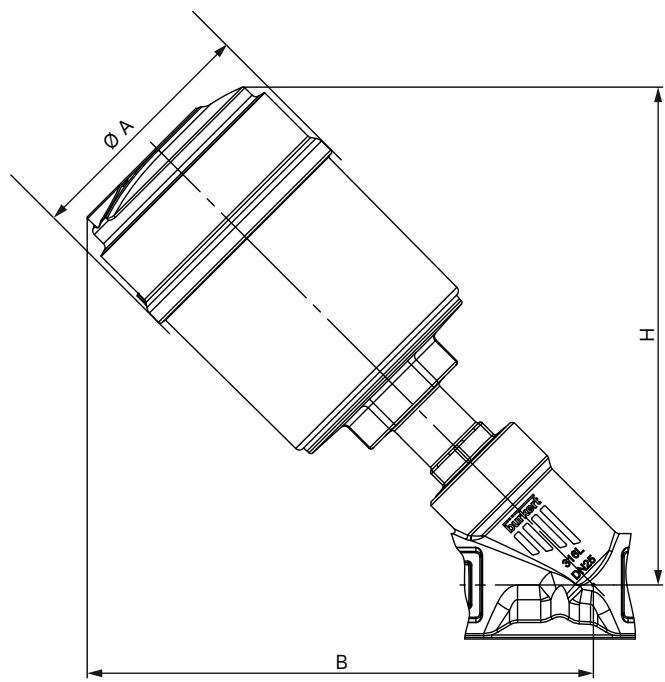
| Nominal diameter (DN) | Actuator size | Ø A | B | H |
|---|---|---|---|---|
| 15 | 50 (D) | 64.5 | 166 | 163 |
| 20 | 70 (M) | 91 | 189 | 186 |
| 25 | 70 (M) | 91 | 191 | 188 |
| 32 | 90 (N) | 120 | 201 | 197 |
| 40 | 130 (P) | 159 | 296 | 296 |
| 50 | 130 (P) | 159 | 312 | 312 |
(Note: Dimensions in mm. The dimensions for B and H are maximum dimensions and may be up to 6 mm less, depending on the nominal diameter and standard.)
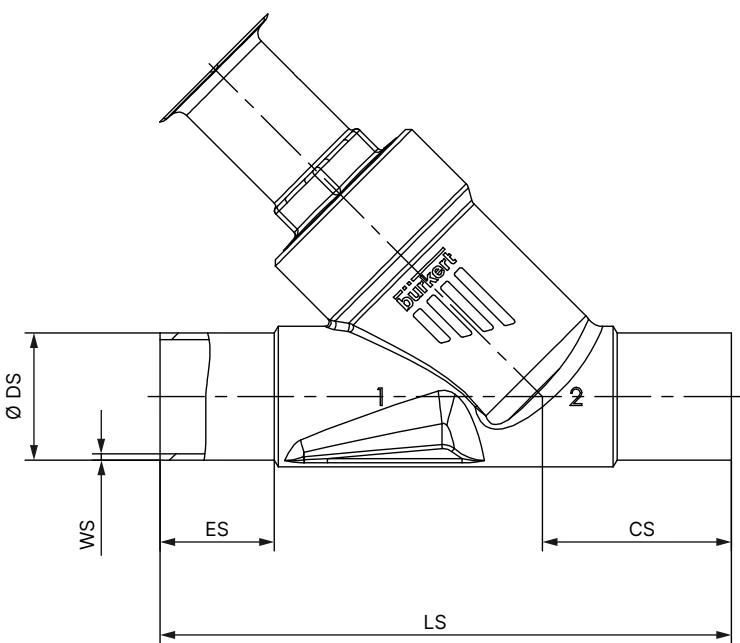
| Nominal diameter (DN) | DIN EN ISO 1127 / ISO 4200 (ES / CS / LS / Ø DS / WS) | DIN 11850-2 / DIN 11866 series A (ES / CS / LS / Ø DS / WS) |
|---|---|---|
| 15 | 19 / 34 / 100 / 21.3 / 1.6 | 19 / 34 / 100 / 19 / 1.5 |
| 20 | 20 / 39 / 115 / 26.9 / 1.6 | 20 / 39 / 115 / 23 / 1.5 |
| 25 | 26 / 43 / 130 / 33.7 / 2.0 | 26 / 43 / 130 / 29 / 1.5 |
| 32 | 26 / 45 / 145 / 42.4 / 2.0 | 26 / 45 / 145 / 35 / 1.5 |
| 40 | 26 / 49 / 160 / 48.3 / 2.0 | 26 / 49 / 160 / 41 / 1.5 |
| 50 | 26 / 50 / 175 / 60.3 / 2.0 | 26 / 50 / 175 / 53 / 1.5 |
DANGER!
Risk of injury from high pressure in the system! Before loosening lines and valves, turn off the pressure and vent the lines.
Risk of injury from electric shock! Before working on the device or system, switch off the power supply. Secure against reactivation.
WARNING!
Risk of injury when opening the actuator! The actuator contains a spring under tension. When the actuator is opened, the spring will jump out and may cause injuries. Do not open the actuator.
NOTE!
Damage to the seat seal or seat contour! When removing or installing the actuator, the valve must be in the open position. For control function A, pressurise the pilot air port 1 with compressed air (5 bar) to open the valve.
Explore similar products in our catalog