

Skip to content
Free FloatStainless SteelThermostatic Air VentInline Repairable

TLV NEW SS1-M2 SS1-M2 Series Stainless Steel Free Float Steam Trap

TLV SS1-M2 series stainless steel free float steam trap for steam mains and tracer lines. Features three-point seating and a thermostatic air vent for fast start-up.
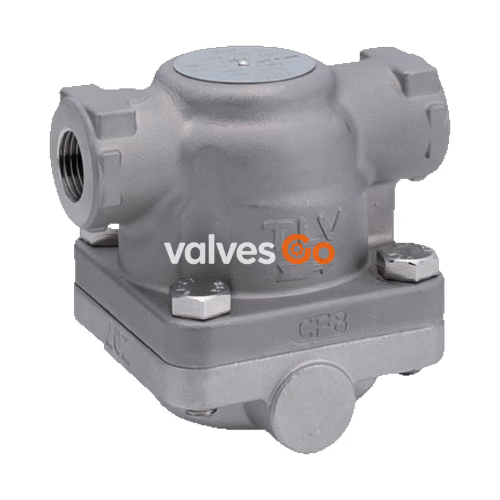
TLV NEW SS1-M2 SS1-M2 Series Stainless Steel Free Float Steam Trap

The TLV SS1-M2 series free float steam trap uses a precision-ground float and three-point support for the valve body. With no hinges or levers, the trap automatically and continuously discharges condensate, preventing it from collecting. This stainless steel steam trap is ideal for places at which extremely small amounts of condensate are generated, such as superheated and saturated steam mains and branches, and trace lines.

Features

  1. Self-modulating free float provides continuous, smooth, low velocity condensate discharge as process loads vary.
  2. Constant water seal and unique three-point seating ensure a steam-tight seal, even under no-load conditions.
  3. Trap incorporates a thermostatic air vent (bimetal) for fast start-up.
  4. Built-in screen with large surface area holds back impurities.
  5. Only one moving part, the free float, prevents concentrated wear and provides long service life.
  6. Easy, inline access to internal parts simplifies cleaning and reduces maintenance costs.

Principles of Air and Condensate Discharge

1. Start-up air and cold condensate discharge

At start-up, before steam is supplied, the system is cold and the bimetal air vent strip is contracted, holding the float off of the valve seat. This allows for the rapid discharge of air and cold condensate through the valve when steam is first supplied to the system.
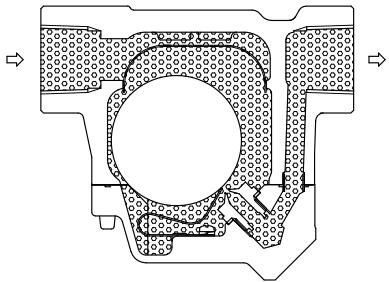
TLV NEW SS1-M2 TLV SS1-M2 series start-up air and cold condensate discharge

2. Condensate discharge

If the temperature of the condensate rises above 90 °C, the bimetal air vent strip expands allowing the float to block the valve seat. Rising condensate levels cause the float to rise due to buoyancy, opening the valve and allowing hot condensate to be discharged.
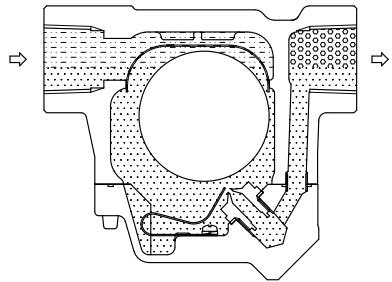
TLV NEW SS1-M2 TLV SS1-M2 series condensate discharge

3. Closed position

When the condensate flow rate decreases, the float falls, closing off the valve seat opening. A water seal is maintained at all times over the valve seat opening to prevent steam loss.
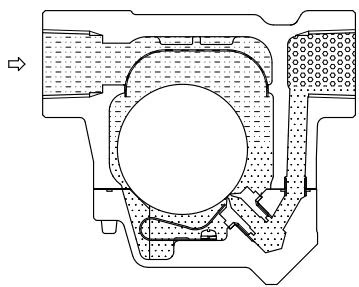
TLV NEW SS1-M2 TLV SS1-M2 series closed position

Specifications

WARNING

Install properly and DO NOT use this product outside the recommended operating pressure, temperature and other specification ranges. DO NOT use this product in excess of the maximum operating pressure differential. Such use could make discharge impossible (blocked).

ModelInstallationConnectionMax Operating Temp (°C)
SS1NL-M2HorizontalScrewed, Socket Welded, Flanged220
SS1VL-M2VerticalScrewed, Socket Welded, Flanged220
SS1NH-M2HorizontalScrewed, Socket Welded, Flanged400
SS1VH-M2VerticalScrewed, Socket Welded, Flanged400
  • Size: 1/2", 3/4", 1" / DN 15, 20, 25
  • Orifice No.: 5, 10, 21
  • Maximum Operating Pressure (barg): 5, 10, 21
  • Maximum Differential Pressure (bar): 5, 10, 21

Installation

DANGER

NEVER apply direct heat to the float. The float may explode due to increased internal pressure, causing accidents leading to serious injury or damage to property and equipment.

WARNING

Take measures to prevent people from coming into direct contact with product outlets. Failure to do so may result in burns or other injury from the discharge of fluids.

  1. Before installing the product, blow out the inlet piping to remove any piping scraps, dirt and oil. Close the inlet valve after blowdown.
  2. Install the product so the arrow on the body is pointing in the direction of flow.
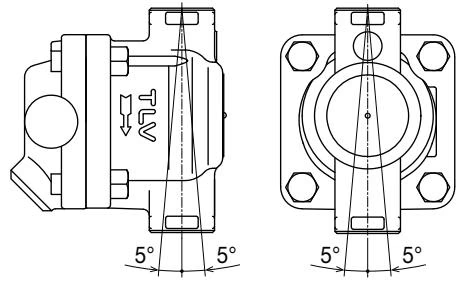
  3. The product must be installed within the allowable angles of inclination of 5° horizontally and front-to-back.

SS1NL-M2 / SS1NH-M2 (Horizontal Installation Model)TLV NEW SS1-M2 TLV SS1-M2 series horizontal installation model
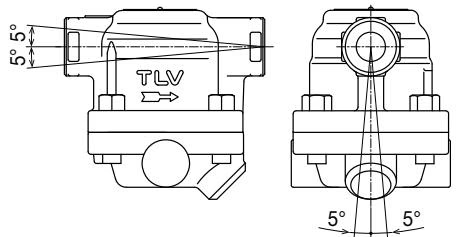
SS1VL-M2 / SS1VH-M2 (Vertical Installation Model)TLV NEW SS1-M2 TLV SS1-M2 series vertical installation model
Checking the Piping

  • Is the pipe diameter suitable?
  • Is the piping where the product is to be installed horizontal (for the SS1NL-M2/SS1NH-M2) or vertical (for the SS1VL-M2/SS1VH-M2)?
  • Have isolation valves been installed at the inlet and outlet? If the outlet is subject to back pressure, has a check valve been installed?
  • Is the inlet pipe as short as possible, with as few bends as possible, and installed so the liquid will flow naturally down into the product?

Operational Check

A visual inspection of the following items should be done on a daily basis:
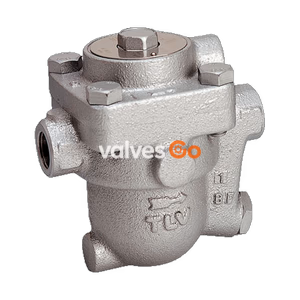
  • Normal: Condensate is discharged continuously, together with flash steam, and the sound of flow can be heard.
  • Blocked (Discharge Impossible): No condensate is discharged. The product is quiet and makes no noise, and the surface temperature of the product is low.
  • Blowing: Live steam continually flows from the outlet and there is a continuous metallic sound.
  • Steam Leakage: Live steam is discharged through the product outlet together with condensate, accompanied by a high-pitched sound.