
PN16

The TLV SS5-P is a stainless steel free float clean steam trap designed for pure and clean steam systems in reactors, fermenters, and sterilizers.
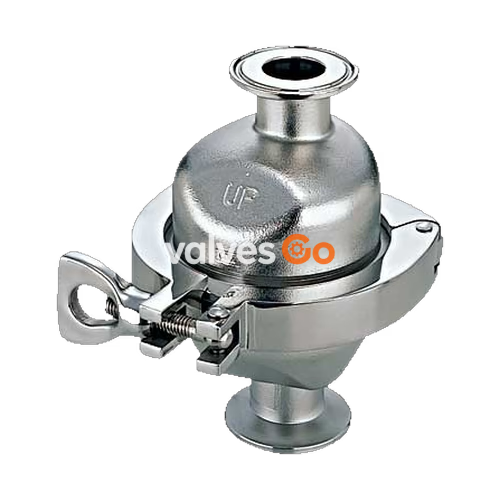
The TLV SS5-P is a free float clean steam trap recommended for use in reactors, fermenters, and sterilizers in the chemical, pharmaceutical, food, and beverage services. These steam traps are suitable for a wide range of medium-capacity applications up to 0.6 MPaG (85 psig) and for steam-using equipment requiring high levels of sanitation. They discharge condensate continuously and automatically, at a temperature slightly lower than the saturation temperature.
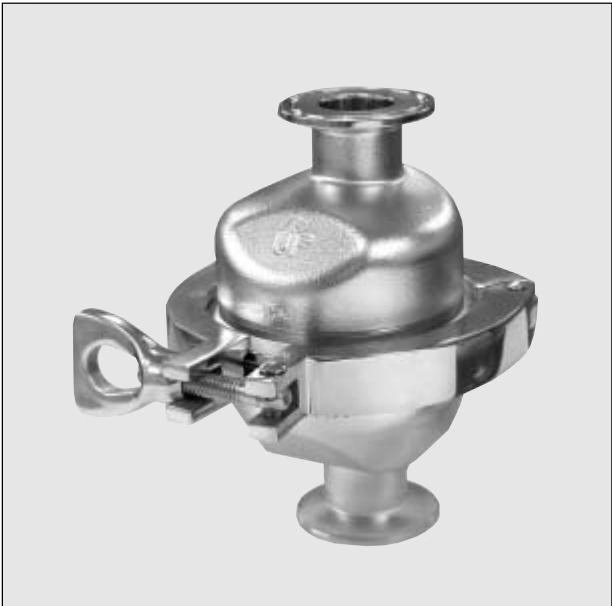
| Model | SS5-P* |
|---|---|
| Connection** | Clamp End |
| Size | DN 25, 38 (ISO) 1", 1½" (ASME-BPE) |
| Maximum Operating Pressure (barg) PMO | 6 |
| Maximum Differential Pressure (bar) ΔPMX | 6 |
| Maximum Operating Temperature (°C) TMO | 165 |
| Finishing (Internal/External)* | 0.8μm Ra buff-polished / Bead-blasted and electro-polished |
Pressure Shell Design Conditions
Maximum Allowable Pressure (barg) PMA: 10 Maximum Allowable Temperature (°C) TMA: 185 These are NOT operating conditions. 1 bar = 0.1 MPa.
Material Configuration
| No. | Description | Material | DIN* | ASTM/AISI* |
|---|---|---|---|---|
| 1 | Body | Cast Stainless Steel A351 Gr.CF3M | 1.4435 | - |
| 2 | Cover | Cast Stainless Steel A351 Gr.CF3M | 1.4435 | - |
| 3 | Float | Stainless Steel SUS316L | 1.4404 | AISI316L |
| 4 | Body Clamp | Cast Stainless Steel A351 Gr.CF8 | 1.4312 | - |
| 5 | Clamp Gasket** | High-performance Fluorine Resin | - | - |
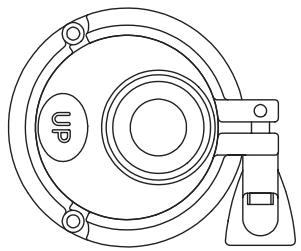
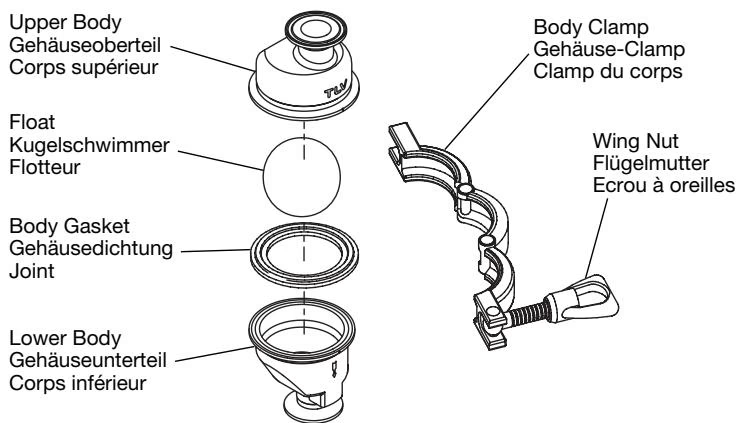
| No. | Name |
|---|---|
| 1 | Lower Body |
| 2 | Upper Body |
| 3 | Float |
| 4 | Body Clamp |
| 5 | Body Gasket |
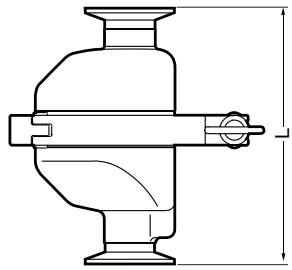
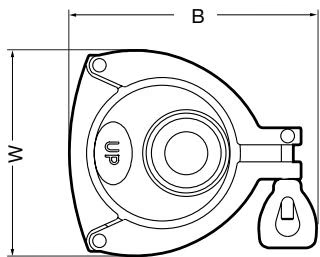
SS5-P Clamp End
| DN | L (mm) | W** (mm) | B** (mm) | φD (mm) | φd (mm) | Weight (kg) |
|---|---|---|---|---|---|---|
| 25 (1") | 145 | 115 | 140 | 50.5 | 22.6 (22.1) | 1.7 |
| 38 (1½") | 145 | 115 | 140 | 50.5 | 35.6 (34.8) | 1.8 |

The SS5-P Clean Steam Trap has a small built-in drain hole to ensure no condensate remains in the trap after operation. Therefore, a minimum condensate load is required during operation to prevent any steam discharge. The chart below shows the maximum steam discharge through the drain hole under no condensate load conditions.
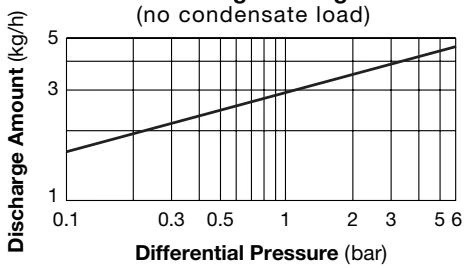 (— : Maximum capacity of SS5-P. - - - - : Minimum amount of condensate required to prevent steam discharge)
Capacity Notes
WARNING
DO NOT use traps under conditions that exceed maximum differential pressure, as condensate backup will occur!
WARNING
CAUTION
| Status | Description |
|---|---|
| Normal | Condensate is discharged continuously with flash steam and the sound of flow can be heard. |
| Blocked | No condensate is discharged. The trap is quiet, making no noise, and the surface temperature of the trap is low. |
| Blowing | Live steam continually flows from the outlet and there is a continuous metallic sound. |
| Steam Leakage | Live steam is discharged through the trap outlet together with the condensate, and there is a high-pitched sound. |
Operational inspections should be performed at least twice per year.
Parts Inspection Procedure
Disassembly / Reassembly
| Part & No. | During Disassembly | During Reassembly |
|---|---|---|
| Body Clamp (4) | Loosen the wing nut then remove the body clamp | Tighten wing nut to the proper torque; open inlet valve and allow live steam to enter and heat the trap, then close the inlet valve; after the internal and atmospheric pressures have equalized and the trap surface has cooled, tighten wing nut to the proper torque again |
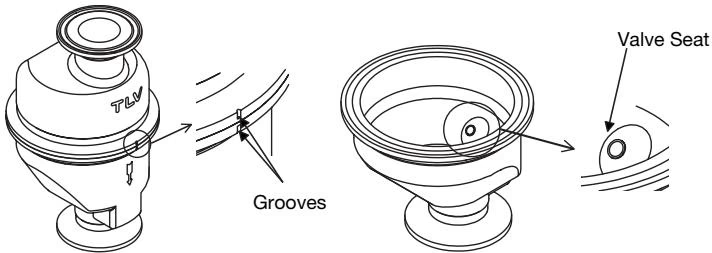
| Upper Body (2), Lower Body (1) | Take apart without scratching the gasket sealing surfaces | With gasket in place, align groves and gently place the upper body on the lower body |
| Body Gasket (5) | Remove being careful not to scratch sealing surfaces | Replace with a new gasket only if damaged |
| Float (3) | Remove being careful not to scratch the polished surfaces of the float and lower body | Insert into body, being careful not to scratch its polished surface, take care not to scratch or damage the valve seat |
Tightening Torque
| Problem | Cause | Remedy |
|---|---|---|
| No condensate is discharged or discharge is poor (blocked) | The float is damaged or filled with condensate | Replace with new float |
| The float is sticking to the valve seat | Clean parts | |
| The valve seat, drain hole or piping are clogged with foreign matter | Clean parts | |
| Steam-locking or air binding has occurred | Perform a bypass blowdown or close the trap inlet valve and allow the trap to cool | |
| Flow exceeds trap's rated capacity | Check specifications and reselect trap suitable for actual flow | |
| The trap operating pressure exceeds the maximum specified pressure, or insufficient pressure differential | Compare specifications and actual operating conditions | |
| Steam is discharged or leaks from the outlet (blowing / leakage) | Foreign matter has accumulated around the valve seat or under the float | Clean parts |
| Scratches on the valve seat | Replace lower body | |
| The float is deformed or has build-up | Clean or replace float | |
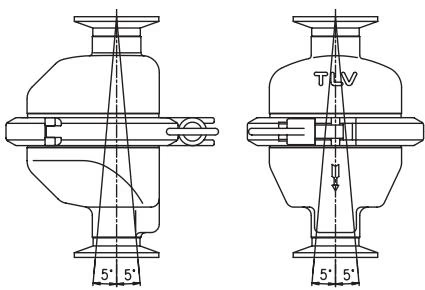
| Trap is installed above the maximum allowable inclination angle | Correct the installation | |
| Trap vibration | Lengthen inlet piping and fasten securely |