
PN16

Yoshitake DP-10 pilot operated piston type solenoid valve for steam, air, water and oil. Compact, lightweight, 0.05-1.0 MPa working pressure, normally closed, AC coil.
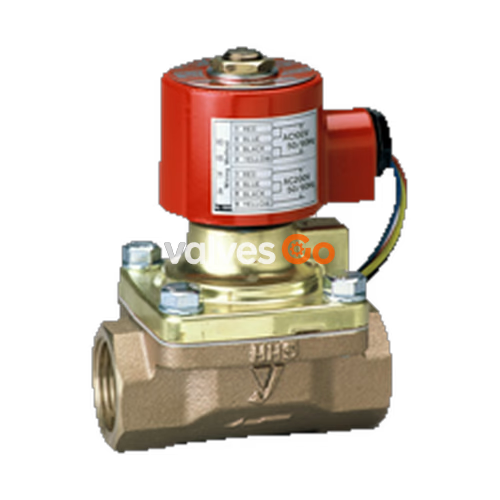
Yoshitake DP-10 pilot operated piston type solenoid valve is a compact, lightweight, and high-reliability valve featuring excellent performance on fluid control. It is mainly used for steam, air, cold and hot water, and oil. Horizontal and vertical installation is available.
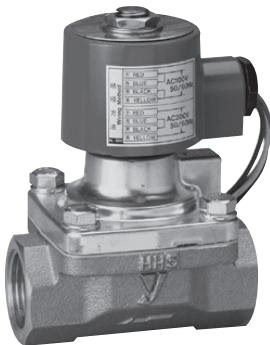
| Model | DP-10 |
|---|---|
| Application | Steam, Air, Cold and hot water, Oil (20 cSt or less) |
| Working pressure | 0.05-1.0 MPa (unusable under vacuum) |
| Min. differential pressure | 0.05 MPa (0.1 MPa or more is required for vertical installation) |
| Valve seat leakage | 50 mL/min (at the time of air pressure 0.6 MPa) |
| Max. temperature | 180℃ |
| Operation | Normally closed |
| Material (Body) | Cast bronze |
| Material (Piston) | Stainless steel |
| Material (Valve disc) | PTFE |
| Connection | JIS Rc screwed |
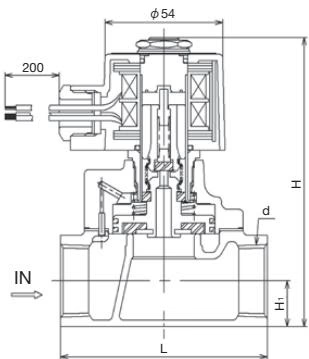
| Nominal size | d | L (mm) | H (mm) | H1 (mm) | Weight (kg) |
|---|---|---|---|---|---|
| 10A | Rc 3/8 | 70 | 119 | 14.5 | 1.2 |
| 15A | Rc 1/2 | 70 | 119 | 14.5 | 1.2 |
| 20A | Rc 3/4 | 80 | 126 | 17.5 | 1.4 |
| 25A | Rc 1 | 95 | 133 | 21.0 | 1.8 |
| 32A | Rc 1-1/4 | 110 | 155 | 26.0 | 2.6 |
| 40A | Rc 1-1/2 | 120 | 162 | 29.5 | 3.2 |
| 50A | Rc 2 | 140 | 177 | 36.5 | 5.1 |
When the power is turned ON, the coil is magnetized and the plunger is sucked up, thereby opening the pilot valve. The pressure at the upper part of the valve (diaphragm) flows to the outlet side via the pilot port, causing a pressure drop. The valve (diaphragm) is then pushed up by the inlet pressure, and the valve is opened.
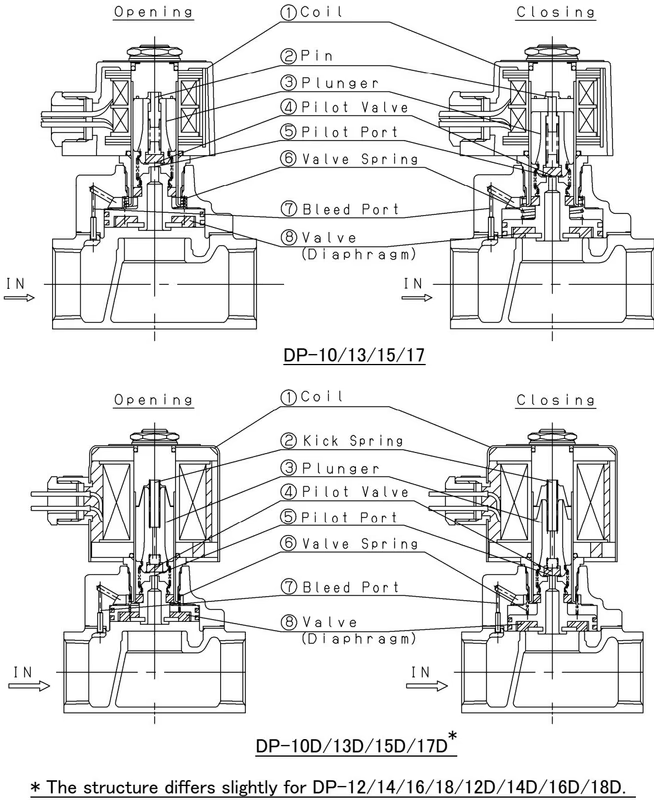
When the power is turned OFF, the plunger is pushed down by a pin/kick spring and dead weight, thereby closing the pilot valve. The inlet pressure is introduced through the bleed port to the upper part of the valve (diaphragm), thereby equalizing the inlet pressure. The valve (diaphragm) is then pushed down and closed by the pin/kick spring and the valve spring.
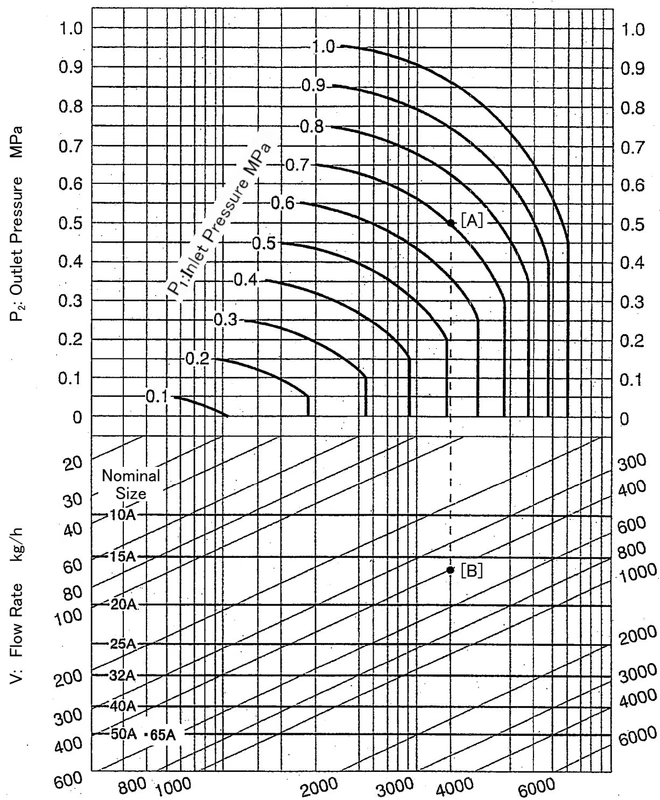
Installation Cautions
Wiring Method
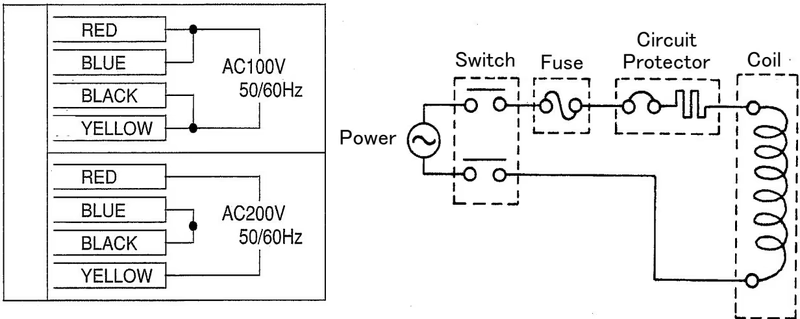
Wiring differs according to the voltage, AC100V or 200V (AC110V or 220V/AC120 or 240V). Wire the coil according to the instruction on the label attached to the coil.
Maintenance Procedure
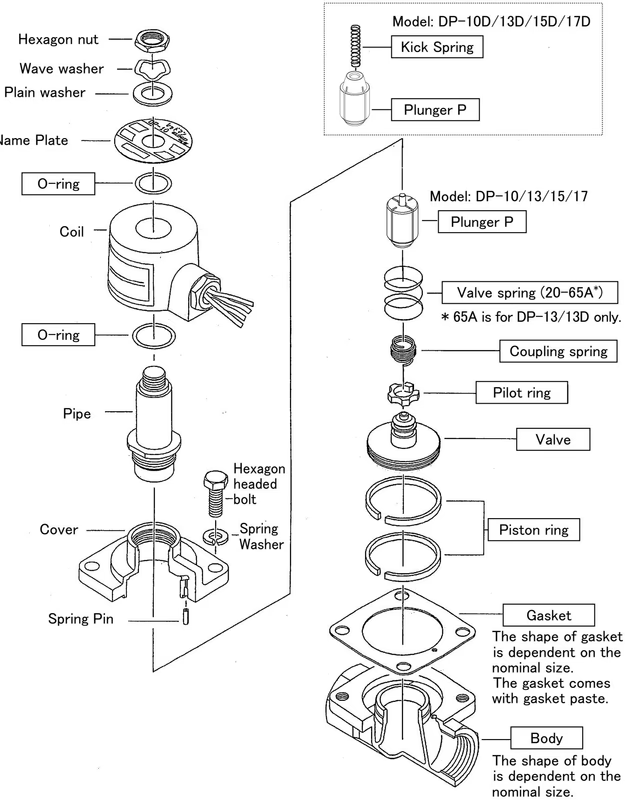
Before disassembling, completely discharge internal pressure from the valves, lines, and cool the valves down to a level where you can touch it with bare hands. Re-assembly should occur in the reverse order of the disassembly procedure. When assembling the product, replace the gasket with a new one.
Disassembly Drawing
Yoshitake Actuation & Positioners / Solenoid
DD and DP series solenoid valves for automatic fluid shutoff and interlocking control.
Explore similar products in our catalog