
PN16

Yoshitake DP-100 series pilot-operated solenoid valve for steam, air, and water. Features a stainless steel body, PTFE gasket, and 0-1.0 MPa working pressure.
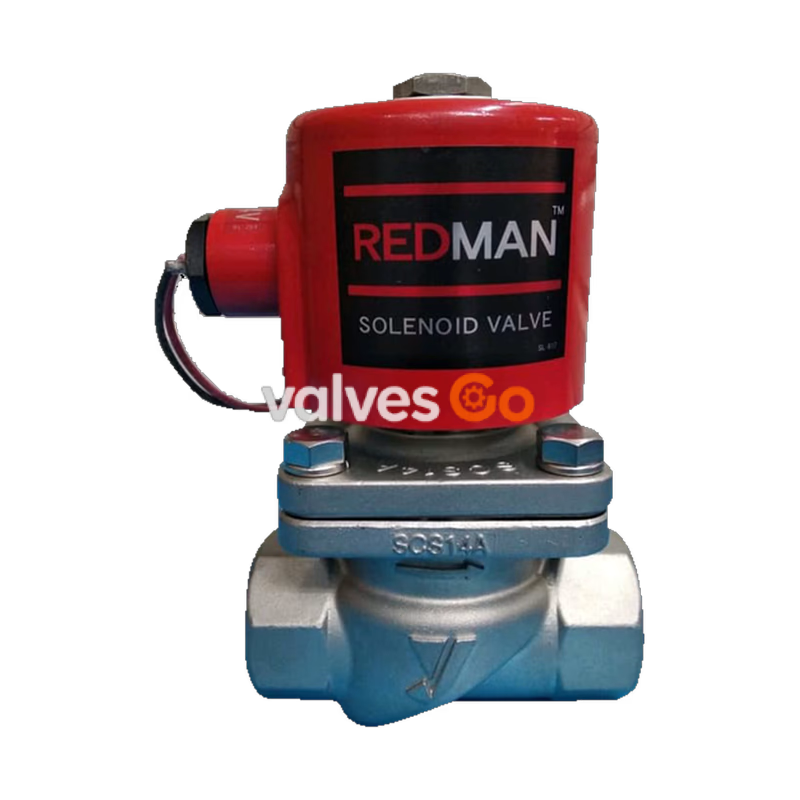
Yoshitake DP-100 series pilot-operated solenoid valves are high-precision valves featuring a stainless steel (SCS14A) body and PTFE valve disc. The DP-100 series provides three times more durability and scale resistance than conventional models thanks to its Anti-Sticking Mechanism (ASM). It is suitable for various clean fluids including steam, air, cold and hot water, nitrogen, carbon dioxide, argon, and low-viscosity oil.
| Specification | Details |
|---|---|
| Structure | Pilot-operated piston type |
| Application | Steam, Air, Cold and hot water, N2 gas, CO2 gas (dry), Ar gas, Oil (20 cSt or less) |
| Working Pressure | 0-1.0 MPa (unusable under vacuum) |
| Min. Differential Pressure | 0 MPa (0.03 MPa or more is required for vertical installation) |
| Allowable Valve Seat Leakage | 50 mL/min under standard conditions (at air pressure of 0.6 MPa) |
| Temperature Range | 5-180°C (no freeze condition) |
| Ambient Temperature | 50°C or less (no freeze condition) |
| Installation Posture | Vertical or horizontal installation (within 90 degrees from upward position of the coil) |
| Material: Body / Piston | Stainless steel (SCS14A) |
| Material: Valve Disc | PTFE |
Recommended Application
Recommended to use DP-200, DP-200F for cold and hot water applications.
| Specification | Details |
|---|---|
| Rated Voltage | AC 100/200 V or AC 110/220 V selective type (50/60 Hz common) |
| Allowable Fluctuation | Rated voltage -5% to +10% |
| Insulation Class | Insulation class H |
| Protective Structure | Dust tight, Splash proof |
| Ingress Protection | IP64 (JIS C0920) |
| Insulation Resistance | 50 MΩ and more / 500 V megger |
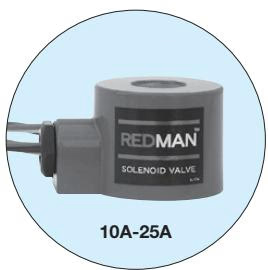
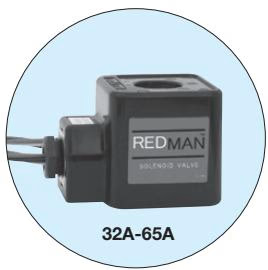
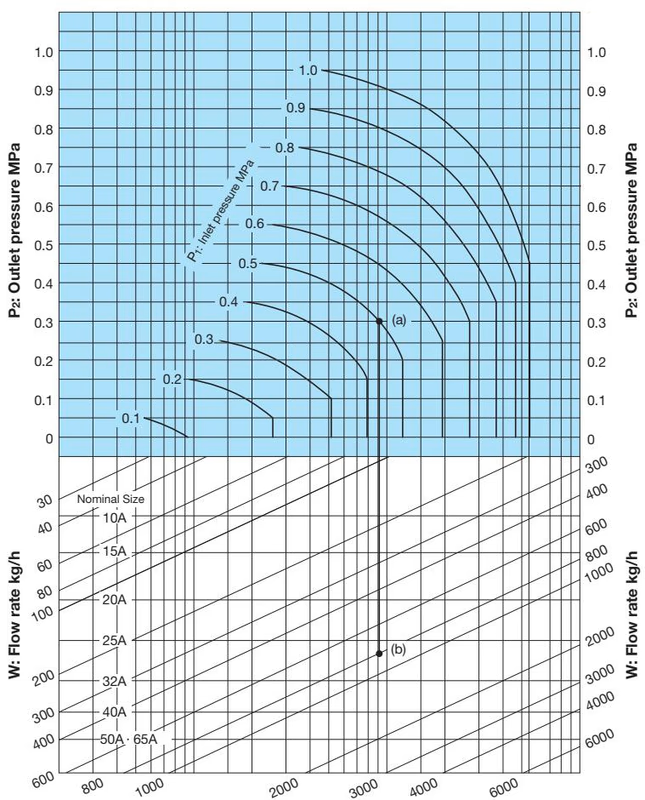
When selecting the nominal size of a solenoid valve whose inlet pressure (P1), outlet pressure (P2), and steam (saturated steam) flow rate (W) are 0.5 MPa, 0.3 MPa, and 800 kg/h, respectively, first find the intersection point of P1 = 0.5 MPa and P2 = 0.3 MPa. Trace down vertically from this intersection point to find the intersection point with W = 800 kg/h. Since this intersection point lies between nominal sizes 25A and 32A, select the larger one, 32A.
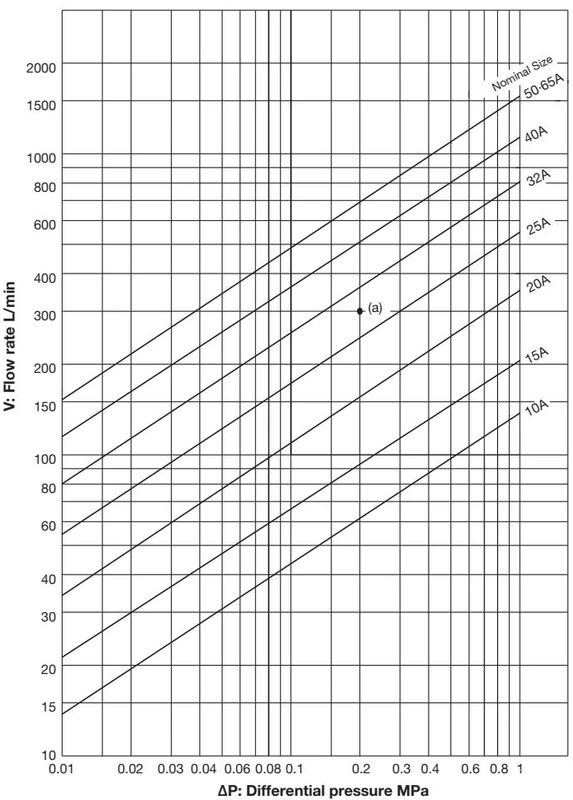
When selecting the nominal size of a solenoid valve whose inlet pressure (P1), outlet pressure (P2), and flow rate (V) are 0.5 MPa, 0.3 MPa, and 300 L/min, respectively, first find the intersection point of the differential pressure before and after the valve (∆P = 0.5 - 0.3 = 0.2 MPa) and V = 300 L/min. Since this intersection point lies between nominal sizes 25A and 32A, select the larger one, 32A.
Opening operation (Power ON) When the power is turned ON, the coil is excited and pulls up the plunger, to open the pilot valve. Next, the pressure at the upper part of the valve drops since it flows to the outlet through the pilot port. The valve is then lifted up to the open position by the inlet pressure.
Closing operation (Power OFF) When the power is turned OFF, the coil excitation is canceled and the plunger drops down by force of the kick spring, to close the pilot valve. The pressure at the upper part of the valve rises due to the incoming inlet pressure from the bleed port which is communicated with the inlet. With the support of the kick spring, this makes the valve pushed down to the closed position.
Opening operation (Power OFF) When the power is turned OFF, the coil excitation is canceled and the pilot valve and plunger are lifted up by force of the lift spring, to open the pilot valve. The pressure at the upper part of the valve drops due to the outgoing pressure toward the outlet through the pilot port. This makes the valve lifted up to the opened position by the inlet pressure.
Closing operation (Power ON) When the power is turned ON, the coil is excited and pulls down the plunger, to close the pilot valve. The pressure at the upper part of the valve rises due to the incoming inlet pressure from the bleed port which is communicated with the inlet. With the support of attractive force of the plunger, this makes the valve pushed down to the closed position.
Yoshitake Actuation & Positioners / Solenoid
DD and DP series solenoid valves for automatic fluid shutoff and interlocking control.
Explore similar products in our catalog