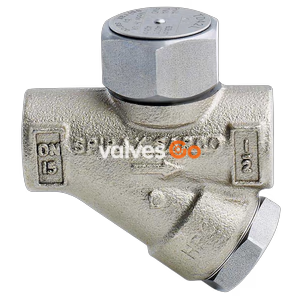
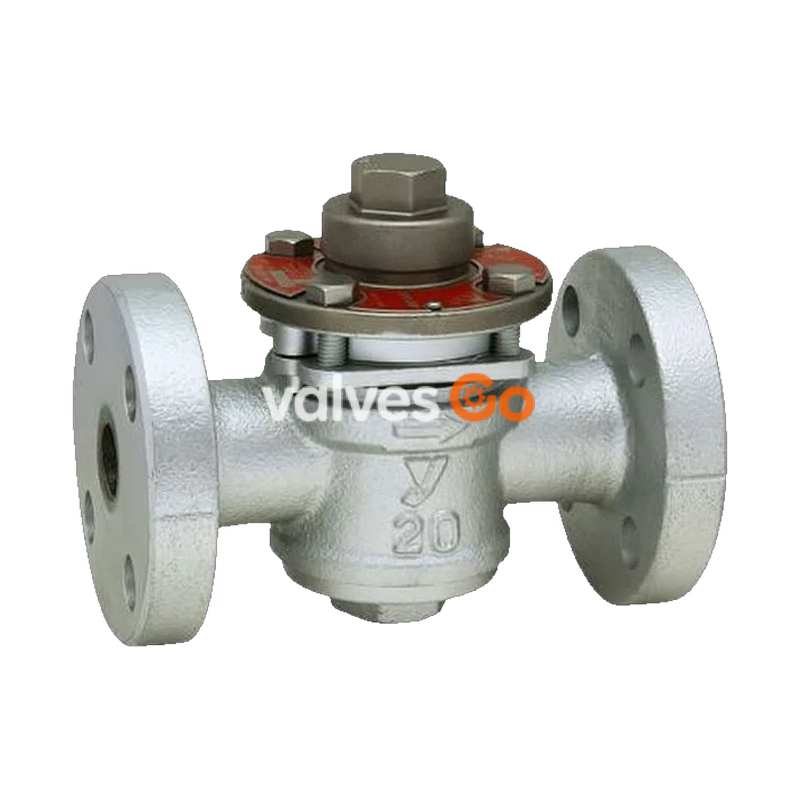
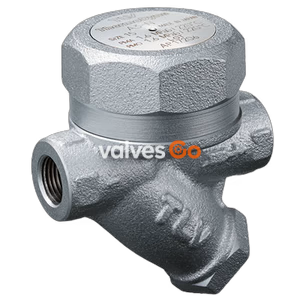
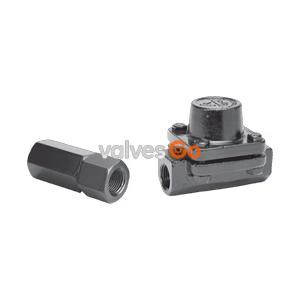
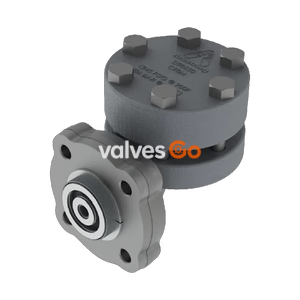
Yoshitake TSD-7F and TSD-7 are disc type steam traps with a built-in bypass function, designed to meet a wide variety of needs such as in building facilities. The integrated bypass helps reduce piping and construction work costs significantly. Four functions (STOP, BY-PASS, TRAP, and TEST) can be switched easily with a spanner or wrench.
The adoption of bimetal solves the problem of air locking and ensures a smooth discharge of cold condensate or air at the start of operation. The disc, valve seat, and bimetal can be easily replaced without dismounting the body from the piping.
Features
- Four functions (STOP / BY-PASS / TRAP / TEST) can be switched easily.
- The integrated bypass function helps reduce piping and construction work costs significantly.
- Bimetal solves air-binding problem and ensures a smooth discharge of cold condensate or air at the start of operation.
- Can be checked without being affected by back pressure.
- The stainless steel valve disc and valve seat are subjected to special heat treatment and very durable.
- Equipped with a built-in strainer.
- Can be installed vertically or horizontally as desired.
- Rain cover is available as options for outdoor use.
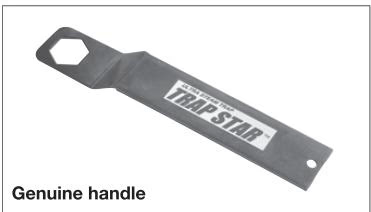
Dimensions and Weight
TSD-7
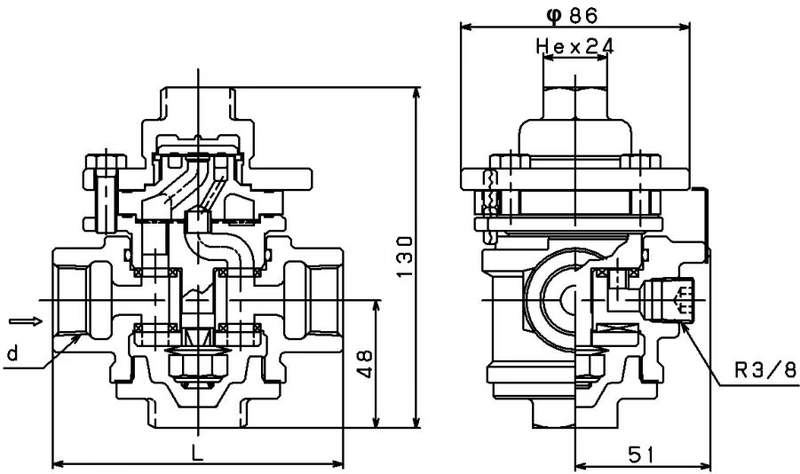
| Nominal size | d | H | Weight (kg) |
|---|
| 15A | Rc 1/2 | 107 | 2.5 |
| 20A | Rc 3/4 | 109 | 2.6 |
| 25A | Rc 1 | 115 | 2.7 |
TSD-7F
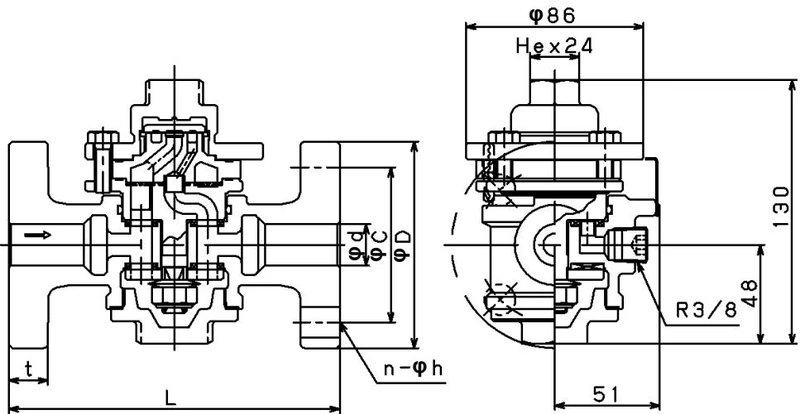
| Nominal size | L | Weight (kg) |
|---|
| 15A | 156 | 4.1 |
| 20A | 160 | 4.6 |
| 25A | 160 | 5.7 |
Switching Mechanism and Operation
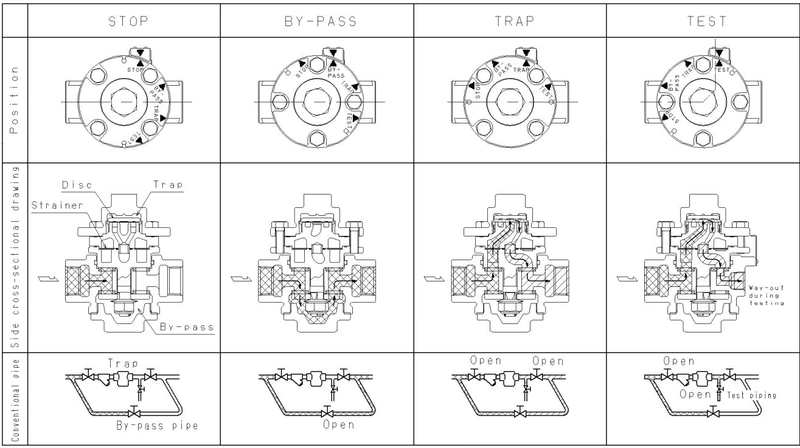
In order to switch the cock, be sure that each mark ▲ of the functions meets the mark ▼ on the indicator accurately. If not, the product does not function correctly. All steam traps are set at the "STOP" position when delivered.
- STOP: Fluid is blocked off since the inlet and outlet sides of the product and the bypass are closed. Select this position for cleaning of the strainer and inspection of the disc and seat.
- BY-PASS: Fluid flows through the bypass directly to the outlet. Select this position to blow the piping during plumbing or to discharge a large quantity of condensate at start-up of the operation. Since fluid does not flow to the trap portion, the strainer can be cleaned and the disc and seat can be inspected. Do not keep the product positioned in this function for a long period.
- TRAP: The product performs regular trap operation. Condensate is discharged from the inlet to the outlet through the trap without flowing out from the bypass.
- TEST: Condensate is discharged from the inlet to the test-line outlet through the trap without flowing out from the bypass so that the trap operation can be tested. In this position, test can be carried out without being affected by back pressure due to closing of the usual outlet.
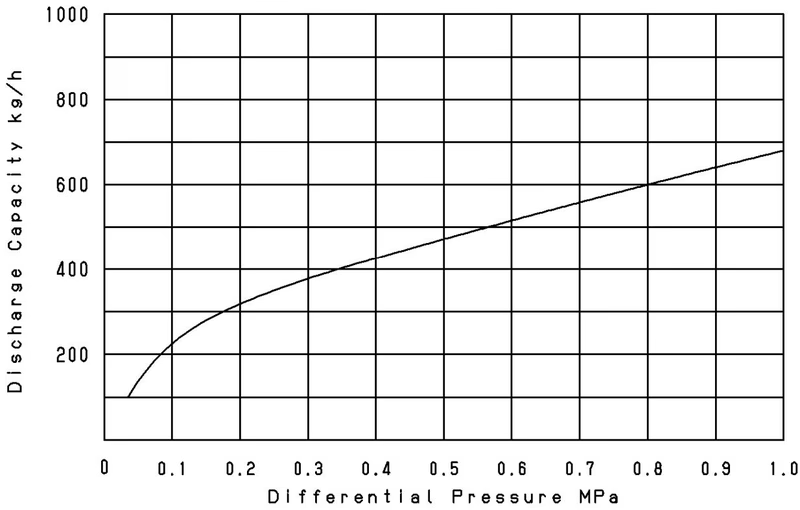
Maximum Continuous Discharge Capacity
TIP
In designing a system, select a steam trap with a sufficient safety factor (four to five times the regular level). That is, for example, if a discharge capacity of 100 kg/h is required, select a steam trap capable of discharging 400 to 500 kg/h.
Installation Precaution
- Carefully blow the piping before installing the steam trap.
- Connect the steam trap to the piping according to its arrow indicating the direction of flow.
- Slope the piping and place the product at as a low position as possible in order to make condensate flow into the product by its own weight.
- Do not insulate the piping inlet and the steam trap.
- To install the product in a main steam pipe, provide a drip leg at the inlet side of the product.
- Secure enough space for maintenance (such as cleaning the strainer and inspection of the bellows).
- If discharge capacity is not enough, install more than one trap. In this case, connect the traps to the piping so that their inlets are in the same level.
- Do not install the steam trap in a place where ambient temperature is higher than the condensate to be discharged.
Piping Example
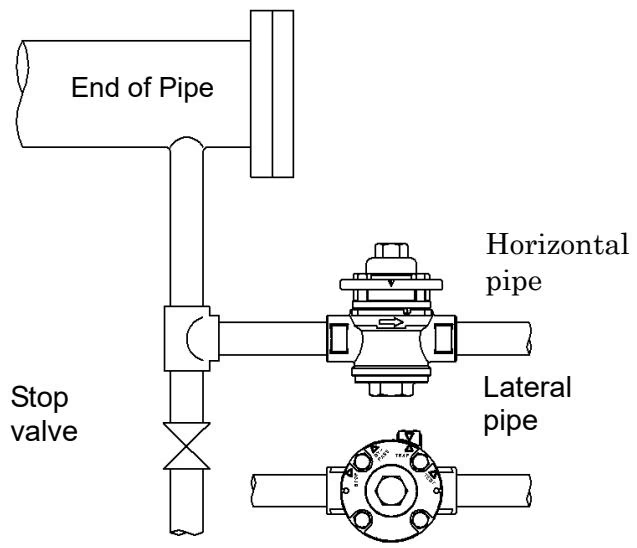
WARNING
In order to discharge condensate to the atmosphere, lead the outlet to a place where there is no possibility of physical damage. Failure to follow this notice may result in injury and scalds when condensate blows out.