
Up to 99.8% Efficiency

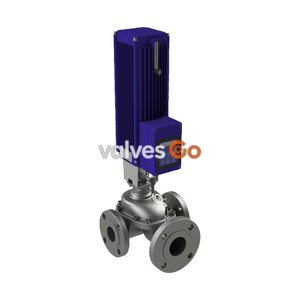
BURKERT 20150730 Type 2000 pneumatically operated 2/2-way angle seat valve. Features stainless steel body, PPS actuator, PTFE seal, and RC 2" internal thread.
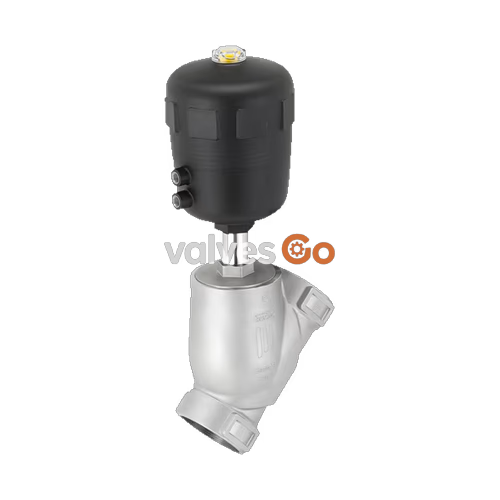
BURKERT 20150730 (Type 2000) is a pneumatically operated 2/2-way angle seat valve designed for the controlled flow of gaseous media and steam. This specific model features a stainless steel body, a PPS (Polyphenylene sulphide) actuator, and PTFE seat seals. It connects via an RC 2" internal thread and provides a Kv value of 44 m³/h. The valve handles operating pressures from 0 to 16 bar, medium temperatures from -10 °C to +185 °C, and ambient temperatures from +5 °C to +140 °C.
This valve operates with Control Function A (CFA), meaning it is closed in the rest position by spring force.
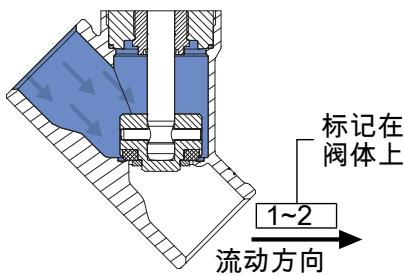
It is configured for flow above the seat (flow to close). Because the medium is located above the swivel plate, the operating pressure contributes to closing the valve and sealing the valve seat.
Risk of water hammer
When the flow inlet is over the seat, the angle seat valve must not be used for liquid media due to the risk of water hammer. Valves with flow above the seat are restricted to steam and gases.
High Pressure Hazard
Turn off the pressure and vent the lines before loosening lines or valves. If the permitted medium or control pressure is exceeded, lines or the device may leak and burst.
The 20150730 model utilizes a stainless steel body and a PPS actuator. The self-adjusting packing gland features PTFE V-rings with spring compensation to maintain high sealing integrity.
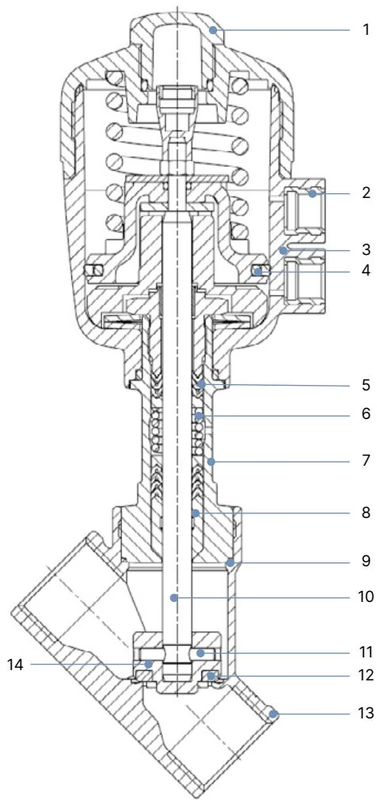
| Component | Material (Stainless Steel Body with PPS Actuator) |
|---|---|
| Transparent cover | PSU |
| Pilot air ports | Stainless steel 1.4305 |
| Actuator | PPS |
| Piston seal | FKM |
| Packing gland | PTFE V-Rings (filled), with spring compensation |
| Spring | Stainless steel 1.4310 |
| Pipe | Stainless steel CF3M |
| Wiper | PTFE (filled), PEEK |
| Body seal | Graphite, PTFE (option) |
| Spindle / Pin | Stainless steel 1.4401 / 1.4404 |
| Seat seal | PTFE |
| Valve body | Stainless steel CF3M |
| Swivel plate | Stainless steel CF3M / 1.4401 / 1.4404 |
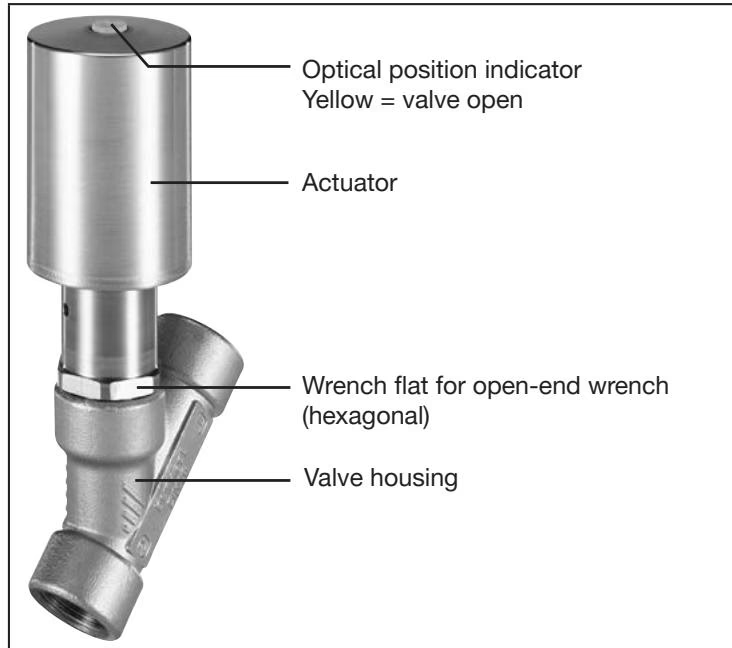
To prevent damage to the seat seal or the seat contour, ensure that the valve is in the open position when removing the actuator.
Explore similar products in our catalog