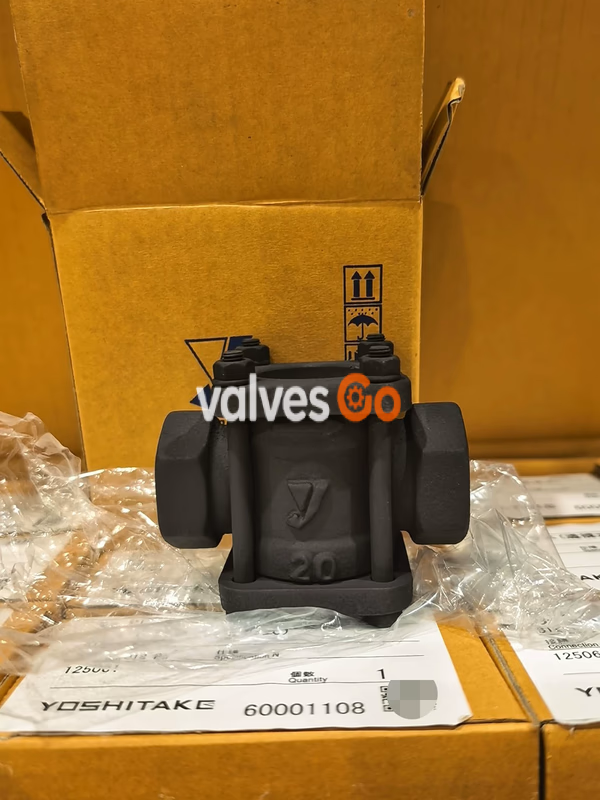
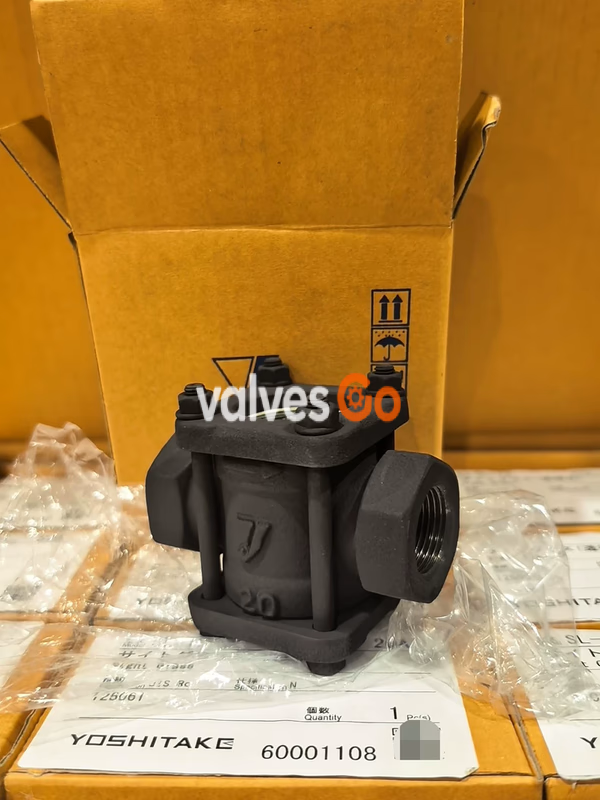
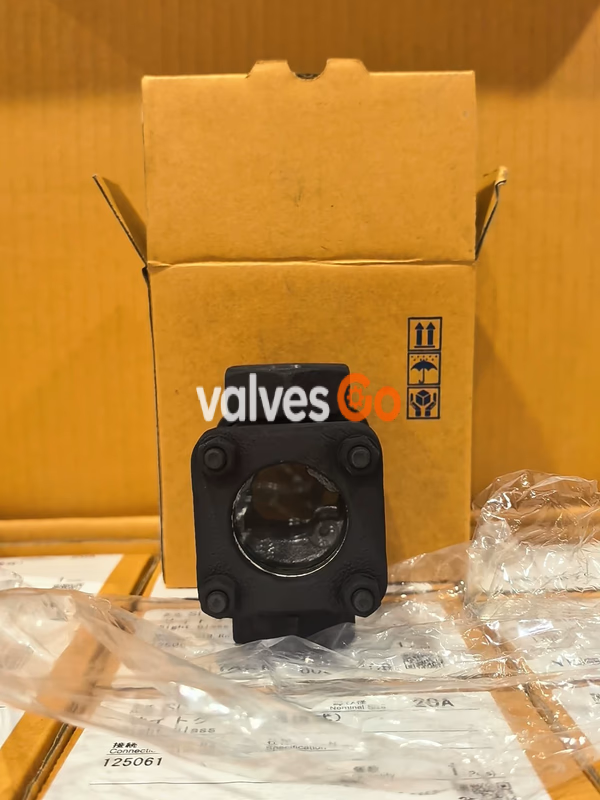
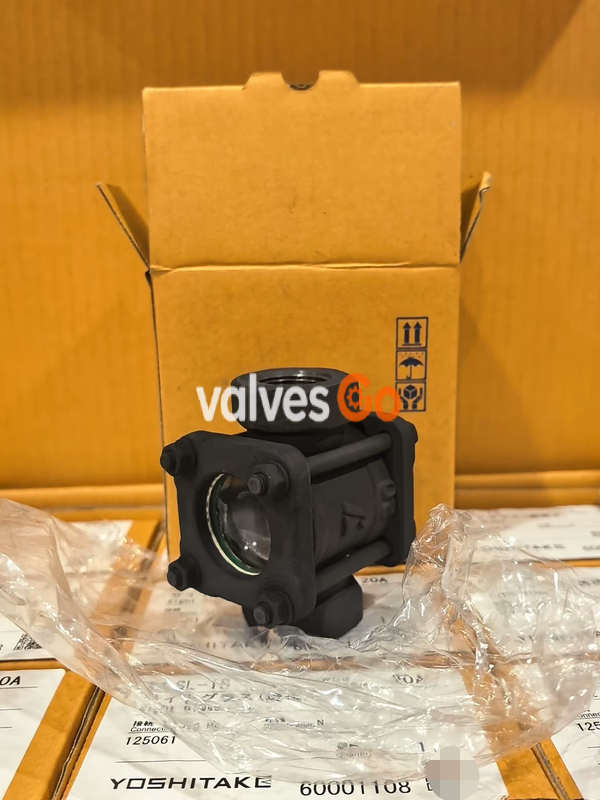
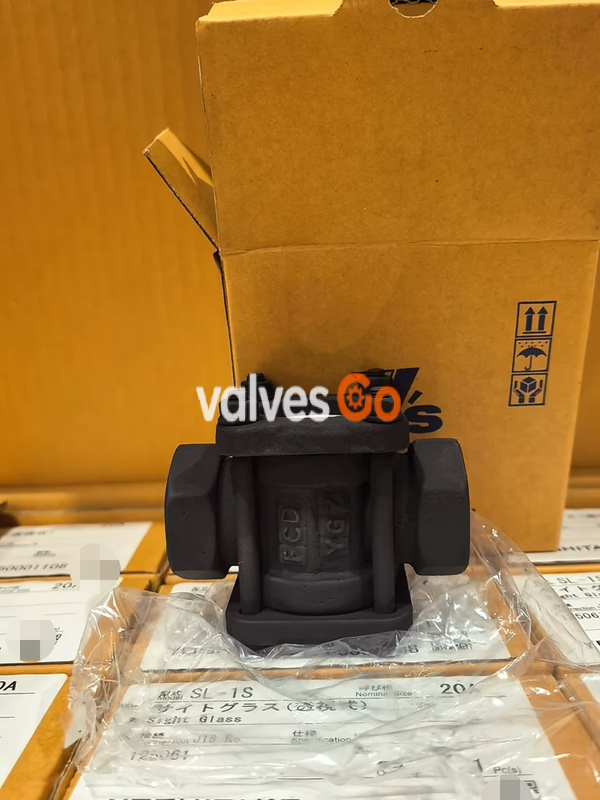
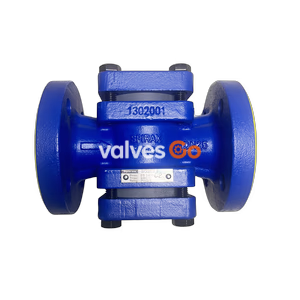
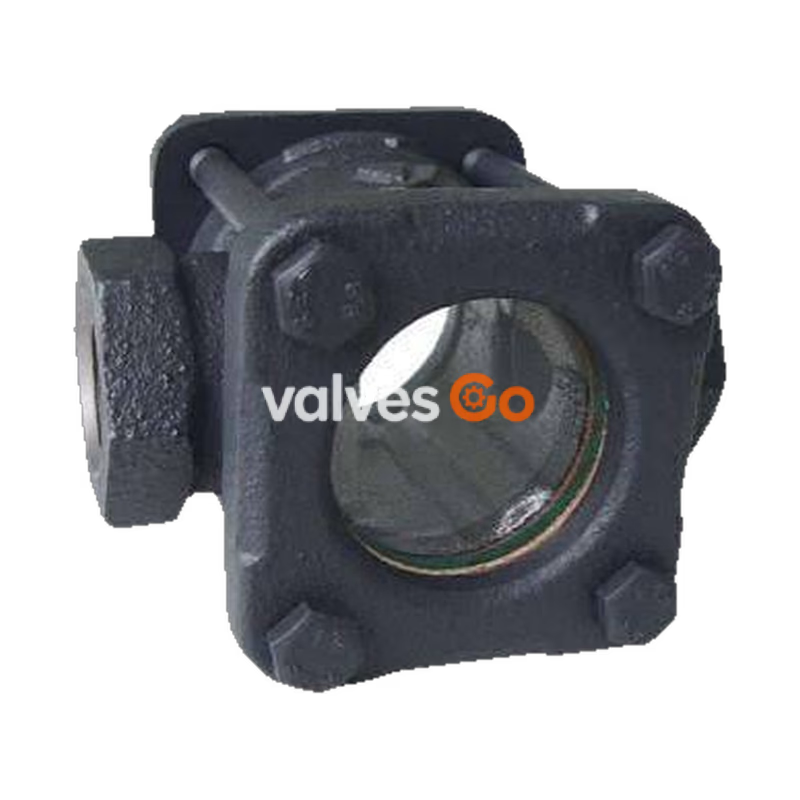
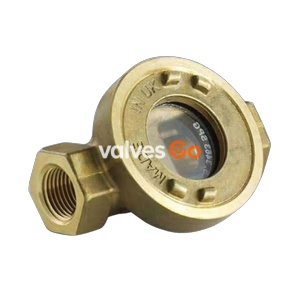
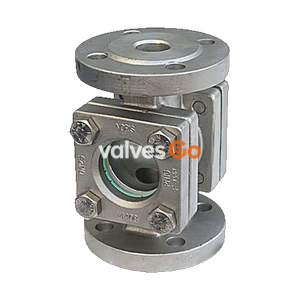
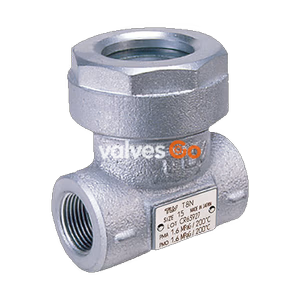
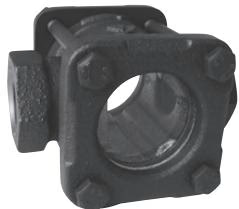
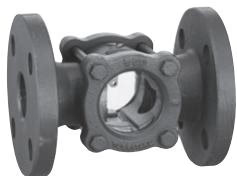
Yoshitake SL-1S (screwed) and SL-1F (flanged) are plain type sight glasses designed as compact, space-saving, and lightweight units that can be connected to either horizontal or vertical piping. These sight glasses are used to check the mixed state or color of two-component fluids, as well as intermittent fluid flow.
Features
- Mixed state or color of two component fluid can be checked.
- Intermittent fluid flow can be checked.
- Can be connected to horizontal/vertical piping.
- Mica plate is required for steam condensate.
Specifications
| Model | SL-1S | SL-1F |
|---|
| Application | Cold and hot water, Oil, Other non-dangerous fluids | Cold and hot water, Oil, Other non-dangerous fluids |
| Maximum working pressure | 1.0 MPa | 1.0 MPa |
| Max. temperature | 150°C | 150°C |
| Max. thermal shock | 100°C | 100°C |
| Body Material | Ductile cast iron | Ductile cast iron |
| Glass Material | Hardened glass | Hardened glass |
| Connection | JIS Rc screwed | JIS 10K FF flanged |
INFO
- When a plain type is applied to steam condensate, use the product with mica plates (as the SLM-1S or SLM-1F) within a maximum working pressure of 0.6 MPa and maximum temperature of 150°C.
- Available with protective wire mesh (as the SLP-1S or SLP-1F).
- The glass part is a consumable supply.
Dimensions and Weights
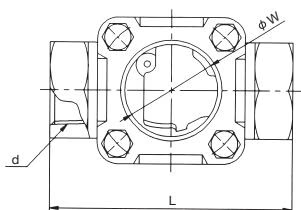
SL-1S Dimensions
| Nominal size | d | L | W | Weight (kg) |
|---|
| 15A | Rc 1/2 | 80 | 35 | 0.7 |
| 20A | Rc 3/4 | 90 | 35 | 0.8 |
| 25A | Rc 1 | 115 | 44 | 1.4 |
| 32A | Rc 1-1/4 | 127 | 57 | 2.1 |
| 40A | Rc 1-1/2 | 140 | 57 | 2.7 |
| 50A | Rc 2 | 162 | 73 | 5.2 |
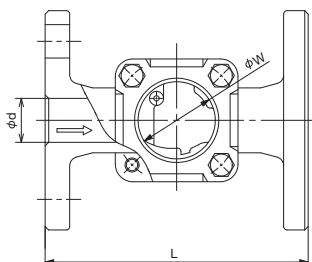
SL-1F Dimensions
| Nominal size | d | L | W | Weight (kg) |
|---|
| 15A | 15 | 130 | 35 | 2.2 |
| 20A | 20 | 130 | 35 | 2.6 |
| 25A | 25 | 150 | 44 | 4.1 |
| 32A | 32 | 160 | 57 | 5.7 |
| 40A | 40 | 170 | 57 | 6.0 |
| 50A | 50 | 200 | 73 | 9.3 |
Installation and Operation
Piping Examples
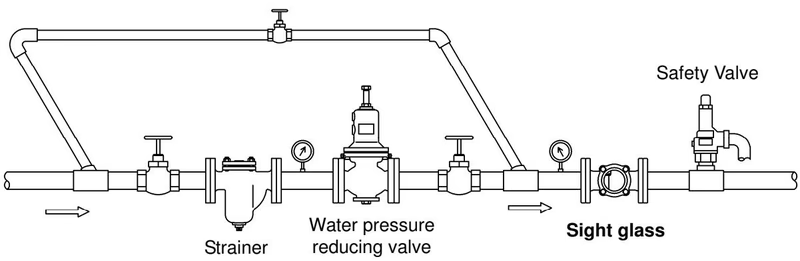
For cold and hot water:
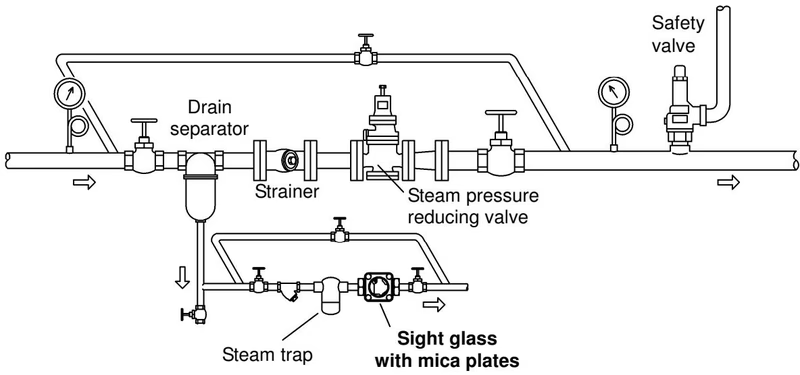
For steam condensate:
Precaution for Installation
WARNING
- Before connecting the product to piping, remove foreign substances and dirt inside the piping. Failure to follow this notice may make the glass damaged due to scratches by foreign substances or may make the fluid cannot be seen through the glass due to glass opacity caused by scale stains.
- When installing, check the direction of the product so that the fluid flowing and the arrow marked on the product are in the same direction. Setting the product in wrong directions prevents the product from functioning properly.
- For steam condensate application, make sure to use the product with mica plates to protect the glasses. Failure to follow this notice may result in erosion on the glass.
- Do not apply excessive load, torque or vibration to the product. Failure to follow this notice may result in leakage.
- When using sealing material to install SL-1S, take care so that the sealing material does not get inside the piping.
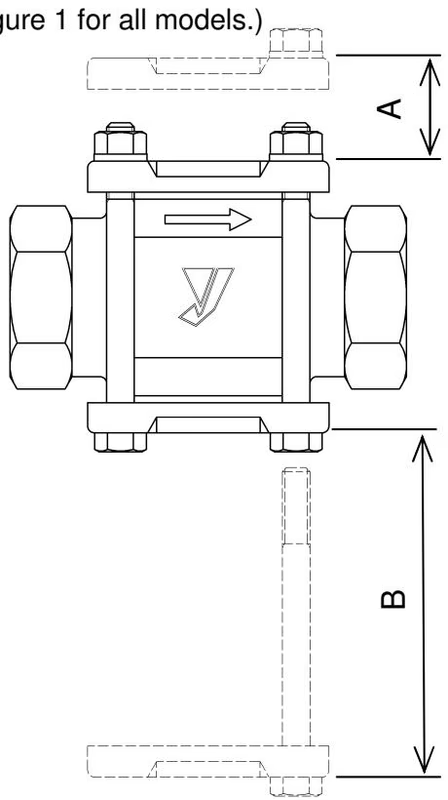
Required space for disassembly/removal of the product:
| Nominal size | A | B |
|---|
| 15A-25A | 30 or more | 100 or more |
| 32A-40A | 35 or more | 120 or more |
| 50A | 40 or more | 150 or more |
(Units: mm)
Precaution for Operation
DANGER
- Before applying the fluid to the product, confirm that the product is connected to the pipes securely. Failure to follow this notice may cause a blowout of the fluid, resulting in scalds (in the case of hot fluid) or property damage.
- Do not apply a rapid temperature change to the product during both initial and usual operations. In case of a possible frozen line, take proper measures to remove the fluid inside the piping to avoid freezing.
- Do not retighten the cover of the product. Failure to follow this notice may damage the glass resulting in fluid blowout.
Troubleshooting
| Trouble | Cause | Remedy |
|---|
| Fluid flow cannot be observed. | 1. Foreign substances stick to the inner surface of the glass, or the glass is stained. | 1. Disassemble and clean the product to remove the foreign substances. |
| 2. The inner surface of the glass has erosion or scratches. | 2. Disassemble the product and replace the glass. |
| Outside leakage | 1. The gasket leaks. | 1. Disassemble the product and replace the gasket. |
Disassembly, Cleaning and Reassembly
WARNING
Completely discharge the pressure inside of the product, piping and equipment prior to disassembly and inspection. When fluid is hot, cool down the product to the condition that it can be touched with bare hands. Failure to follow this notice may result in scalds or injury due to the residual pressure.
TIP
- Clean the gasket spaces of the body, covers and glasses.
- The glasses are consumable parts. Replace the glass if it is eroded by more than 10% of its thickness or if it has scratches or flaws.
- The gaskets are consumable parts. Replace them with new ones at the time of reassembly.
- When disassembling, put a container under the product to collect fluid flowing out from the product.
- The mica plates are consumable parts; however, the plates only cannot be replaced. Be sure to replace both of the glass and mica plate whenever either of them has scratches, flaws, or erosion.
Reassembly
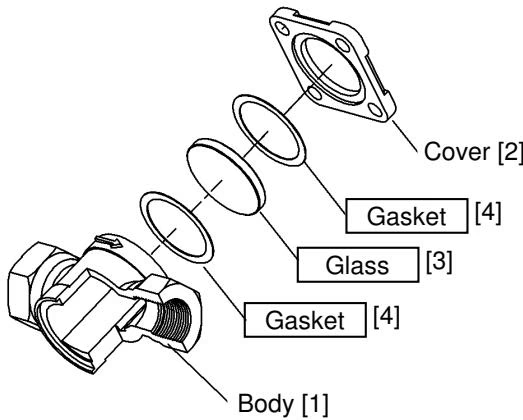
- Attach the gaskets [4], glasses [3], gaskets [4], and covers [2] in this order to the body [1].
- To fix the covers to the body, firstly tighten them temporarily with the bolts [5], spring washers [7] (for 15A-25A only), and nuts [6], and then tighten them evenly at the required torque by using a torque wrench. Overtightening damages the glass [3].
Tightening torque
| Nominal size | Tightening torque |
|---|
| 15A, 20A | 7 N·m |
| 25A | 10 N·m |
| 32A, 40A | 15 N·m |
| 50A | 25 N·m |