

PN16

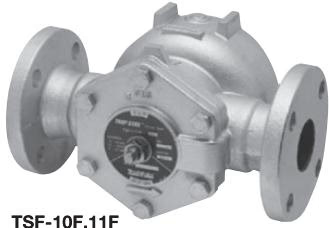
Yoshitake TSF-11F float steam trap for steam condensate. Features ductile cast iron body, stainless steel float, 220°C max temperature, and thermostatic air vent.
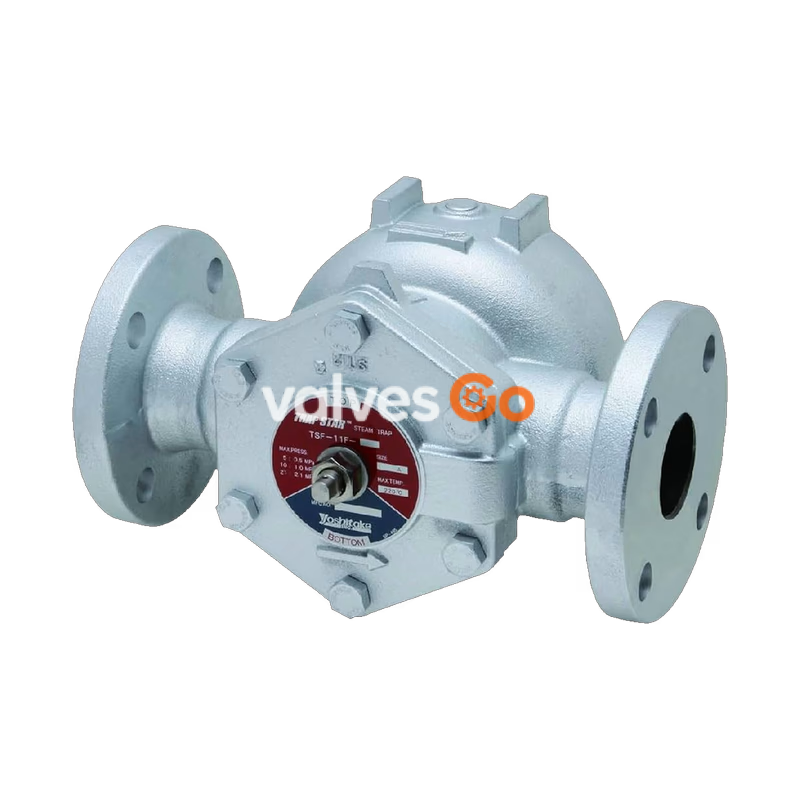
Yoshitake TSF-11F is a float steam trap designed for steam condensate applications. The TSF-11F can discharge condensate effectively without retention, realizing an energy-saving steam system without steam loss. It features a ductile cast iron body and a stainless steel float and valve.
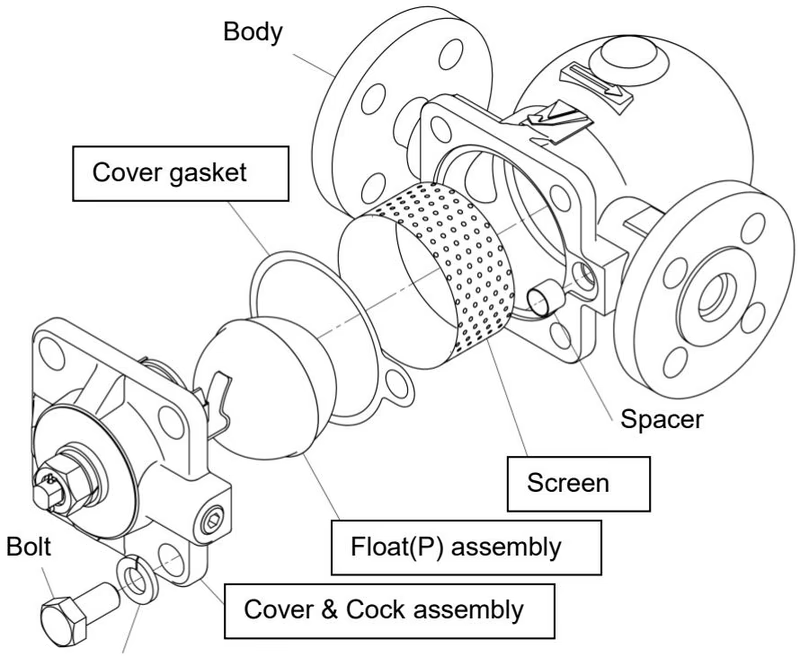
An incorporated thermostatic air vent discharges air inside the piping and shortens warming-up time. By turning the cock, it is possible to meet various flow directions such as horizontal or vertical installation. Flow direction can be switched easily without disassembly such as detaching the cover. Since the main parts are installed on the cover, it is possible to disassemble the cover with the body installed on the piping, making inspection and parts replacement easy.
| Model | TSF-11F |
|---|---|
| Nominal size | 25A-50A |
| Application | Steam condensate |
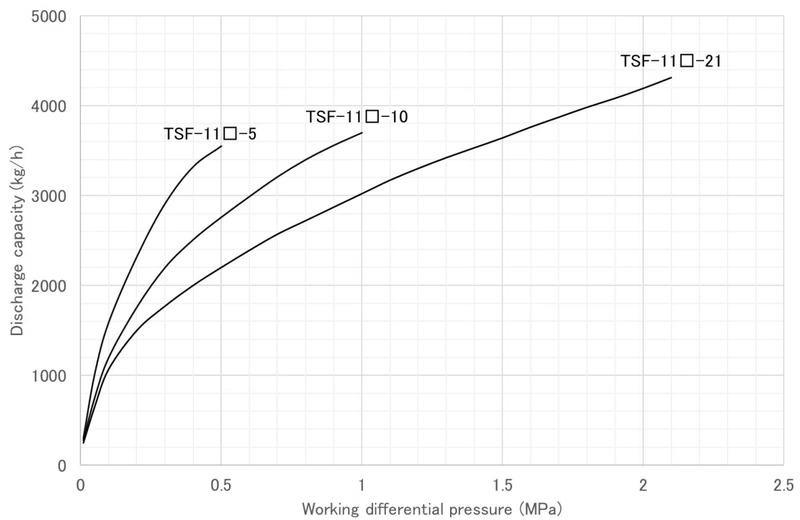
| Working pressure | TSF-11F-5: 0.01-0.5 MPa TSF-11F-10: 0.01-1.0 MPa TSF-11F-21: 0.01-2.1 MPa |
| Maximum temperature | 220℃ |
| Body Material | Ductile cast iron |
| Float Material | Stainless steel |
| Valve, valve seat Material | Stainless steel |
| Connection | JIS 10K FF flanged, JIS 20K FF flanged |
| Flow direction | All directions |
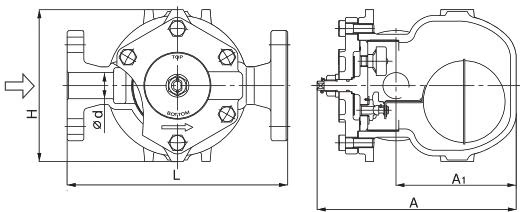
| Nominal size | d | L | A | A1 | H | Weight (kg) |
|---|---|---|---|---|---|---|
| 25A | 25 | 270 | 244 | 147 | 186 | 13.4 |
| 32A | 32 | 270 | 244 | 147 | 186 | 14.1 |
| 40A | 40 | 280 | 244 | 147 | 186 | 14.4 |
| 50A | 50 | 290 | 244 | 147 | 186 | 15.5 |
The discharge capacity shown in the chart below is the maximum value. In designing a system, select a steam trap with a sufficient safety factor (two times the regular level).
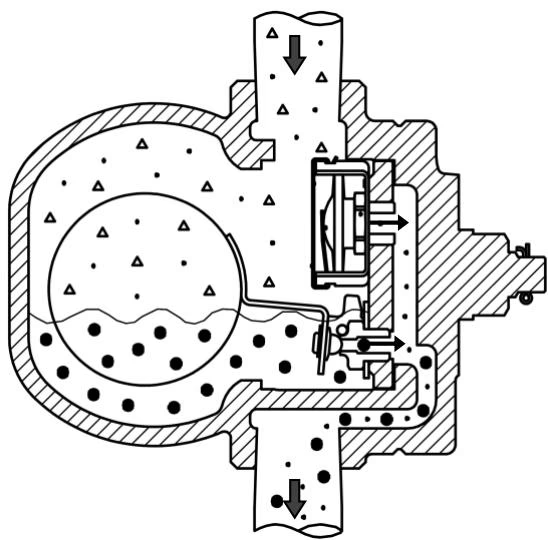
At start-up, since the float is down, the valve is closed. In this state, air in the system and piping is discharged out through the air vent which is opened. When condensate flows into the product, the float lifts up and opens the valve, and then discharges condensate. Air is continuously discharged out from the air vent.
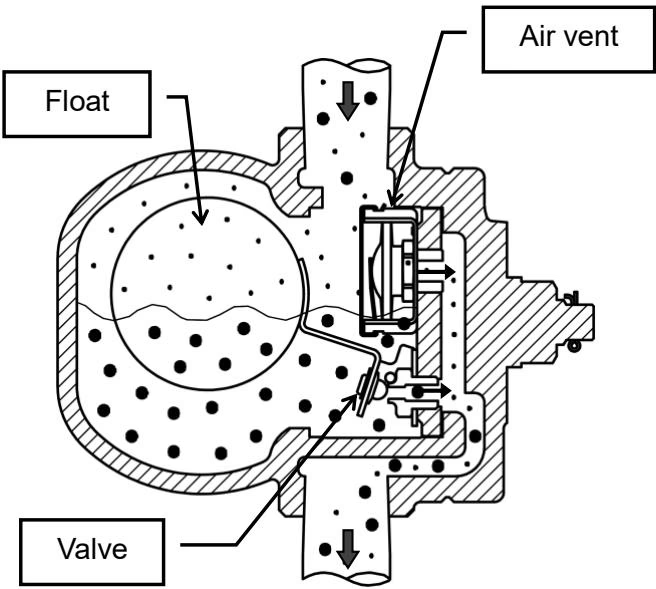
When steam flows into the product, internal pressure of the air vent rises by steam temperature, and the air vent closes. According to the amount of condensate inflow, the float position moves up and down changing the opening degree of the valve, and thus condensate is continuously discharged. The float moves down and the valve closes when condensate inflow stops.
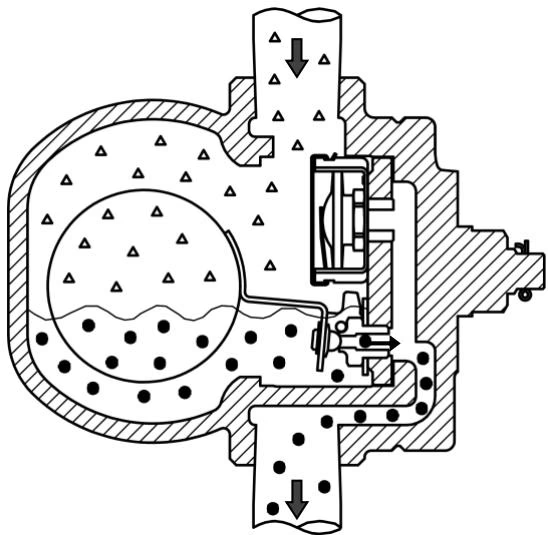
When air or non-condensable gas flows into the product, it accumulates in the upper part of the product. When temperature of air or non-condensable gas decreases with condensate inflow, the air vent opens and discharges it to the outside of the product. Then, operations 2 and 3 repeat according to the inflow amount of condensate and air.

Installation
Yoshitake Steam Traps / Float Steam Traps
TF and TSF series float steam traps for continuous condensate drainage in steam systems.