
PN16

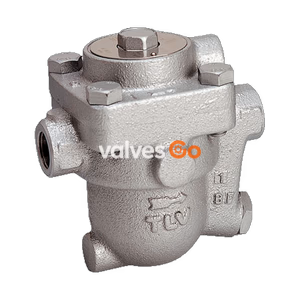
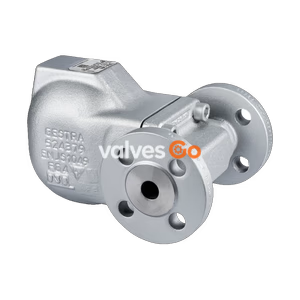
Yoshitake TSF-11S float steam trap (Ultra Steam Trap Trap Star) for steam condensate. Features cast stainless steel body, 220°C max temp, and 360-degree flow adjustment.
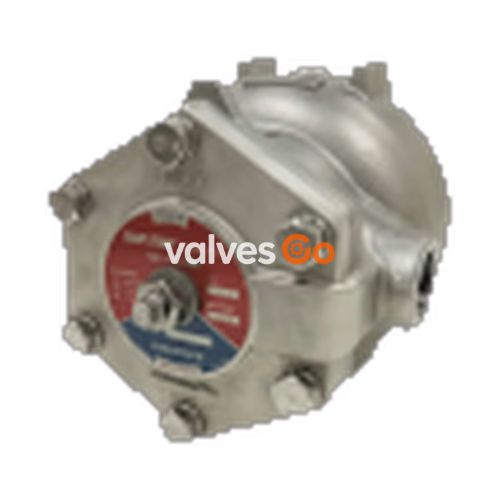
Yoshitake TSF-11S (Ultra Steam Trap Trap Star) is a high-performance float steam trap designed for steam condensate applications. Featuring an all-stainless steel construction, it provides exceptional durability and corrosion resistance. The trap is equipped with an incorporated thermostatic air vent that efficiently discharges air inside the piping, significantly shortening warming-up times. A key advantage of the TSF-11S series is its 360-degree flow direction capability; by simply turning the cock, it can accommodate various flow directions (horizontal or vertical) without the need for disassembly.

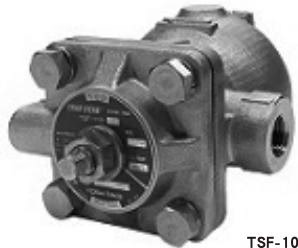
| Model | TSF-10S | TSF-10SF | TSF-11S | TSF-11SF |
|---|---|---|---|---|
| Nominal size | 15A-25A | 15A-25A | 25A-50A | 25A-50A |
| Application | Steam condensate | Steam condensate | Steam condensate | Steam condensate |
| Working pressure | 0.01-2.1 MPa* | 0.01-2.1 MPa* | 0.01-2.1 MPa* | 0.01-2.1 MPa* |
| Maximum temperature | 220°C | 220°C | 220°C | 220°C |
| Body Material | Cast stainless steel | Cast stainless steel | Cast stainless steel | Cast stainless steel |
| Float Material | Stainless steel | Stainless steel | Stainless steel | Stainless steel |
| Valve & Seat Material | Stainless steel | Stainless steel | Stainless steel | Stainless steel |
| Connection | JIS Rc / NPT screwed | Flanged (JIS, ASME, EN) | JIS Rc / NPT screwed | Flanged (JIS, ASME, EN) |
*Working pressure ranges depend on the specific variant: -5 (0.01-0.5 MPa), -10 (0.01-1.0 MPa), -21 (0.01-2.1 MPa).
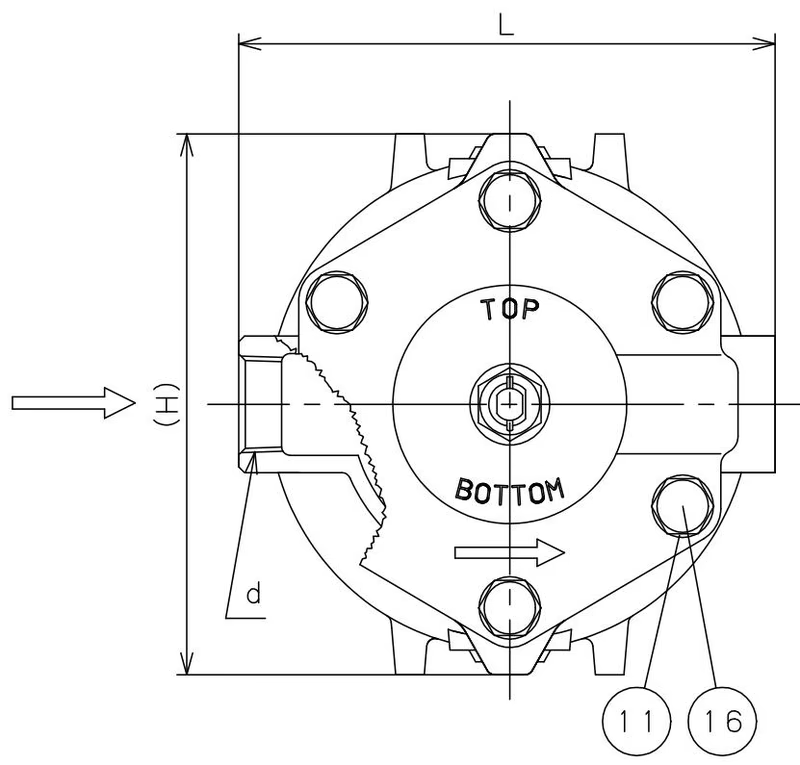
TSF-11S (Screwed)
| Nominal size | d | L | A | A1 | H | Weight (kg) |
|---|---|---|---|---|---|---|
| 25A | Rc 1 | 190 | 242 | 146.5 | 186 | 9.1 |
| 32A | Rc 1-1/4 | 190 | 242 | 146.5 | 186 | 9.2 |
| 40A | Rc 1-1/2 | 205 | 242 | 146.5 | 186 | 9.4 |
| 50A | Rc 2 | 220 | 242 | 146.5 | 186 | 9.7 |
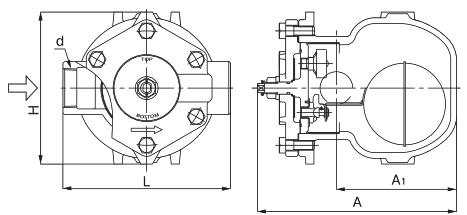
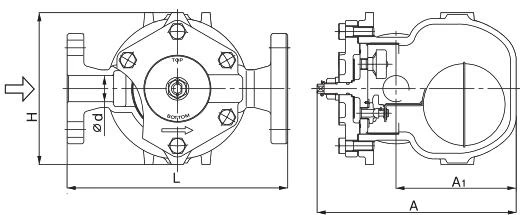
TSF-11SF (Flanged)
| Nominal size | L | A | A1 | H | Weight (JIS 10K) | Weight (JIS 20K) |
|---|---|---|---|---|---|---|
| 25A | 270 | 242 | 146.5 | 186 | 11.7 | 12.0 |
| 32A | 270 | 242 | 146.5 | 186 | 12.6 | 13.0 |
| 40A | 280 | 242 | 146.5 | 186 | 13.0 | 13.5 |
| 50A | 290 | 242 | 146.5 | 186 | 14.2 | 14.7 |
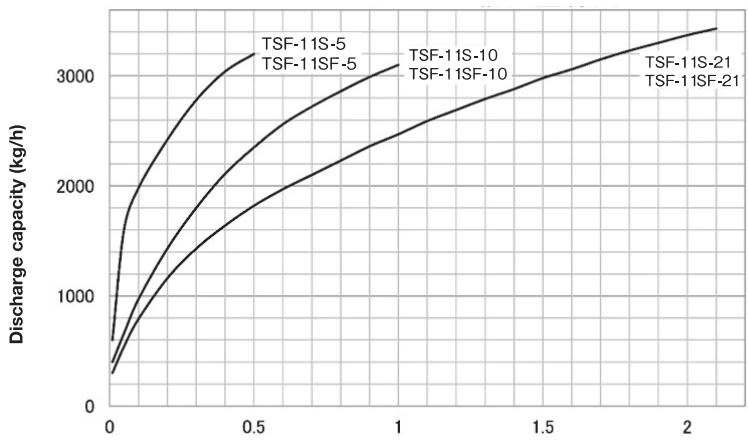
The discharge capacity shown in the chart below is the maximum value. In designing a system, select a steam trap with a sufficient safety factor (more than two times the regular level).
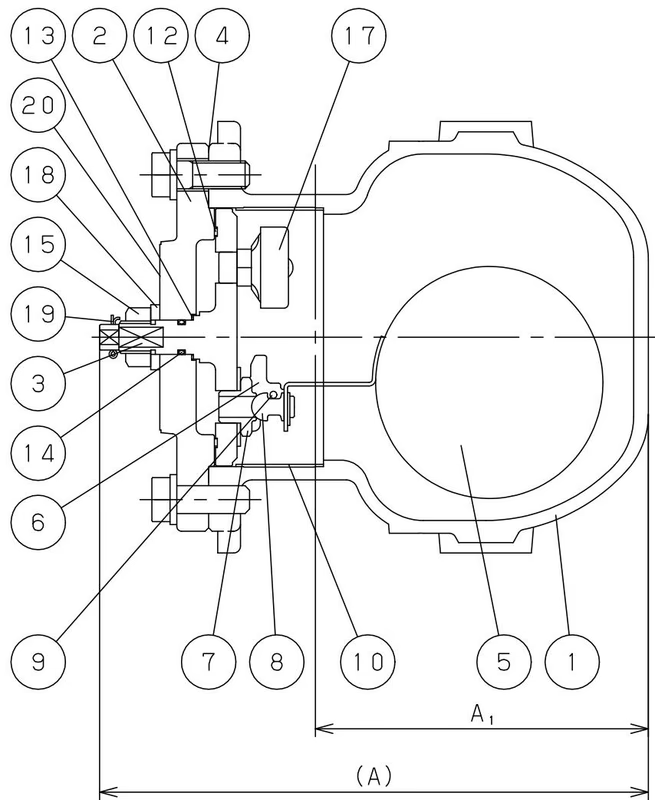
| No. | Name of Parts | Material |
|---|---|---|
| 1 | Body | Cast Stainless Steel (SCS13A) |
| 2 | Cover | Cast Stainless Steel (SCS13A) |
| 3 | Cock | Cast Stainless Steel (SCS13A) |
| 4 | Cover Gasket | Non Asbestos |
| 5 | Float (P) | Stainless Steel (SUS) |
| 6 | Float Holder | Stainless Steel (SUS304) |
| 7 | Valve Seat | Stainless Steel (SUS420J2) |
| 8 | Valve | Stainless Steel (SUS420J2) |
| 9 | Spindle | Stainless Steel (SUS304) |
| 10 | Screen | Stainless Steel (SUS304) |
| 17 | Air Vent (P) | Stainless Steel (SUS) |
Installation Posture
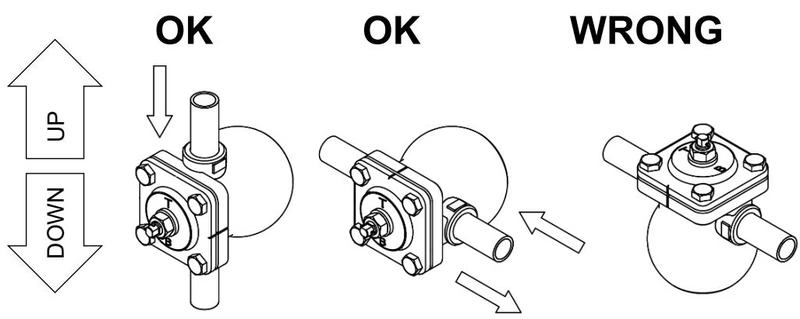
Wrong posture hampers proper operation. Allowable tilt from the horizontal line is within ±10°.
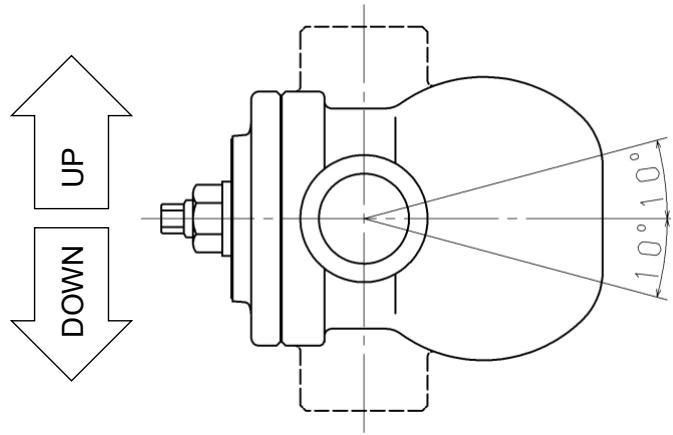
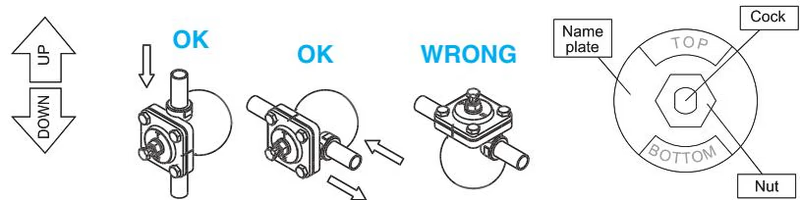
Piping Precautions:
Nameplate Adjustment: Adjust the direction of the nameplate in a no-pressure condition after installation. Fix the cock with a spanner and loosen the nut. Turn the cock and adjust the direction of the nameplate to position "TOP" and "BOTTOM" signs on the upside and downside respectively. Fasten the nut after adjustment.
Daily and Periodic Inspections
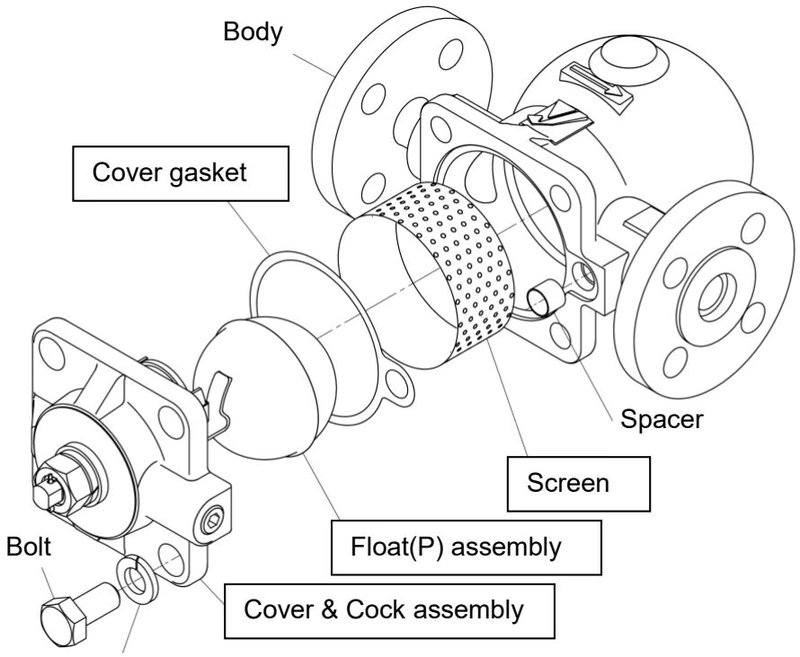
Conduct daily inspections during operation to ensure condensate is discharged smoothly and there is no outside leakage. Perform a periodic disassembly inspection once a year to check for scratches on seat surfaces, float deformation, and screen clogging.
| Trouble | Cause | Remedy |
|---|---|---|
| Condensate is not discharged | Blockage of foreign substances in a discharge hole. | Disassemble and clean it. |
| The screen is clogging. | Disassemble and clean it. | |
| The float (P) is damaged. | Replace it with a new one. | |
| "TOP" and "BOTTOM" signs on the Nameplate are in wrong positions. | Adjust direction of the Nameplate. | |
| Continuous blowout | Foreign substances stuck on valve, valve seat or air vent. | Disassemble and clean them. |
| Abrasion or scratches on the valve, valve seat or air vent. | Replace the parts with new ones. | |
| Insufficient capacity of the product. | Replace with a model of sufficient capacity. | |
| Steam leakage | Leakage due to loosening of the bolts. | Replace the cover gasket and retighten bolts. |
| Leakage due to deterioration of cock gasket and O-ring. | Replace the parts with new ones. |
Yoshitake Steam Traps / Float Steam Traps
TF and TSF series float steam traps for continuous condensate drainage in steam systems.