PN16

Burkert Type 8640 modular valve island (SKU 20047275) for pneumatics. Features 19mm station width, 8-bank configuration, G 1/4 pressure port, and 2-8 bar operating pressure.
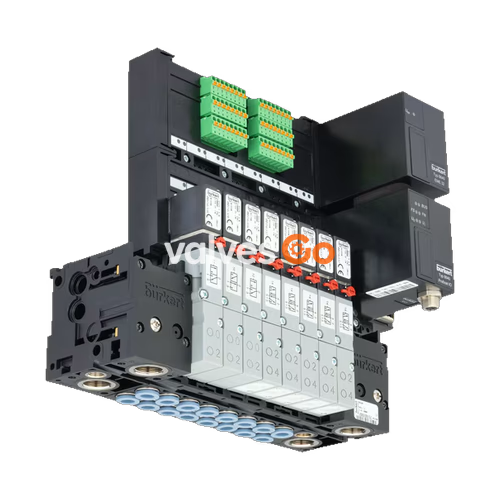
Burkert Type 8640 is a modular valve island designed to control neutral media and compressed air. The specific configuration for article number 20047275 features an 8-bank setup with a 19 mm width per station, utilizing a G 1/4 pressure port and D6 working ports. It operates within a nominal pressure range of 2 to 8 bar and supports medium temperatures from 0 °C to 50 °C. The unit is designed for DIN-rail installation and carries an IP20 protection rating due to its single wiring configuration.
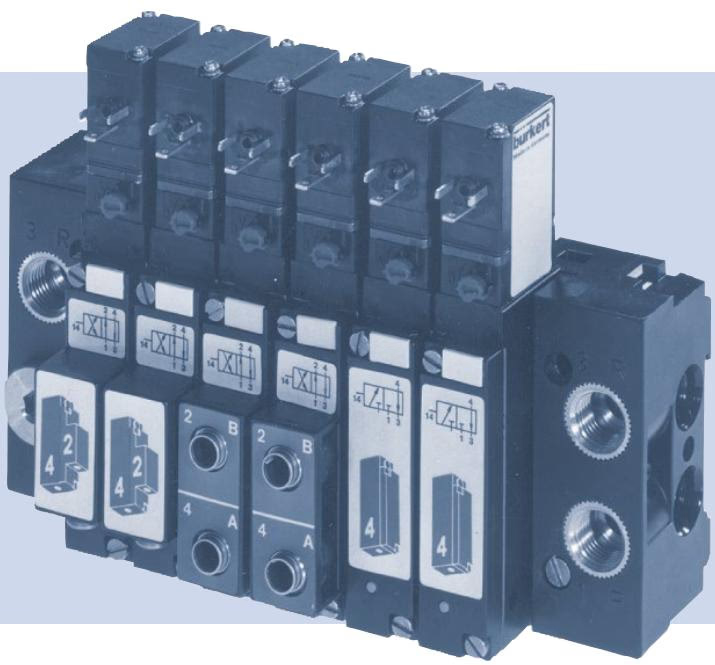
The valve island integrates Type 5470 solenoid valves, which consist of a 3/2-way pilot valve (Type 6106), a valve body with a diaphragm, seat seals, and connection plates. The valves can be mounted on modular, pneumatic MP05 base rails to form valve blocks. The working ports 2 (B) / 4 (A) as well as the supply connection and exhaust port 1 (P) / 3 (R) are configured for pneumatic integration.
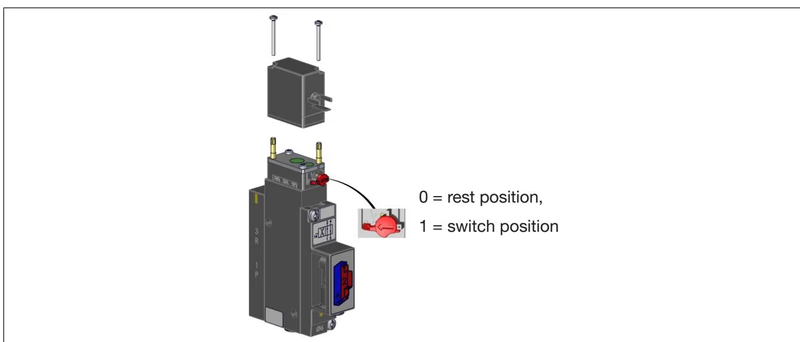
To operate the valve manually, press the manual override and turn it 90° clockwise until it stops. The manual override is locked and does not reset automatically.
WARNING
Only operate the manual override when the power is off.
| Circuit Function | Description |
|---|---|
| C (3/2-way valve) | In rest position, pressure port 1 (P/NC) closed, working port 2 (A/OUT) open after port 3 (R/NO). |
| D (3/2-way valve) | In rest position, pressure port 1 (P/NO) open after working port 2 (B/OUT), port 3 (R/NC) closed. |
| G (4/2-way valve) | In rest position, pressure port 1 (P) open after working port 2 (A), working port 4 (B) open after port 3 (R). |
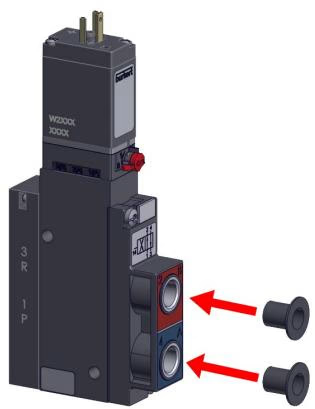
To convert a 4/2-way valve to a 3/2-way valve, close port 2 or port 4 with a stopper depending on the desired circuit function.
INFO
The pilot pressure for the pneumatic control unit depends on the pressure of the flow medium; it must be between 2 and 10 bar (at least 70% of operating pressure). A pressure difference between port 1 and 3 of at least 2 bar is required. When temperatures are below 0 °C, operation is restricted to dried air.
| Parameter | Value |
|---|---|
| Ambient temperature | -10 ... +55 °C |
| Medium temperature | -10 ... +50 °C |
| Medium | Filtered compressed air (particle size max. 10 μm), neutral gases (5 μm filtering) |
| Seal material | NBR |
| Operating pressure range | 2 ... 10 bar |
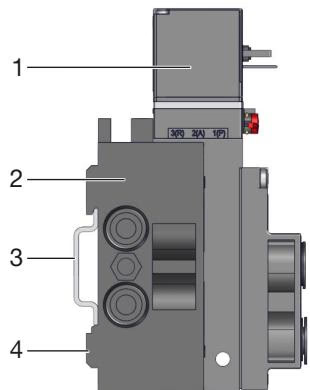
The valve block can be installed on a standard rail (35 x 15 or 35 x 7.5 EN 50022) or directly to a wall using M4 screws. Hook the valve block with the upper groove into the standard rail, snap the lower clamping pieces into the rail, and tighten the screws.
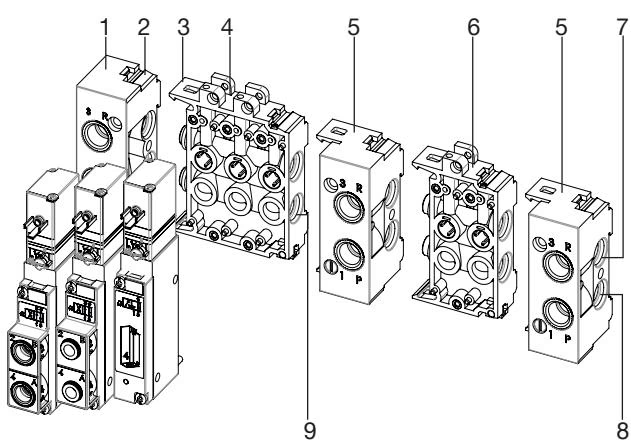
Begin installation with the connection module on the left. Engage the lower latch hooks of the module to be attached in the latch grooves of the preceding module. Press the module upwards slightly and engage the upper latch hook.
WARNING
Insert 3 O-rings into the recess on the back of the valve and ensure that the seal is properly fitted. Crushed O-rings and profile seals lead to leaky blocks. Fasten each valve to the base module with 2 screws using a recommended tightening torque of 0.6 ±0.1 Nm.
Push the hose lines into the push-in connections of the solenoid valves until they come to a stop. Use PTFE tape or an elastomer seal for sealing threaded connections. Hose lines must have a minimum hardness of 40 Shore D (according to DIN 53505 or ISO 868) and be cut off at right angles without burrs.
| Fault | Possible Cause | Remedy |
|---|---|---|
| Valves do not switch | No operating voltage or operating voltage too low | Check electrical connection. Ensure operating voltage according to type label. |
| Manual override not in zero position | Bring manual override to zero position. | |
| Pressure supply insufficient or not available | Set up large-volume pressure supply. Minimum operating pressure ≥ 2 bar. | |
| Valves switch with a delay or blow off at exhaust ports | Insufficient ventilation of the exhaust air ducts | Use suitably sized silencers or expansion vessels. Clean dirty silencers. |
| Impurities or foreign matter in the pilot or pneumatic valve | Apply pulsed pressure to the exhaust air ducts to blow out impurities. | |
| Leaky valve blocks | Missing or crushed O-rings between modules | Identify leak or missing seals. |
| Missing or incorrectly positioned flat seals | Insert missing seals or replace damaged seals. |
Explore similar products in our catalog