Ductile Cast Iron

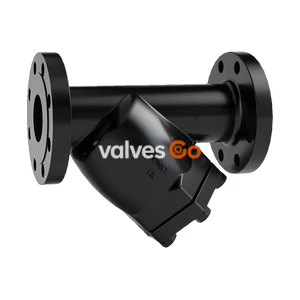
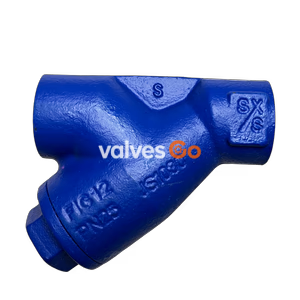
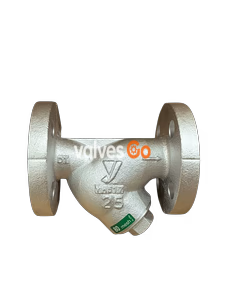
Yoshitake SU-50S quick-open strainer for water and oil. Features a ductile cast iron body, carbon steel cover, O-ring seal, and up to 1.0 MPa max pressure.
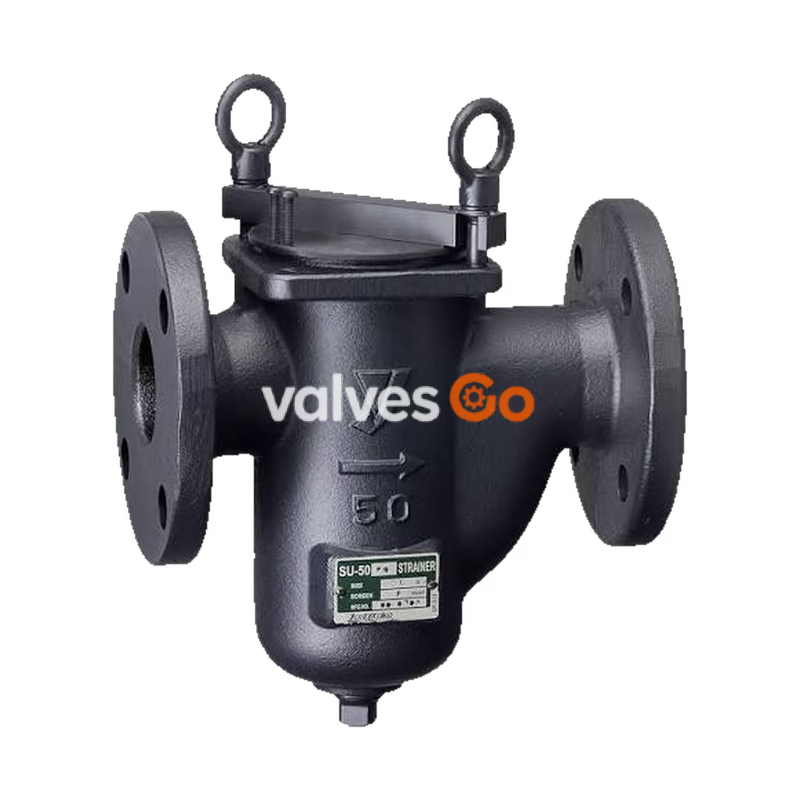
Yoshitake SU-50S is a quick-open strainer designed for removing dust from cooling and industrial water. It features a ductile cast iron body and a carbon steel cover with an O-ring for superior sealing, making screen disassembly and cleaning easy. The strainer is suitable for water and oil applications with a maximum pressure of 1.0 MPa and a maximum temperature of 80℃. Related models SU-50H (up to 2.0 MPa) and SU-50SS (with stainless steel cover and epoxy coating for flushing water) share the same product family.
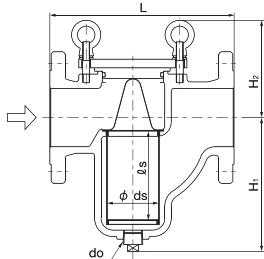
| Model | SU-50H | SU-50S | SU-50SS |
|---|---|---|---|
| Application | Water, Oil | Water, Oil, Flushing water | |
| Nominal size | 50A, 65A, 80A, 100A, 150A | ||
| Maximum pressure | 2.0 MPa | 1.0 MPa | 1.0 MPa |
| Maximum temperature | 80℃ | ||
| Body Material | Ductile cast iron | Ductile cast iron | Ductile cast iron with Epoxy Coating |
| Cover Material | Ductile cast iron | Carbon steel | Stainless steel |
| O-ring | NBR | ||
| Screen Material | Stainless steel | ||
| Screen Perforation | φ6-9P | ||
| Screen Mesh | Standard 60 mesh | ||
| Connection | JIS 20KRF | JIS 10KFF or BSEN PN16 | JIS 10KFF or BSEN PN16 |
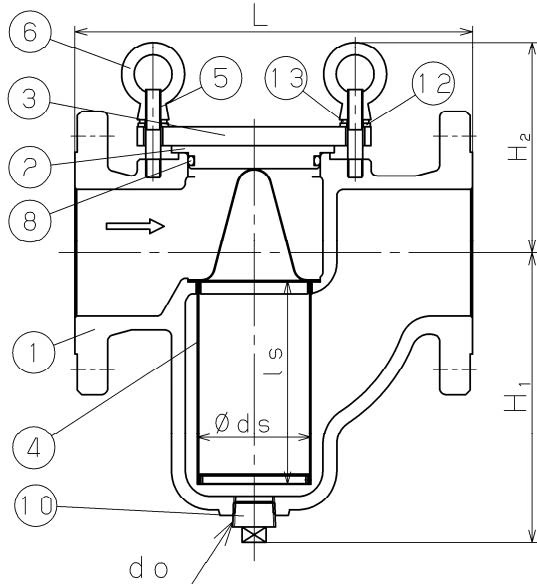
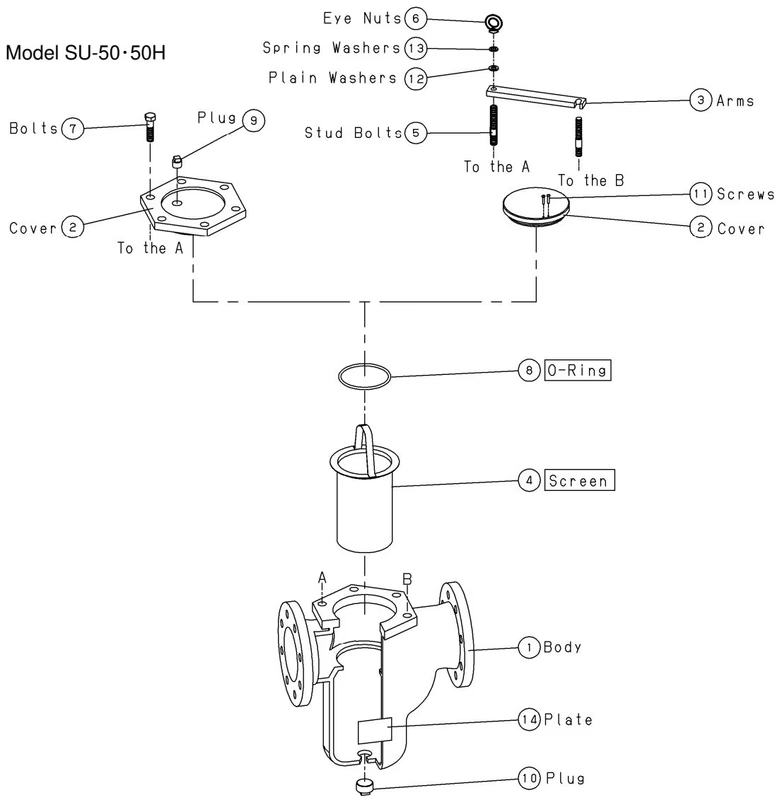
Name of Parts
| No. | Part | No. | Part | No. | Part |
|---|---|---|---|---|---|
| 1 | Body | 7 | Bolts | 13 | Spring Washers |
| 2 | Cover | 8 | O-Ring | 14 | Plate |
| 3 | Arms | 9 | Plug | ||
| 4 | Screen | 10 | Plug | ||
| 5 | Stud Bolts | 11 | Screws | ||
| 6 | Eye Nuts | 12 | Plain Washers |
Alien matter contained in the fluid entered from the strainer inlet is removed by the screen.
Dimensions (mm) and Weights (kg)
| Nominal Size | L | H1 (SU-50S) | H2 (SU-50S, 50SS) | ds | ls | d | do | Weight (kg) |
|---|---|---|---|---|---|---|---|---|
| 50A | 243 | 166 | 144 | 64.5 | 108 | R1/4 | R3/4 | 13.0 |
| 65A | 254 | 166 | 144 | 64.5 | 108 | R1/4 | R3/4 | 15.0 |
| 80A | 300 | 204 | 165.5 | 77 | 140 | R3/8 | R1 | 20.0 |
| 100A | 315 | 230 | 169 | 90 | 160 | R3/8 | R1 | 28.0 |
| 150A | 455 | 314 | 224 | 125 | 230 | R1/2 | R1 1/2 | 68.0 |
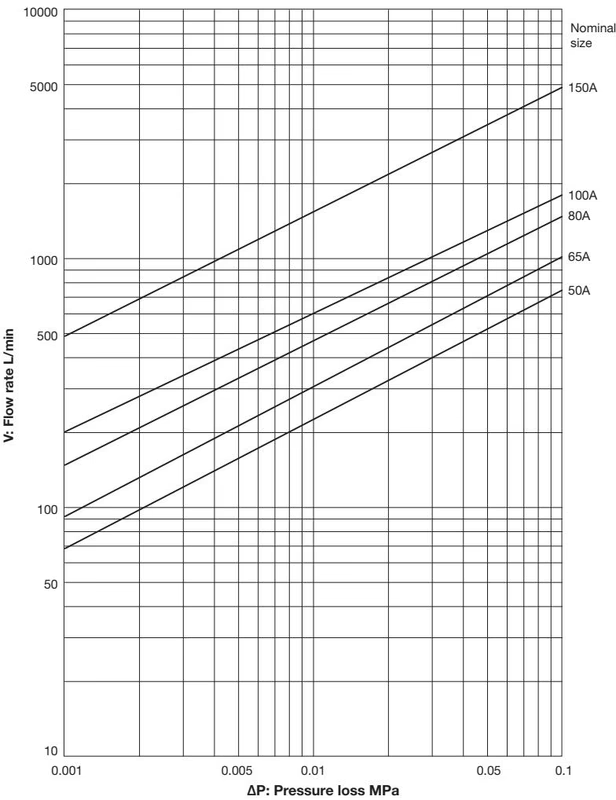
The nominal size of the strainer should be the same as that for the piping. If the nominal size of the strainer is smaller than that for the piping, the pressure loss of the strainer may grow, resulting in failure to maintain the required pressure at the inlet of the strainer.
Standard Flow Velocity by Fluid
| Fluid | Standard flow speed |
|---|---|
| Water & Oil | 2m/s (2~4) |
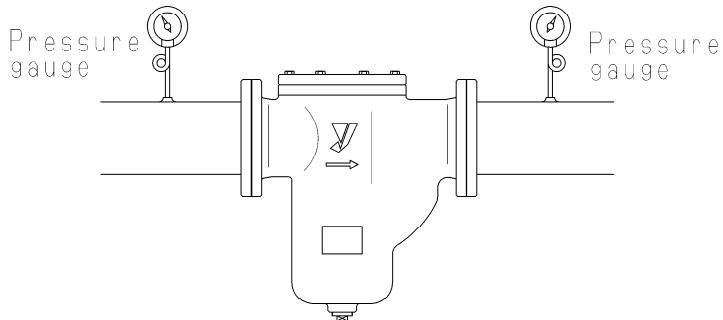
WARNING
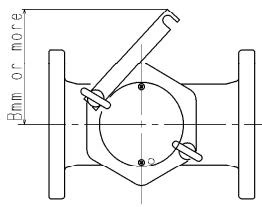
Dimensions required for removal of the screen
| Nominal Size | A (mm) | B (mm) |
|---|---|---|
| 50A, 65A | 300 | 180 |
| 80A | 350 | 210 |
| 100A | 400 | 220 |
| 150A | 600 | 280 |
WARNING
| Condition of failure | Causes | Measures and treatment |
|---|---|---|
| Fluid does not flow. | 1. Screen is clogged. 2. The stop valves are closed. | 1. Disassemble and clean screen. 2. Open the stop valve(s). |
| Loss of pressure is great. | 1. Screen is clogged. 2. Pressure gauge is out of order. 3. Nominal size is too small. | 1. Disassemble and clean screen. 2. Exchange the pressure gauge. 3. Use a strainer with a larger nominal size. |
| Alien matter is not removed. | 1. Screen is damaged. | 1. Disassemble and exchange screen. |
| Cover cannot be removed. | 1. Inside of the product is a vacuum. 2. Cover and body are stuck together. | 1. Break the vacuum inside the pipe and remove the cover. 2. Refer to Removal of the screen. |
| Outer leakage occurs. | 1. O-ring is damaged. 2. Cover is not assembled properly. | 1. Install a new O-ring. 2. Assemble properly. |
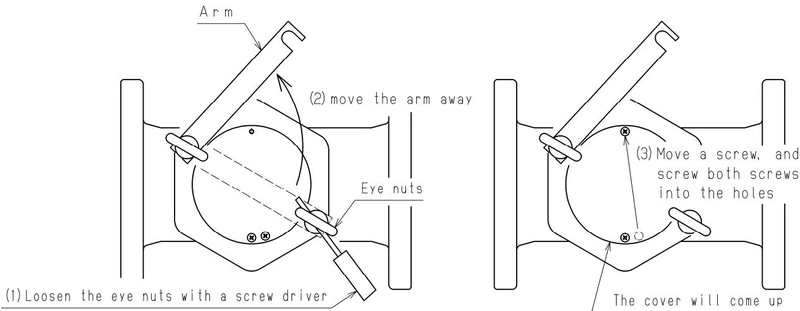
WARNING
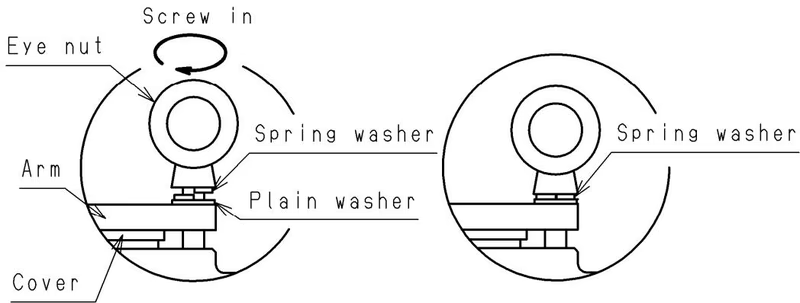
Tightening torque for the eye nuts (recommended values)
| Nominal size | Tightening torque (N·m) |
|---|---|
| 50A, 65A | 20 |
| 80A-150A | 30 |
| Name of parts | Durable (Rough standard) |
|---|---|
| O-Ring | When the cover is replaced or 3 years. |
| Screen | 5 years |
Yoshitake Instrumentation / Strainers
SY, SU, SW, and ST series strainers for removing line debris and protecting downstream valves and equipment.