
Repairable

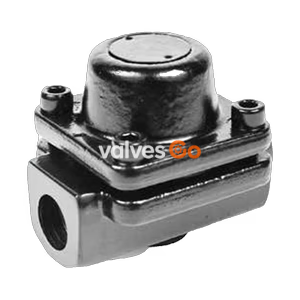
Yoshitake TS-5S compact thermostatic steam trap. Stainless steel, max 2.1 MPa, 220℃. Ideal for tracing lines and direct steam equipment.
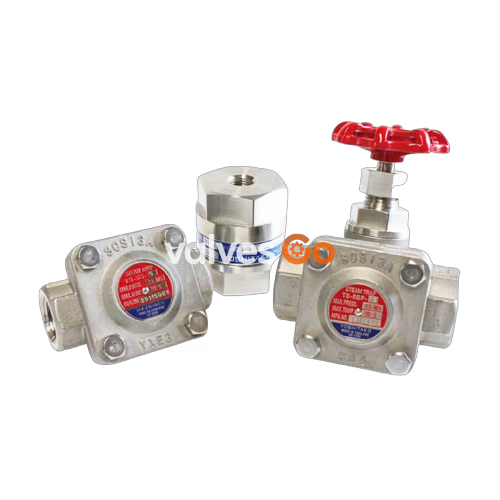
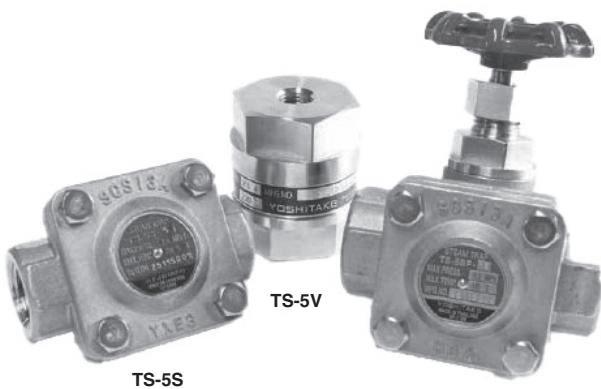
Yoshitake TS-5S is a compact, lightweight thermostatic steam trap suitable for tracing lines, food equipment, medical equipment, and laundry equipment. It operates at a temperature lower than the saturated steam temperature, preventing steam leakage without requiring adjustment. The body and wetted parts are made of stainless steel for improved corrosion resistance.
| Model | TS-5S |
|---|---|
| Nominal Size | 8A, 10A, 15A, 20A, 25A |
| Application | Steam, Steam condensate |
| Maximum Working Pressure | 2.1 MPa |
| Maximum Allowable Back Pressure | 0.4 MPa |
| Operation Temperature | Standard: 15℃ below saturated steam temperature (TS-5S-15) |
| Maximum Temperature | 220℃ |
| Material | Stainless steel (Body, Valve seat) |
| Connection | JIS Rc, NPT |
Operation Temperature Variants
1. Starting-up At start-up, there is a gap between the valve disc and the valve seat, and the trap is open. In this state, condensate and air is discharged.
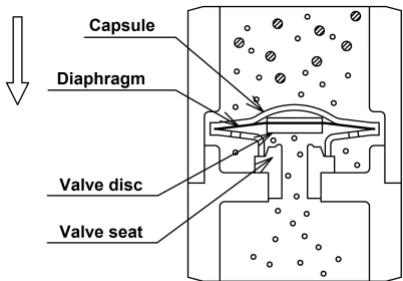
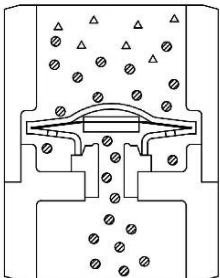
2. Closing When steam flows into the trap, the pressure inside the capsule increases due to the heat of steam and pushes down the diaphragm. This closes the gap between the valve disc and the valve seat, and thus the trap closes.


3. Opening When the steam temperature drops and condenses, the pressure inside the capsule decreases, the diaphragm is pushed up, and the trap opens to discharge condensate. The trap repeats closing and opening according to the inflow of steam and condensate.
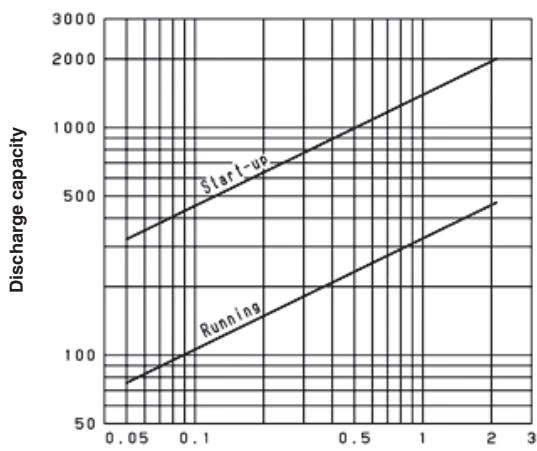
To select a nominal size, secure a safety factor of 2 or more based on the working differential pressure (inlet pressure minus outlet pressure).
WARNING
Use the product with an outlet pressure of 0.4 MPa or less. The capsule may be damaged when high pressure is applied at room temperature, resulting in malfunction.
Piping example as a trap
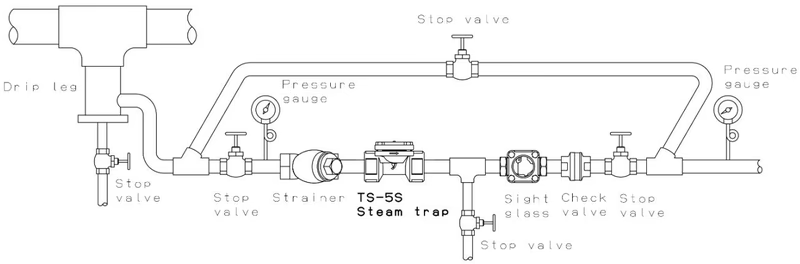
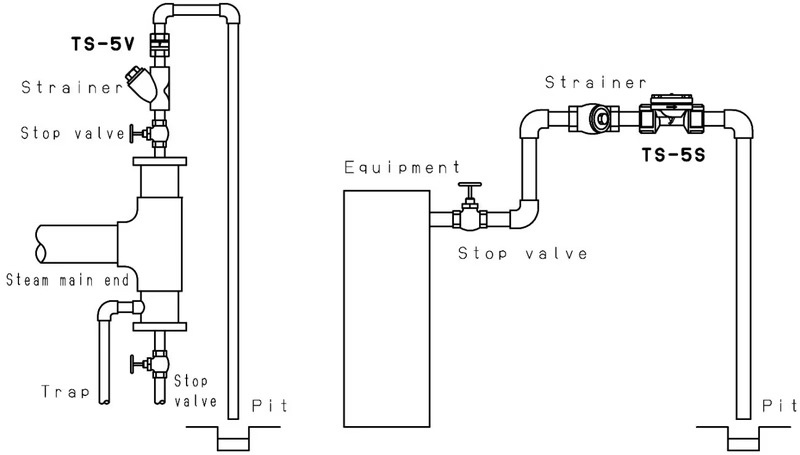
Piping example as an air vent
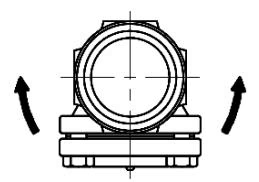
Precaution for installation The TS-5S can be installed either horizontally or vertically, as long as the cover is kept upward at an angle between 0 to 90 degrees.
TIP
Before installation, remove foreign substances and scale from the piping. Install a stop valve and a strainer (80 mesh or more recommended) at the inlet side. Ensure enough space for maintenance and inspections.
Daily Inspection (Once a day) Check that condensate is discharged smoothly and that there is no outside leakage of condensate or steam.
Periodic Inspection (Once a year)
| To be inspected | Inspection criteria |
|---|---|
| Sealing surfaces of capsule and valve seat | No damage, abrasion, or foreign substance stuck |
| Shape of capsule | No deformation or damage |
| Dirt on screen | No clogging on screen |
| Trouble | Cause | Remedy |
|---|---|---|
| Condensate or air is not discharged | Screen is clogged | Disassemble or disconnect from pipe and clean it |
| Capsule is deformed or damaged | Replace the part | |
| Capsule damaged due to abnormal pressure (freezing/water hammer) | Replace the part. Use within working pressure range | |
| Steam locking occurs | Change piping system layout | |
| Inlet pressure is low and outlet pressure is high | Change piping system layout | |
| Continuous blowout | Foreign substance stuck between capsule and valve seat, scale accumulated | Close inlet stop valve, wait for temp/pressure drop, blow the product. If leakage remains, disassemble and clean |
| Capsule and/or valve seat is damaged, abraded, or deformed | Replace the parts | |
| Discharge capacity is insufficient | Replace with another model of enough capacity | |
| Valve seat is loose | Retighten with proper torque | |
| Outside leakage | Bolts loose or cover gasket damaged | Replace cover gasket. Retighten to proper torque |
| Leakage due to freezing or water hammer | Replace trap. Use within working pressure |
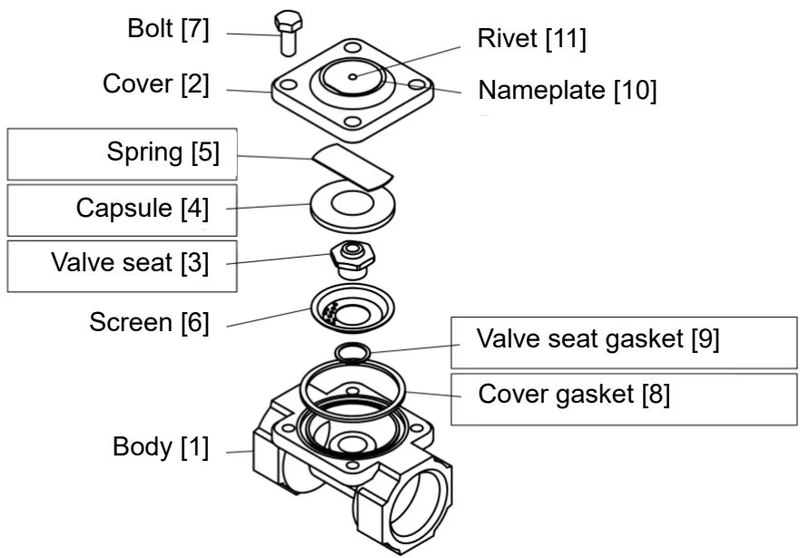
Disassembly:
Reassembly:
Yoshitake Steam Traps / Thermostatic Steam Traps
TS series thermostatic steam traps selected by discharge temperature and subcooling requirements.
Explore similar products in our catalog